
If you’ve been told you’re allergic to penicillin or another antibiotic, you might be carrying around a label that’s not even true. About 10% of people in the U.S. say they’re allergic to penicillin, but when tested properly, fewer than 1% actually are. That’s not just a small mistake - it’s a big deal for your health. Without accurate testing, you’re more likely to get stronger, costlier antibiotics that don’t work as well and can lead to resistant infections. The good news? There’s a safe, proven way to find out if you really have an allergy - and it starts with proper preparation.
Stop Taking Antihistamines Before Your Test
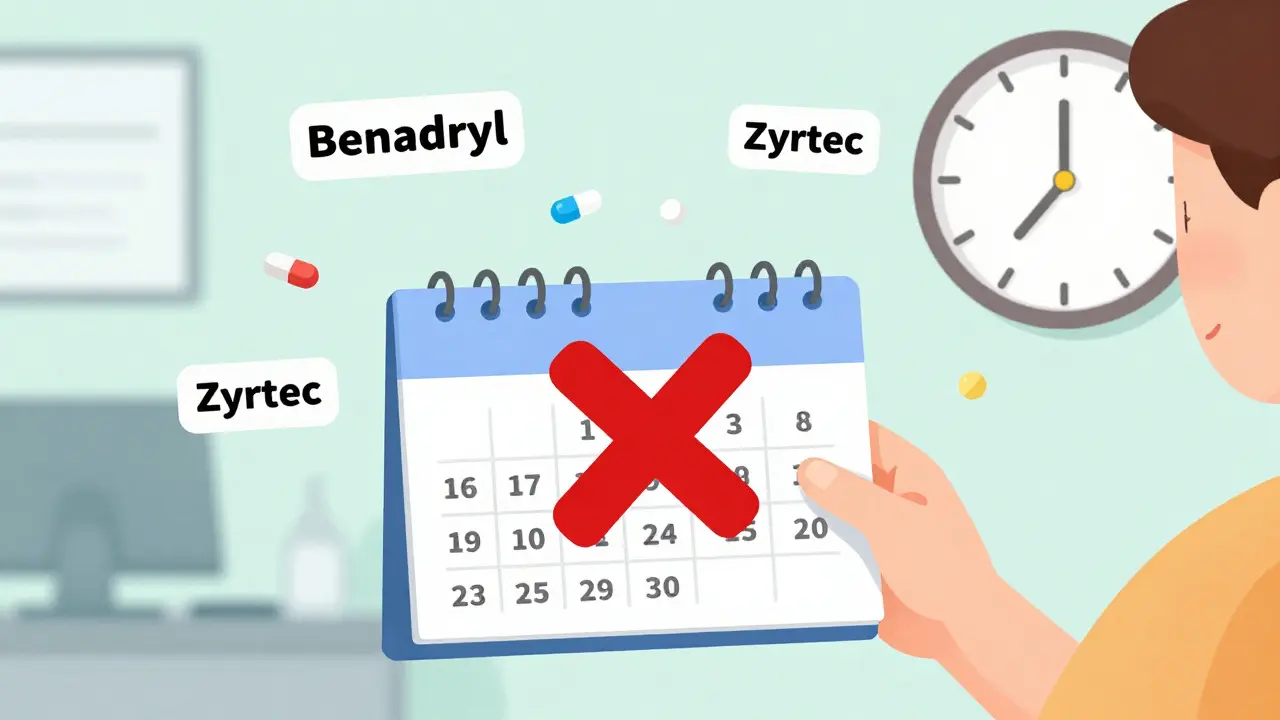
The most important step in preparing for antibiotic allergy testing is stopping certain medications. If you’re taking antihistamines, you need to stop them well before your appointment. Why? Because they block the allergic response. If they’re still in your system, the test might show a false negative - meaning you could be told you’re not allergic when you actually are. First-generation antihistamines like diphenhydramine (Benadryl) and hydroxyzine must be stopped at least 72 hours before testing. Second-generation ones like cetirizine (Zyrtec), loratadine (Claritin), fexofenadine (Allegra), and levocetirizine (Xyzal) need even longer - seven full days. These drugs are common in over-the-counter cold and allergy pills, so check every label. Even if you only took one dose a week ago, it could still interfere. Some prescription meds also have antihistamine effects. Doxepin, a tricyclic antidepressant, must be stopped 14 days before testing. If you’re unsure about any medication you’re taking, bring a full list to your allergist. Don’t stop anything without their approval, especially if it’s for a chronic condition like high blood pressure or depression.Keep Taking Other Essential Medications
You don’t need to stop everything. Medications for high blood pressure, diabetes, asthma, or heart conditions should usually continue as normal. But there’s an important exception: beta-blockers. These drugs - like metoprolol or propranolol - can hide early signs of an allergic reaction during testing. That’s dangerous. If your body starts reacting, you might not feel the warning signs like a racing heart or flushing. Your allergist will watch you more closely if you’re on beta-blockers, but they won’t ask you to stop them unless absolutely necessary. ACE inhibitors, used for blood pressure and heart failure, also need attention. While they don’t interfere with the test itself, they can make anaphylaxis harder to treat. If you take lisinopril, enalapril, or similar drugs, tell your doctor. They’ll make sure emergency tools like epinephrine are ready just in case.Know What the Testing Process Looks Like
Allergy testing for antibiotics isn’t one single test - it’s a step-by-step process designed to be safe and accurate. Most commonly, it’s done for penicillin and related antibiotics called beta-lactams. First, there’s the skin prick test. A tiny drop of penicillin solution is placed on your skin, then the surface is lightly scratched. It feels like a quick, mild pinch - like a mosquito bite. If you’re allergic, a red, itchy bump will appear within 15 to 20 minutes. If nothing happens, the next step is the intradermal test. A small amount of the same solution is injected just under the skin. Again, if you’re allergic, you’ll see swelling and redness bigger than 3mm. These tests are very safe - the chance of a serious reaction is less than 0.01%. If both skin tests are negative, you move to the oral challenge. This is where you actually take the antibiotic. You’ll swallow a small dose - maybe 10% of a normal pill - and be watched for 30 minutes. If there’s no reaction, you’ll take the full dose and be monitored for another hour. The risk of a mild reaction during this part is about 10%. A severe reaction like anaphylaxis? Only 0.06%. That’s lower than the risk of being struck by lightning. The whole process usually takes 2 to 3 hours. You’ll be in a medical setting with staff trained in emergency response. Epinephrine, antihistamines, and breathing treatments are always on hand.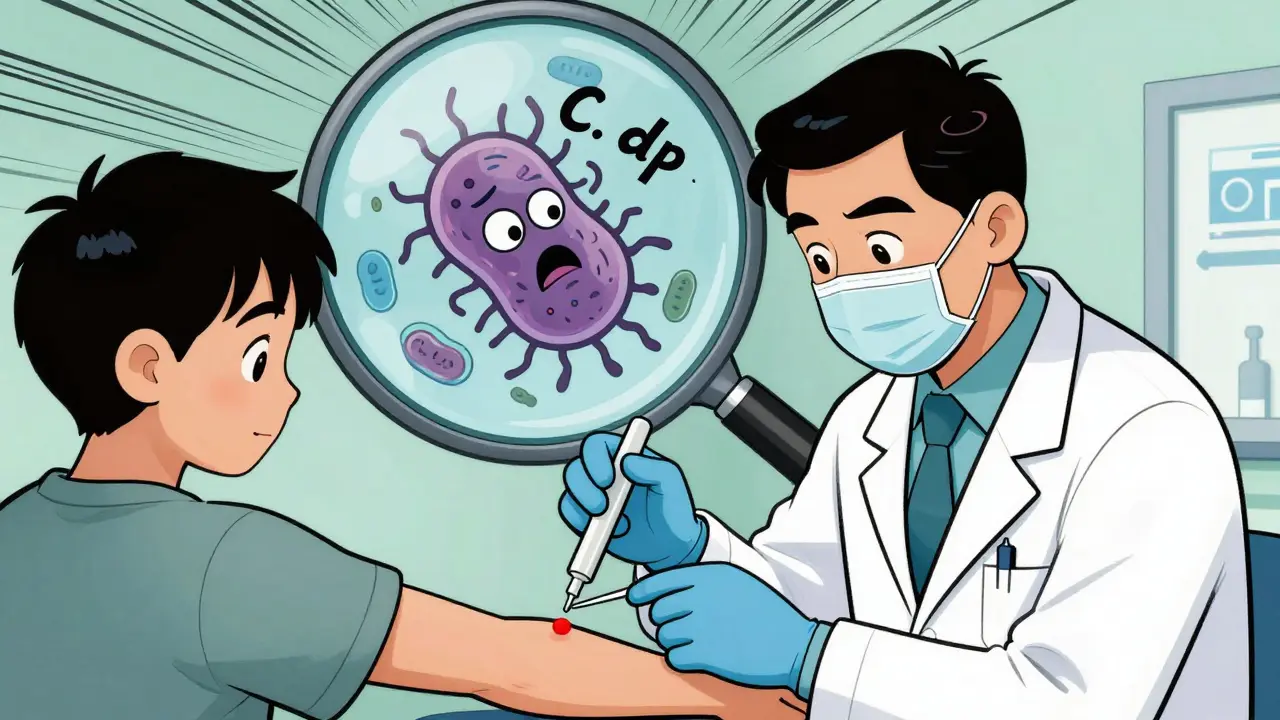
What Happens If the Test Is Positive?
If your skin test or oral challenge shows a reaction, you’re likely truly allergic. That’s not a bad result - it’s a clear one. You’ll get a confirmed allergy label, which helps doctors avoid dangerous drugs in the future. You’ll also get advice on what alternatives to use and how to carry emergency medication if needed. But here’s something many people don’t know: allergies can fade over time. About half of people who had a severe reaction to penicillin in childhood lose the allergy within five years. Eighty percent lose it within ten years. That’s why retesting is often recommended, even if you were told you were allergic years ago.What Happens If the Test Is Negative?
A negative result is life-changing. You’ll be officially “de-labeled” - meaning your medical records will be updated to show you’re not allergic. Suddenly, you can take the best, safest, cheapest antibiotics for infections. Penicillin costs about $12 per dose. Alternatives like daptomycin can cost over $1,800. One patient in a 2023 study saved over $63,000 a year just by switching back to penicillin after testing. You’ll also reduce your risk of complications. People with unconfirmed penicillin allergies get broader-spectrum antibiotics 69% more often. That leads to more side effects, longer hospital stays, and a higher chance of developing hard-to-treat infections like C. diff. After testing negative, patients see a 32% drop in infection-related complications.
Common Side Effects and What to Expect After
Most people feel fine after testing. Some report mild itching or redness at the skin test sites. That’s normal and usually fades in a few hours. About 15% of people get delayed reactions - swelling or itching that shows up 4 to 8 hours later. These can be treated with over-the-counter hydrocortisone cream. A small number report anxiety or stomach upset during the oral challenge. If you feel nauseous or get a headache, don’t assume it’s an allergy. These are common stress reactions. Your doctor will help you tell the difference. The biggest complaint? The medication restrictions. Stopping your daily allergy pills for a week feels inconvenient. But compared to the risks of taking the wrong antibiotics for years, it’s a small trade-off.Why This Test Matters More Than You Think
This isn’t just about you. It’s about public health. Every time someone gets a broad-spectrum antibiotic they don’t need, it adds to the global crisis of antibiotic resistance. The World Health Organization calls this one of the top 10 global health threats. Testing for antibiotic allergies is one of the most cost-effective interventions in modern medicine. Every dollar spent on testing saves $5.70 in avoided costs from wrong antibiotics, longer hospital stays, and complications. Hospitals that have formal de-labeling programs are seeing fewer resistant infections and shorter patient stays. Right now, only about 17% of primary care doctors follow the testing guidelines. That’s mostly because they don’t have easy access to allergists - especially in rural areas. But things are changing. New point-of-care blood tests are in development, and telemedicine programs are letting low-risk patients do supervised oral challenges at home. By 2027, 75% of U.S. hospitals plan to have formal antibiotic allergy testing programs. That’s up from 42% today. The goal? To prevent 120,000 unnecessary courses of broad-spectrum antibiotics every year.What to Do Next
If you’ve been told you’re allergic to penicillin or another antibiotic:- Write down exactly what happened when you had the reaction - rash, swelling, trouble breathing, nausea?
- Check if it was years ago. If it’s been more than 5 years, your allergy may be gone.
- Stop all antihistamines 7 days before your appointment (14 days for doxepin).
- Bring a full list of all medications you take - including vitamins and supplements.
- Ask your doctor for a referral to an allergist who specializes in drug allergies.
Can I eat or drink before antibiotic allergy testing?
Yes, you can eat and drink normally before testing. There’s no fasting required. But avoid alcohol for at least 24 hours before your appointment, as it can affect how your body reacts and may interfere with interpreting symptoms.
Are blood tests for penicillin allergy reliable?
No. Blood tests like ImmunoCAP or RAST for penicillin allergy are not accurate enough to be used for diagnosis. They often give false positives - meaning they say you’re allergic when you’re not. Skin testing combined with an oral challenge is still the gold standard. Don’t rely on blood tests alone.
What if I had a reaction as a child but haven’t taken penicillin since?
You’re likely not allergic anymore. About 80% of people who had a penicillin reaction as a child lose their allergy within 10 years. Even if you had a severe reaction like anaphylaxis, your risk drops significantly over time. Testing is strongly recommended - especially if you’ve never been evaluated since that childhood reaction.
Can I get tested for allergies to antibiotics other than penicillin?
Penicillin and related beta-lactams are the only antibiotics with standardized, reliable testing protocols. For other antibiotics like sulfa drugs, vancomycin, or cephalosporins, testing is less reliable and not routinely done. Diagnosis is usually based on your history and sometimes an oral challenge under close supervision. Always talk to an allergist - they’ll advise you based on your specific reaction history.
Is antibiotic allergy testing covered by insurance?
Yes, most insurance plans in the U.S. and Australia cover allergy testing for antibiotics when it’s medically necessary. You’ll usually need a referral from your doctor. The cost of testing is far lower than the long-term costs of using broad-spectrum antibiotics. Many hospitals will help you check your coverage before scheduling.

laura Drever
Stop antihistamines for 7 days? Bro i took one zyrtec last tuesday and now im scared to breathe
jefferson fernandes
This is absolutely critical information-seriously, people need to stop treating penicillin allergies like a tattoo you can’t remove. If you had a rash at 8 years old and haven’t touched penicillin since, you’re probably not allergic. The data is overwhelming. Don’t let outdated fear cost you thousands and increase your risk of superbugs. Talk to an allergist. Period.
John Tran
You know, this whole antibiotic allergy thing… it’s not just medical-it’s existential. We label ourselves based on one childhood incident, and then we carry that identity like a scar across our entire medical history. But what if the body remembers differently? What if the immune system, that ancient, whispering intelligence, has already moved on? We’re not just avoiding drugs-we’re avoiding versions of ourselves we outgrew. The test isn’t just about penicillin-it’s about forgiveness. Forgiveness from your past self. From the scared kid who got a rash and was told, ‘You’re allergic now.’ But you’re not that kid anymore. You’re the person who’s ready to ask: ‘What if I’m not broken?’
mike swinchoski
Why are you letting doctors control your life? You don’t need testing. Just say no to penicillin and be done with it. Everyone else is taking these fancy antibiotics anyway-why risk it? You think you’re saving money? You’re just being reckless. I’ve seen people die from this stuff. Don’t be stupid.
Trevor Whipple
lol so you're telling me i took benadryl last week and now my allergy test is useless? i thought that stuff was just for sleepin. also why is doxepin even a thing? sounds like a villain from a disney movie. also i got my blood test done and it said i'm allergic but now you're saying that's fake? so which one do i believe? the machine or the dude in the lab coat?
Lance Nickie
Testing is useless. I’m allergic. End of story.
Damario Brown
So let me get this straight-you want me to stop my meds, get poked with needles, then swallow a pill that might kill me, just so some doctor can save $1,800? That’s not medicine, that’s a cost-cutting scam. And who the hell decided it’s okay to test people with antibiotics? You think the FDA cares about your wallet? They care about liability. You’re a guinea pig. And now you’re proud of it?
John Pope
There’s a metaphysical layer here, you know? The penicillin allergy isn’t just a physiological response-it’s a societal narrative. We’ve been conditioned to fear the chemical, to equate it with danger, to mythologize it like a dragon guarding the treasure of effective treatment. But the real dragon? The fear itself. The fear of being wrong. The fear of being labeled. The fear of trusting science over trauma. The test doesn’t just reveal your allergy-it reveals your relationship with vulnerability. Are you willing to unlearn your pain? Or will you cling to the label like a security blanket stitched with misinformation?
Clay .Haeber
Oh wow, so now we’re doing ‘allergy de-labeling’ like it’s a TikTok trend? Next they’ll be ‘de-labeling’ gluten intolerance because ‘it’s probably not real.’ Meanwhile, my cousin died from anaphylaxis after some ‘expert’ told her she was fine. So yeah, I’ll keep avoiding penicillin. Thanks for the ‘cost-saving’ nightmare.
Priyanka Kumari
This is such an important post! I work in public health in India, and antibiotic misuse is a huge problem here too. Many people self-medicate with penicillin because it’s cheap, and then they get resistant infections. Proper testing could save so many lives. I’ve encouraged my patients to talk to allergists-even if they think they’re allergic, retesting after 5–10 years is a gift to their future health. Thank you for sharing clear, actionable advice!
vishnu priyanka
Back home in Kerala, everyone just takes antibiotics like candy. My uncle got a rash once, now he won’t touch anything that looks like a pill. Meanwhile, his UTI keeps coming back because he’s on some expensive junk. This post? It’s a wake-up call. We need more of this info in local languages. Not just for rich folks with insurance.
Robin Williams
you ever think that maybe the body’s not allergic to the drug… but to the fear? like maybe the panic, the stress, the history of trauma around it… that’s what triggers the reaction? maybe the real allergy is to being told you’re broken. and maybe the test isn’t about penicillin… it’s about whether you believe you’re still whole
Scottie Baker
So you want me to stop my Zyrtec for a week so I can get poked with needles and maybe die so you can save a few bucks? Nah. I’d rather pay $1,800 than risk my life for your ‘science.’ You’re not a hero. You’re a guinea pig with a blog.