
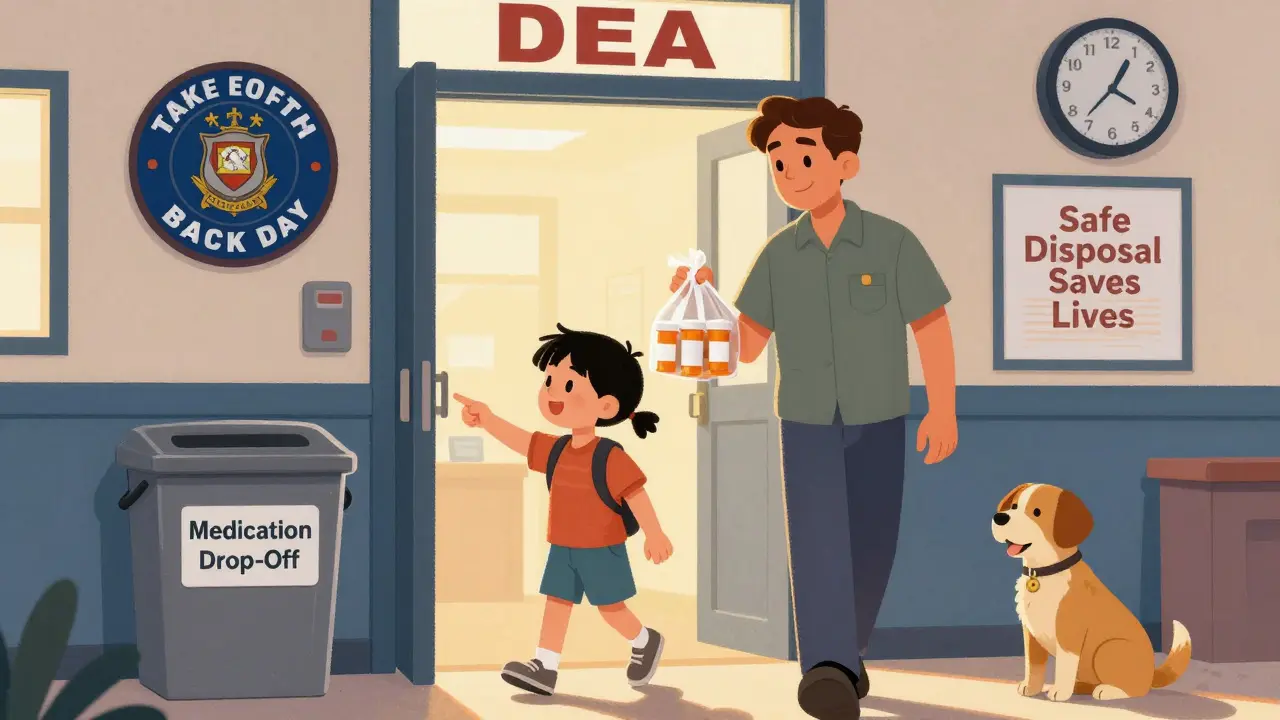
Every year, millions of unused or expired prescription drugs sit in bathroom cabinets, kitchen drawers, and medicine chests across the U.S. - many of them still potent, many of them dangerous. These aren’t just old pills gathering dust. They’re potential hazards: a child finding grandma’s painkillers, a teen experimenting with leftover opioids, or chemicals leaching into water supplies when flushed down the toilet. The prescription drug take-back program was created to fix this. And every April and October, it becomes the largest single-day drug disposal effort in the country.
When and Where Does It Happen?
The National Prescription Drug Take-Back Day happens twice a year, on the last Saturday of April and October. In 2025, the next event is scheduled for October 25, from 10 a.m. to 2 p.m. local time. That’s it - four hours, one day. No extensions. No late drop-offs. If you miss it, you wait until next time. Collection sites are everywhere: police stations, fire departments, hospital pharmacies, and even some retail pharmacies like CVS and Walgreens. There are over 4,500 locations nationwide. You can find the nearest one using the DEA’s official website, takebackday.dea.gov, or the free Dispose My Meds app, used by more than 340,000 Americans. Just enter your zip code, and it shows you the closest drop-off point - often within a few miles.What Can You Drop Off?
Not everything goes in the bin. The program accepts solid medications: pills, capsules, patches, and even liquid medications - but only if they’re sealed in their original containers. That means your cough syrup, antibiotic capsules, or painkiller tablets? All good. What’s not allowed? Needles, syringes, sharps, or any illegal drugs. Those require special handling. If you have used syringes, take them to your local pharmacy or medical waste facility. The take-back event is strictly for prescription and over-the-counter drugs you no longer need. Also, no inhalers. No controlled substances in aerosol form. No chemotherapy drugs. If you’re unsure, check the DEA’s official list - or just call the site ahead of time. Most locations will tell you exactly what they’ll take.What Happens When You Drop Off Your Meds?
You walk up. You hand over your bag of old pills. You don’t need to show ID. You don’t need to explain why you’re getting rid of them. No questions asked. That’s the whole point. Law enforcement officers are there to receive the medications. They don’t record your name, your prescription history, or your medical condition. It’s completely anonymous. You’re not being judged. You’re not being tracked. You’re just doing the right thing. Once collected, the drugs are sealed in secure bins and transported to licensed disposal facilities. They’re incinerated under strict environmental standards - not dumped, not flushed, not recycled. This is the only safe way to destroy powerful medications without contaminating soil or water.Why This Matters
In 2024, nearly 18 million Americans misused prescription drugs. More than half of them got them from family or friends’ medicine cabinets, according to the National Survey on Drug Use and Health. That’s not a statistic - that’s your neighbor, your cousin, your kid’s friend. A single bottle of oxycodone left on a shelf can start a lifelong addiction. The take-back program has collected nearly 10 million pounds of medication since it started in 2010. That’s 4,500 tons - enough to fill 150 semi-trucks. The April 2025 event alone collected over 620,000 pounds. That’s real impact. And it’s not just about preventing misuse. It’s about protecting the environment. Flushing pills or tossing them in the trash leads to pharmaceuticals entering our water systems. Fish in rivers have shown hormonal changes from drug residues. Children in rural areas are getting sick from accidental ingestion. This program stops both.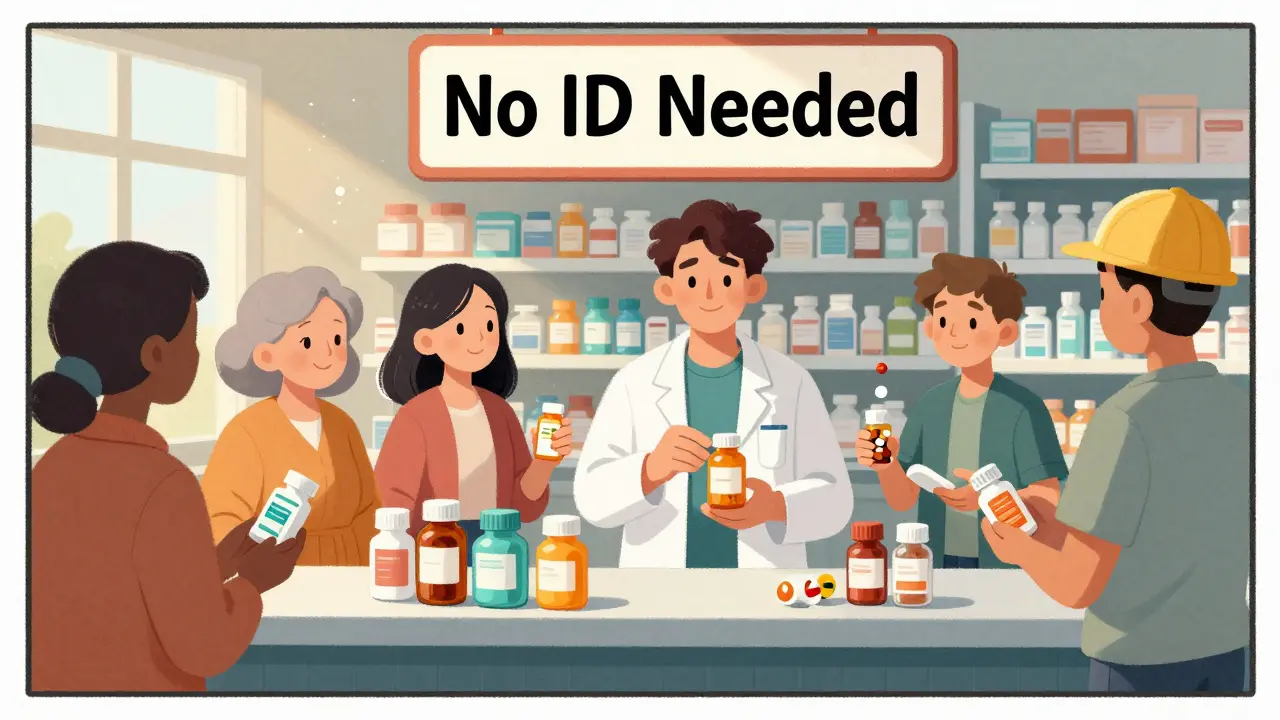
What You Might Not Know
The program isn’t perfect. Rural areas often have just one collection site per 50,000 people. Urban areas have one per 15,000. That’s a big gap. That’s why the DEA is now deploying 120 mobile collection units - trucks that drive to remote towns and parking lots, bringing the service to people who can’t drive 30 miles. Also, most people don’t know about the event until it’s too late. A 2024 survey found that 28% of households only heard about Take-Back Day after the deadline passed. That’s why hospitals like University Hospitals in Ohio now host educational sessions alongside collection sites. They bring in pharmacists to explain how to read expiration dates, how to store meds safely, and why flushing isn’t okay. These events see 37% more participation than sites that just hand out bins.What If You Miss the Day?
You still have options. There are over 14,000 permanent drug disposal kiosks across the country - mostly in pharmacies and law enforcement buildings. CVS and Walgreens now have them in more than 1,200 locations. These kiosks are locked, secure, and available year-round. You can drop off your meds any day, any time. Some states also have mail-back programs. You get a prepaid envelope, seal your pills inside, and drop it in the mailbox. It’s not available everywhere, but it’s an option if you live far from a drop-off point. Still, nothing replaces the convenience and scale of the biannual Take-Back Day. It’s free. It’s anonymous. It’s nationwide. And it’s the only time you can safely get rid of large quantities of meds without paying a fee.What to Bring
- Original prescription bottles (labels can stay on - no need to remove them) - Unopened or expired pills, capsules, or patches - Sealed liquid medications (cough syrup, liquid antibiotics) - A bag or box to carry them in Don’t bring: - Needles or sharps - Illegal drugs - Inhalers - Chemotherapy drugs - Empty containers Pro tip: If you’re bringing multiple medications, keep them in separate bags or labeled containers. It helps staff sort them faster and keeps everything organized.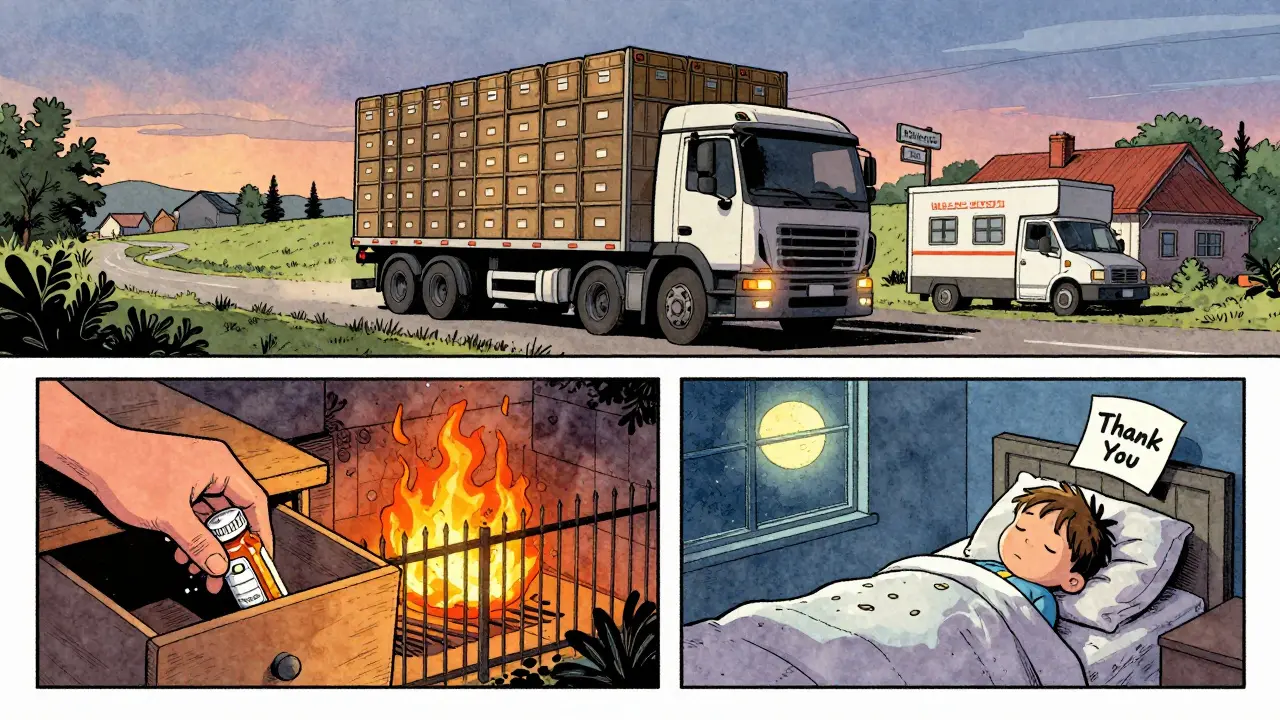
What Happens After the Event?
After 2 p.m., the bins are locked and loaded onto trucks. The DEA and local law enforcement track every container. They’re audited annually to ensure compliance with federal disposal laws. Nothing is reused. Nothing is recycled. Nothing is thrown in landfills. It all goes up in smoke - safely, legally, and permanently. The DEA publishes the total weight collected after each event. In 2024, the program removed over 1.2 million pounds of drugs from homes. That’s 600 tons. That’s 600 tons of potential overdose risk, environmental damage, and accidental poisonings - gone.Why It’s Still Necessary
Despite all this, 75% of Americans still dispose of medications improperly - flushing them, tossing them in the trash, or leaving them in open cabinets. That’s not ignorance. It’s convenience. Most people don’t know where to go. Or they think it’s too much trouble. Or they believe it doesn’t matter. It does matter. A single bottle of hydrocodone can change a life. A child finding a fentanyl patch can be fatal. A neighbor’s leftover painkiller can become a gateway to addiction. This program isn’t about punishment. It’s about prevention. It’s about giving people a simple, safe, and stigma-free way to protect their families and their communities.Final Thoughts
You don’t need to be a doctor, a policymaker, or a public health expert to make a difference. You just need to show up on October 25 with your old pills. Take five minutes. Drop them off. Walk away. You’ve done something real. And if you’re reading this after the event? Don’t wait. Find a permanent kiosk. Use the Dispose My Meds app. Call your local pharmacy. Don’t let another bottle sit in your drawer. The next take-back day is coming. But the risk doesn’t wait.Can I drop off medications for someone else?
Yes. You can bring medications belonging to family members, friends, or even neighbors. No identification is required. You don’t need to say whose pills they are. The program is designed to be anonymous and accessible to anyone who wants to dispose of unused drugs safely.
Are there any fees to use the take-back service?
No. The National Prescription Drug Take-Back Day is completely free. There are no charges, no hidden fees, and no paperwork. It’s funded by federal grants and supported by local law enforcement and public health agencies. You just show up with your meds and leave.
What if I have a lot of pills - can I bring them all?
Yes. There’s no limit on how much you can drop off. Whether it’s one bottle or ten, they’ll take it. Many people bring entire medicine cabinets’ worth. The bins are designed to handle large volumes. Just make sure everything is sealed and in original containers where possible.
Why can’t I flush or throw away my old pills?
Flushing pills can contaminate water supplies - studies have found traces of medications in rivers, lakes, and even drinking water. Throwing them in the trash makes them accessible to children, pets, or people who go through the garbage. Both methods pose serious health and environmental risks. Take-back programs destroy drugs safely through high-temperature incineration, preventing these dangers.
Do I need to remove the labels from my pill bottles?
No. You can leave the labels on. In fact, it’s better if you do - it helps staff identify the medication type and ensures nothing gets mixed up. The DEA does not collect personal information from labels, and your privacy is protected. Just don’t tear the bottles open - keep them sealed.
Are there permanent drop-off locations if I miss the event?
Yes. Over 14,000 permanent drug disposal kiosks are available year-round across the U.S., mostly in pharmacies like CVS and Walgreens, as well as police stations. These kiosks are locked, secure, and accessible during store hours. You can use them anytime - no waiting for a special day.
Can I drop off pet medications?
Yes. Pet medications - whether for dogs, cats, or other animals - are accepted at take-back events, as long as they’re prescription drugs. This includes antibiotics, painkillers, or anti-anxiety meds for pets. Just bring them in their original containers.
What if I live in a rural area with no nearby drop-off site?
The DEA has launched 120 mobile collection units to reach remote communities more than 25 miles from a fixed site. These trucks visit towns, community centers, and parking lots on Take-Back Day. Check the DEA website or call your local sheriff’s office to see if a mobile unit is scheduled near you. You can also use mail-back programs if available in your state.


Hayley Ash
So let me get this right - we pay billions to keep pills in cabinets so we can burn them once a year? Brilliant. Next they'll invent a national nap-taking day. 🙄
srishti Jain
Just throw em in the trash. No one cares.
Kelly Gerrard
The systematic eradication of pharmaceutical waste through federally sanctioned incineration represents a critical public health intervention. This program is not merely convenient-it is morally imperative. Failure to participate constitutes negligence.
Glendon Cone
I dropped off my grandpa's old painkillers last year. Felt good. 🙌 Also, if you're nervous about it-no one's judging. Just show up. It's like a pharmacy drive-thru but for your conscience.
Henry Ward
You people are naive. This is performative activism. The DEA collects a few tons of pills and calls it a win while fentanyl floods the streets. You think burning old oxycodone fixes a broken system? Wake up. This is theater for people who want to feel good without changing anything.
Aayush Khandelwal
The pharmacoeconomic externalities of improper disposal are nontrivial. Pharmaceutical residues in aquatic ecosystems induce endocrine disruption at sub-ppb concentrations-this isn't just about kids finding bottles. It's about trophic cascade collapse. We're talking bioaccumulation of benzodiazepines in piscine fauna. The take-back initiative? It's a necessary but insufficient intervention in the grand pharmacovigilance architecture.
Sandeep Mishra
I remember when my neighbor brought her dog's anti-anxiety meds to the drop-off. She said, 'He gets more stress than I do.' We all laughed. But then we hugged. That's what this is. Not a policy. Not a program. Just people being kind to each other and the world. Slow down. Breathe. Do the thing.
Joseph Corry
The romanticization of anonymous pill disposal is a symptom of late-stage capitalist alienation. We outsource moral responsibility to DEA-sanctioned bins because confronting our own dependency-on drugs, on systems, on meaning-is too terrifying. So we burn our pills like incense and call it virtue.
Colin L
I went to the one in my town last year and the guy at the table didn't even look up. Just took the bag like it was a parking ticket. I asked him if he knew what was in it and he said 'Pills.' I said 'But what kind?' He said 'Does it matter?' And I realized-no. It doesn't. Not to him. Not to the system. Not to anyone but the person who held those pills in their hand and decided they didn't need them anymore. And that's the whole point, isn't it? We're not saving the world. We're just saving ourselves from the guilt of leaving them on the shelf.
kelly tracy
I don't trust the government with my meds. What if they're just storing them to sell later? Or worse-using them to drug the water supply? You think they're incinerating? Ha. They're bottling it for the next pandemic. I'm keeping mine.
Cheyenne Sims
The use of the term 'take-back' is grammatically incorrect. It should be 'return' or 'submission.' 'Take-back' implies ownership transfer, which is not the case. The government does not 'take back' what is not theirs. This is a linguistic failure that undermines the program's credibility.
Shae Chapman
I brought my mom's expired antidepressants and cried the whole way there. I didn't know she still had them. I didn't know she still needed them. I didn't know I was carrying her pain in my glovebox. I dropped them off and felt lighter. Like I finally let her go. 💔🙏
Nadia Spira
This entire program is a distraction. The real issue is overprescribing. The real issue is pharmaceutical marketing. The real issue is doctors writing scripts like they're handing out candy. You don't solve a systemic crisis by asking people to drop off bottles. You solve it by holding the architects of the crisis accountable. But that's too hard. So we burn pills instead.