
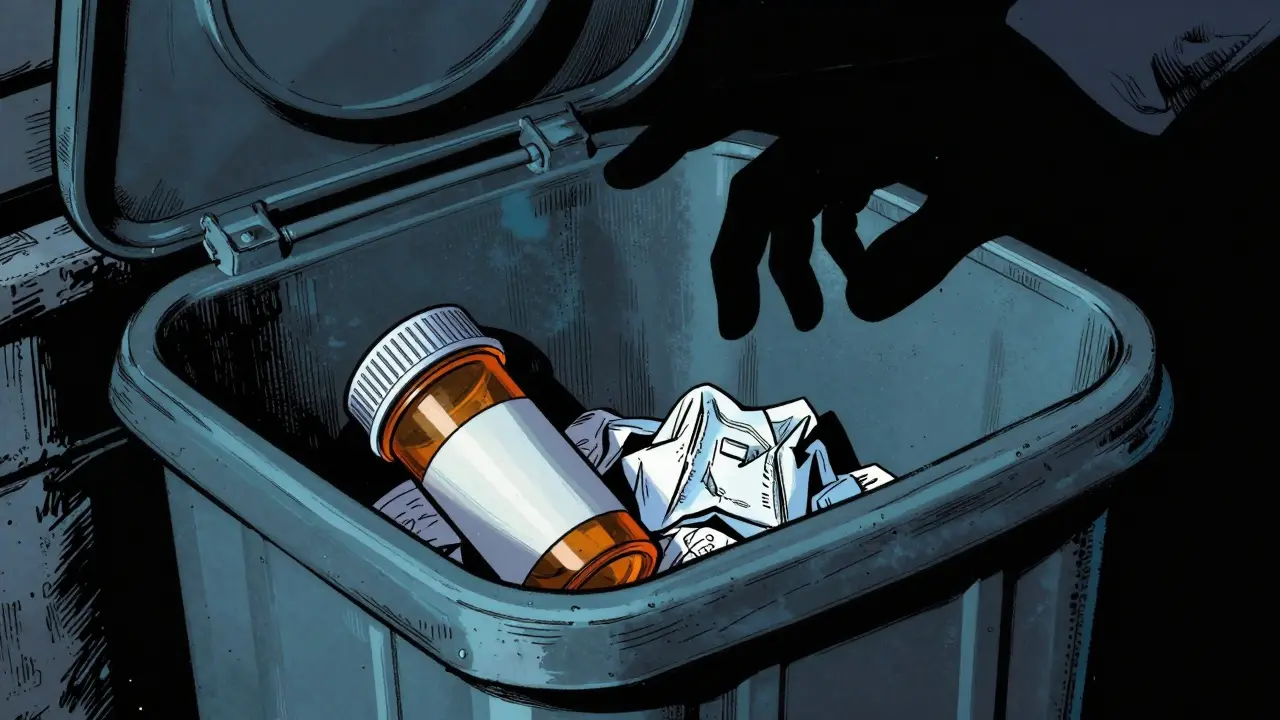
Imagine throwing away an old prescription bottle. It seems harmless enough, right? You toss it in the recycling bin and forget about it. But here is the uncomfortable truth: that empty container is a goldmine for identity thieves. It holds your name, address, date of birth, and even your doctor's details. This is why protecting your privacy when you throw away medicine is just as critical as taking the medicine correctly in the first place. You are not just getting rid of chemicals; you are securing your personal data from prying eyes.
Many people do not realize the risk until it is too late. A study published in the Journal of the American Pharmacists Association found that 42% of prescription bottles discarded in residential trash still had readable personal information. That is nearly half of all discarded containers. Someone digging through your trash could find enough details to open a credit card or access your medical records. The good news is that fixing this takes only a few minutes and a few simple tools.
Why Your Medicine Bottle Is a Privacy Risk
Prescription containers are designed to hold vital information for the patient. They need to list the drug name, dosage, and instructions. However, they also contain what is known as Protected Health Information (PHI). This includes your full name, your address, your date of birth, and often your pharmacy contact details. In the United States, regulations like the Health Insurance Portability and Accountability Act (HIPAA) mandate that this information must be safeguarded, even when the container is empty.
While you might live in Perth and not be subject to US law, the risk is universal. Identity thieves do not care about borders. They look for data points. Your prescription bottle provides a bundle of data that makes you a prime target. According to the HHS Office for Civil Rights, improper disposal of PHI on prescription containers represents one of the top 10 privacy violation risks in healthcare today. This is not just about embarrassment; it is about financial security and medical safety.
Consider the case of a user on Drugs.com who reported identity theft after improperly disposing of an opioid prescription container. A stranger found the bottle in the trash, used the information on the label to get more pills, and the user discovered $1,200 in fraudulent charges on their insurance. This scenario highlights that the threat is real and the consequences can be costly.
The Step-by-Step Privacy Protocol
Disposing of medication safely requires a specific routine. You cannot simply toss the bottle. You need to render the personal information unreadable before the container leaves your home. The FDA and EPA recommend a five-step process that ensures both the medication is safe and your data is hidden. This process takes about 5 to 7 minutes per container.
- Remove the medication: Take your prescription drugs out of their original containers. Do not put the pills back in later. If you are disposing of the pills, mix them with an undesirable substance like cat litter or used coffee grounds. This makes them less appealing to children or pets and prevents accidental ingestion.
- Prepare the mixture: Put the mixture of medication and undesirable substance into a disposable container with a lid. Seal it tight. This prevents the drugs from leaking into the environment.
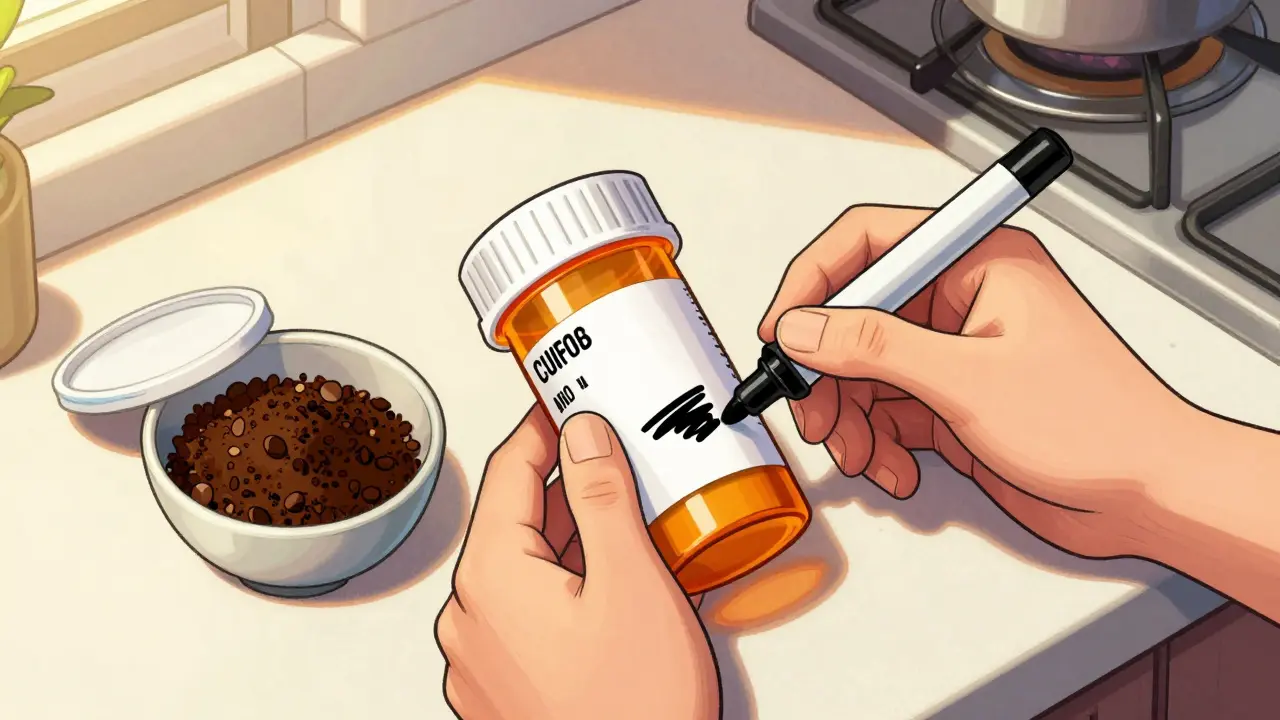
- Destroy the label: This is the most critical privacy step. You must scratch out all personal information on the prescription label. Use a permanent marker to black out the name, address, and Rx number. Alternatively, you can peel the label off entirely and tear it into small pieces.
- Conceal the container: If you cannot remove the label, cover it with duct tape or a permanent marker. Make sure no text is visible from any angle. The goal is to make the information unreadable to anyone who picks up the bottle.
- Dispose of the container: Place both the sealed medication mixture and the empty, sanitized container in your regular trash. Do not put them in recycling unless you have completely removed and destroyed the label.
Pharmacists at CVS Health reported that proper privacy protection adds only 2 to 3 minutes to the disposal process compared to simply throwing medications away. This small investment of time saves you from potential months of dealing with identity theft.
Comparing Disposal Methods
Not all disposal methods offer the same level of privacy. Some are better for the environment, while others are better for your data security. Understanding the trade-offs helps you choose the right path for your specific situation.
| Method | Privacy Protection | Environmental Impact | Accessibility |
|---|---|---|---|
| Drug Take-Back Programs | High | High | Medium |
| Mail-Back Envelopes | High | Medium | High |
| Deactivation Pouches | Medium | Medium | High |
| Trash Disposal | Low | Low | High |
Drug Take-Back Programs are collection events or permanent drop-off locations operated by law enforcement agencies and pharmacies. These provide the highest privacy protection. When you drop off medication here, it is destroyed without personal information being accessible to unauthorized parties. The DEA's National Prescription Drug Take Back Day held twice annually collected over 821,000 pounds of medications in 2024. This demonstrates that thousands of people trust this method to handle their sensitive data securely.
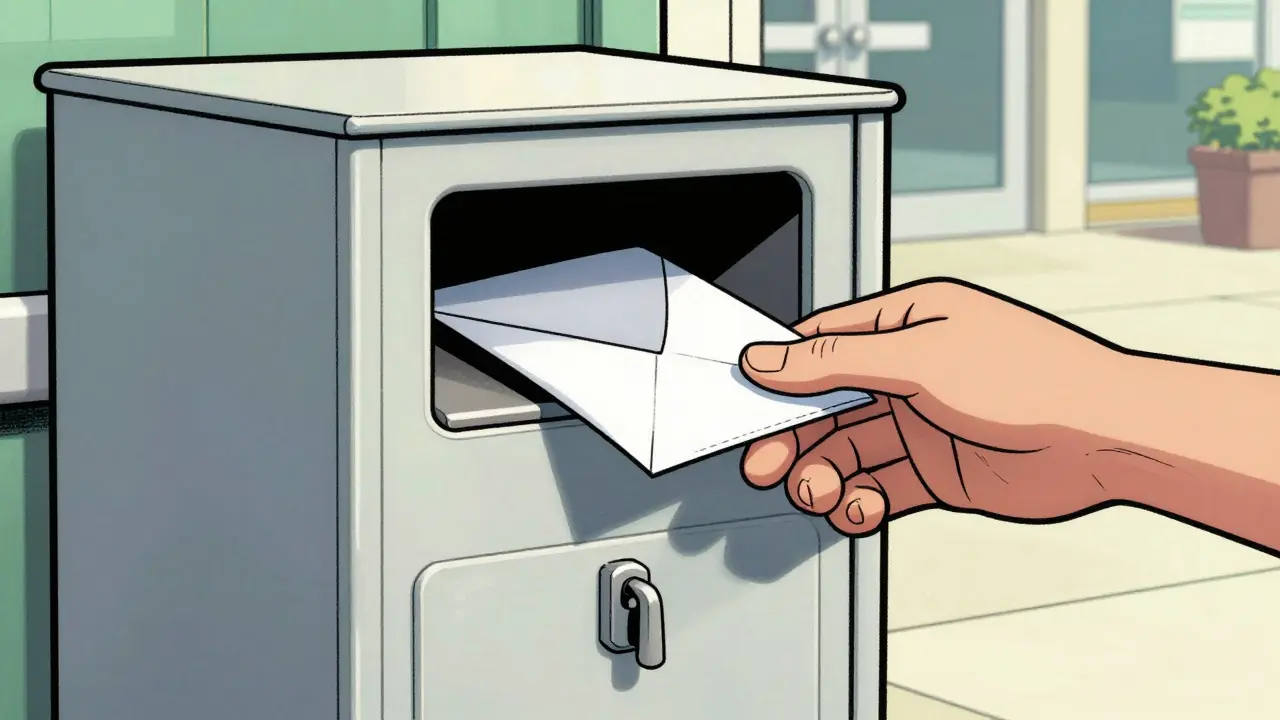
Mail-Back Envelopes are pre-paid envelopes available from retailers like Walgreens that allow you to send medication directly to disposal facilities. These offer strong privacy protection because the medication is mailed directly without personal information exposure. Costs range from $2.99 to $6.99 per envelope. This is a convenient option if you live far from a drop-off site.
Pharmaceutical Deactivation Pouches are products containing activated carbon that neutralize medications while allowing privacy protection through complete destruction of the original medication form. Brands like DisposeRx have been available since 2014. These pouches chemically alter medications, making them safe to throw in the trash. However, you still need to destroy the label on the bottle separately. Prices are approximately $1.50 to $3.00 per unit.
Traditional trash disposal is the last resort. It provides the lowest privacy protection unless you meticulously follow all privacy steps. The Mayo Clinic Health System reported in 2022 that 68% of patients fail to properly remove personal information from prescription containers when using this method. If you must use trash, be extra vigilant with the label.
Special Cases: The Flush List
There are rare situations where you should not wait for a take-back program. The FDA maintains a Flush List of specific medications that should be immediately disposed of via flushing rather than take-back programs due to high risk of accidental ingestion. As of May 2023, this list includes 15 specific medications. These drugs are so dangerous if taken by mistake that the environmental risk is outweighed by the safety risk to humans and pets.
If you have a medication on this list, the priority is immediate disposal. You still need to protect your privacy. Even when flushing, you should remove the label from the bottle before throwing the empty container away. Do not flush the bottle itself. Only flush the pills if the instructions specifically say so. For most other drugs, flushing is not recommended as it can contaminate water systems. The EPA documented 3.2 million pounds of pharmaceuticals entering U.S. water systems annually in their 2023 report.
Tools to Make Privacy Easier
Knowing what to do is one thing; doing it consistently is another. A 2023 University of Michigan study reported that 47% of users find it difficult to remove labels from plastic containers. This friction leads to skipped steps. Fortunately, there are tools designed to make this process smoother.
Permanent markers specifically designed for label destruction, such as Sharpie Industrial markers, are effective at blacking out text. They are priced at around $4.99 per pack. These markers penetrate the plastic and ensure the text underneath is not visible even if the ink is scratched off.
Smartphone apps like DisposeRx's free tool can also help. They identify whether medications are on the FDA Flush List. This removes the guesswork. You scan the bottle, and the app tells you the safest disposal method. Learning curve analysis by the National Community Pharmacists Association shows that patients typically require 2 to 3 disposal attempts to consistently implement proper privacy protection. Using these tools can shorten that learning curve significantly.
Common Challenges and Solutions
Even with the best intentions, people struggle. A Reddit thread in the r/Pharmacy community titled 'How many of you actually scratch off your name from pill bottles?' received 287 responses. 63% of users admitted they 'sometimes forget' or 'don't bother' with privacy protection steps. This is a common human error, not a moral failing. The system is designed to be simple, but life gets busy.
One solution is to create a dedicated disposal station in your bathroom or kitchen. Keep a permanent marker and a small trash bin there. When you finish a bottle, deal with it immediately. Do not let it sit on the counter. Another solution is to involve family members. If you are disposing of medication for an elderly parent, make sure they understand the privacy risk. A Kaiser Family Foundation survey found that 37% of adults aged 65+ report confusion about proper privacy protection steps.
Privacy expert Dr. Rebecca Bollinger from Johns Hopkins University expressed concerns that current disposal guidelines create unnecessary complexity for elderly patients. To simplify, remember the core rule: If it has your name on it, it cannot go in the trash without being destroyed. Keep the process simple. Scratch, mix, seal, throw.
The Bigger Picture of Safety
Protecting your privacy during medication disposal is part of a larger safety ecosystem. It intersects with environmental protection and public health. The global pharmaceutical waste management market is projected to grow to $3.12 billion by 2030. This growth is driven partially by increasing privacy concerns. As more people realize the risk, the industry is responding with better solutions.
Regulatory developments include amendments to the Secure and Responsible Drug Disposal Act, which expanded authorization for mail-back programs. The healthcare industry has seen significant adoption of privacy-focused disposal solutions, with 87% of chain pharmacies now offering take-back programs as reported by Drug Topics magazine in January 2024. This means you have more options than ever before.
Industry analysts at Frost & Sullivan predict that integrated privacy-protection features will become standard in medication disposal products by 2026. We are moving toward a future where disposing of medicine is as secure as shredding a bank statement. Until then, the responsibility lies with us. By taking a few minutes to protect our data, we protect our financial future and our peace of mind.
Do I need to throw away the whole bottle?
No, you do not need to throw away the whole bottle if you remove the label. You can recycle the plastic bottle if you completely peel off and destroy the label. If you cannot remove the label, you must throw the bottle in the trash to prevent identity theft.
What if I don't have a take-back program near me?
If a take-back program is not available, use the at-home disposal method. Mix the medication with cat litter or coffee grounds, seal it in a container, and destroy the label on the bottle before placing both in the trash. You can also order mail-back envelopes online for secure shipping.
Is it safe to flush medication down the toilet?
Only flush medication if it is on the FDA Flush List. This list includes drugs with high abuse potential or risk of fatal overdose. For most other medications, flushing is not recommended as it harms the environment. Check the label or ask your pharmacist.
How do I know if my information is readable on the bottle?
Hold the bottle up to a light. If you can see any text through the plastic or the ink you used to cover it, it is not safe. You need to use a permanent marker to black out the text completely or peel the label off entirely.
Can I reuse the pill bottle for other things?
It is not recommended to reuse pill bottles for food or other medications. Even if you clean them, residue may remain. If you reuse them for non-medical items, ensure the label is completely removed to avoid confusion.



Chris Crosson
I will be making sure to black out the labels next time. The step by step guide makes the process seem much easier than before. I plan to use the permanent marker method described. It is good to know the specific risks involved here. I think everyone should try this routine. Safety is definitely a priority for me.
Linda Foster
It is imperative that individuals adhere to these guidelines strictly. The protection of personal health information is a serious matter. One should not underestimate the capabilities of modern data thieves. Compliance with these disposal protocols is essential for safety. We must all take this responsibility seriously.
Chris Farley
Privacy is a concept that died decades ago anyway. We are all being tracked regardless of the bottle label. This is just fear mongering to sell more disposal tools. People need to stop worrying about things they cannot control. The system is flawed from the start.
Caroline Bonner
I have been thinking about this for a long time now! It is truly amazing how much data we leave behind. We often forget the implications of our daily actions! The plastic bottle itself is not the problem. The label is the actual danger zone for everyone. I remember reading about identity theft cases recently. It is quite frightening to consider the possibilities! We need to be more vigilant in our homes. The steps outlined here are very thorough indeed! I will definitely be changing my routine from now on. Mixing the medication with coffee grounds is a clever idea. It ensures that no one can accidentally ingest them! We should also consider the environmental impact too. There is a balance between safety and nature. I appreciate the detailed breakdown provided in the text. It really helps to understand the why behind the how! We must take responsibility for our own digital footprints. This applies to all of us regardless of location. I hope more people see this information soon! It is better to be safe than sorry in this world.
Jacob Hessler
i dont get why ppl bother with the label stuff trash is trash u know just throw it away and dont worry bout it no one cares that much about ur name on a bottle
Amber Gray
identity theft is real so keep your info safe 😱🛡️
Jefferson Moratin
The intersection of medical waste and data security presents a unique challenge. Proper disposal mitigates risk significantly. One must weigh the environmental cost against the privacy benefit. The proposed methods offer a viable solution for both concerns. It is a logical approach to a complex issue.
Katie Putbrese
People really need to step up and take responsibility for their actions. It is not hard to scratch out a name with a marker. The laziness displayed by many is truly disappointing. We should all be better citizens regarding our data. Ignorance is not an excuse for negligence.
Elaine Parra
You are completely ignoring the security risks involved here. This negligence puts everyone in danger. Stop being lazy about your personal information. It is your fault if someone steals your identity. I cannot believe people still make this mistake.
Marissa Staples
I guess that makes sense to me. It seems like a good idea to protect yourself. I might try doing that when I have extra time. Nothing bad has happened to me yet though.
Mihir Patel
This is so heartbreaking to read honesty. I feel like my whole life is in dnger right now. The world is just so scary with all these risks. I am going to cry because of this information. I need to know I am safe from this.
Grace Kusta Nasralla
It feels heavy knowing this information exists. The thought of someone finding my data is unsettling. I hope everyone stays safe out there. It is a burden to carry this knowledge.