
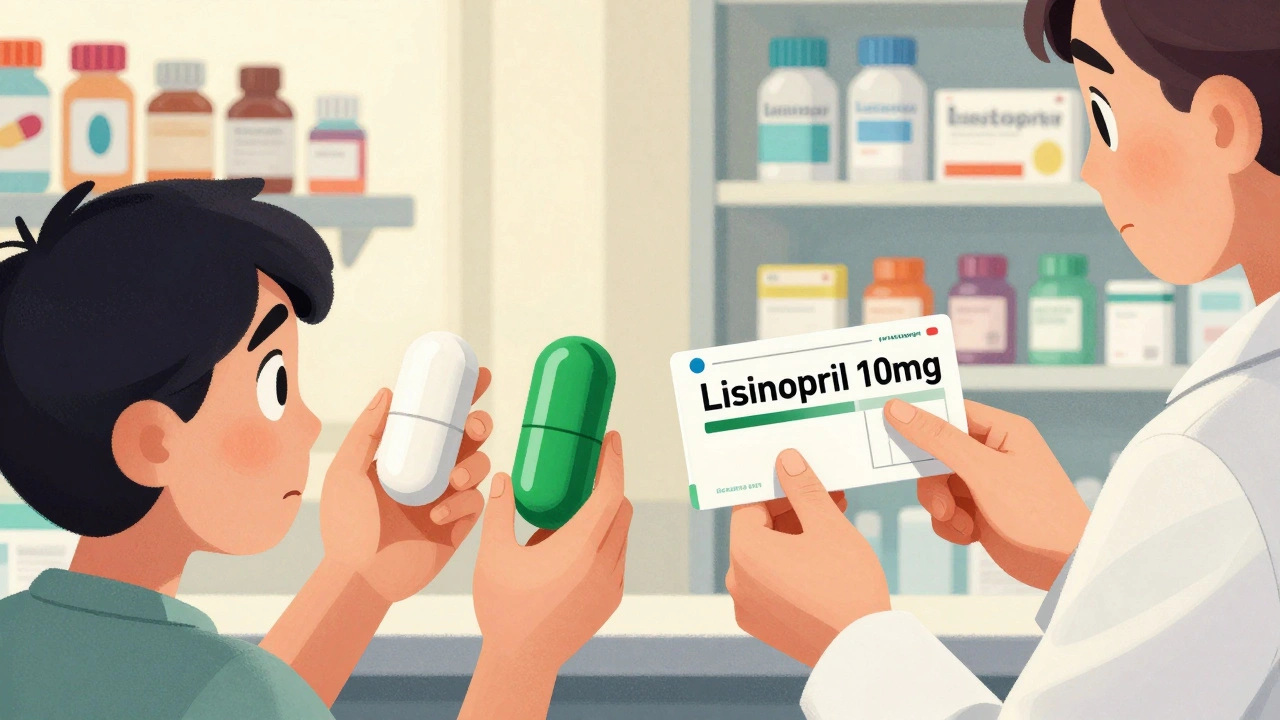
You’ve picked up your prescription again, but the pill looks nothing like last time. Maybe it’s a different color, shape, or size. You pause. Did you get the wrong medicine? Is this safe? The answer is yes - it’s safe. And no, you didn’t get the wrong drug. What you’re seeing is the result of trademark laws, not a mistake.
Why Can’t Generic Drugs Look the Same?
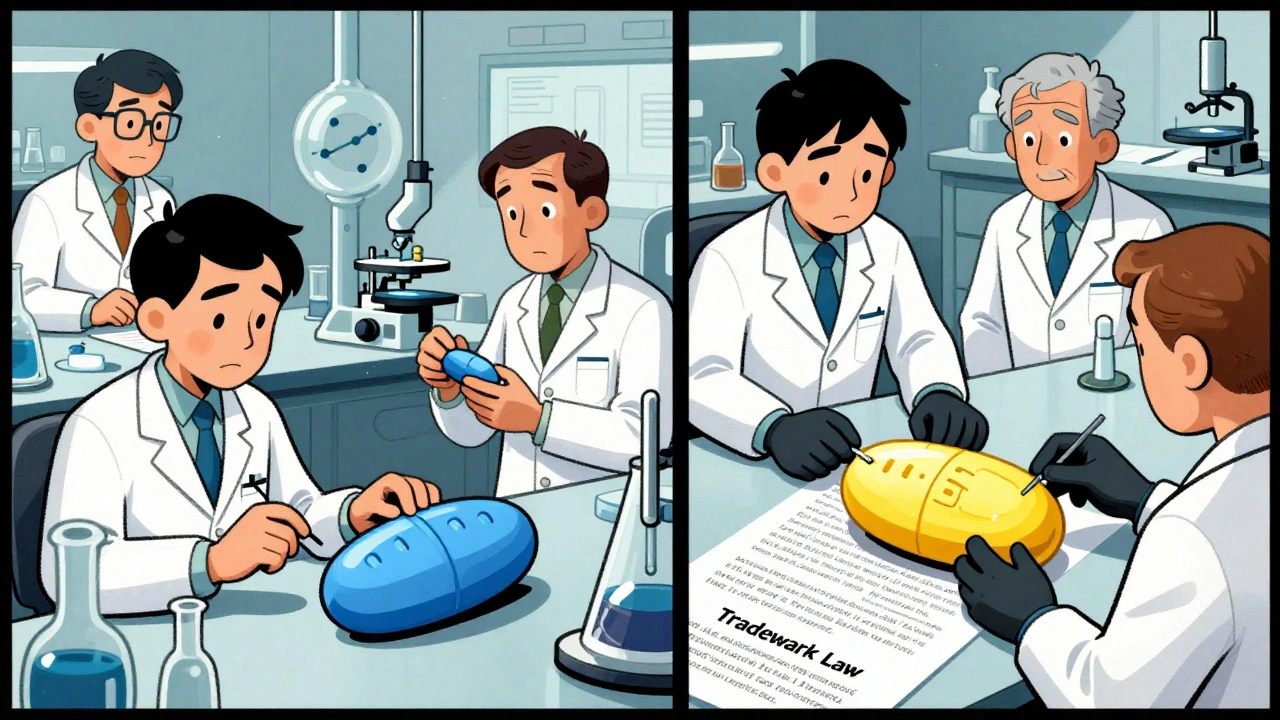
Generic drugs are chemically identical to their brand-name counterparts. They contain the same active ingredient, work the same way in your body, and meet the same safety and effectiveness standards. So why do they look different? Because U.S. trademark law says they can’t look the same.Trademark laws protect the visual identity of products - including pills. When a drug company invents a new medication, they invest millions in designing its appearance: the exact shade of blue, the oval shape, the score line down the middle. That look becomes part of their brand. Once the patent expires, other companies can make the same drug, but they can’t copy the look. If they could, patients might confuse one company’s pill for another’s. That’s not just confusing - it’s dangerous.
The U.S. Food and Drug Administration (FDA) makes this clear: “Trademark laws in the United States do not allow a generic drug to look exactly like other drugs already on the market.” It’s not about quality. It’s about legal boundaries. Generic manufacturers must prove their drug works the same - but they must also make sure it doesn’t look like the original.
What Parts of the Pill Change?
The differences you notice aren’t random. They’re carefully chosen to meet legal rules while keeping the drug effective. Here’s what changes between brand-name and generic versions:- Color - The most obvious change. A brand-name pill might be white, while the generic is yellow or light green.
- Shape - Round, oval, capsule - all can differ. One brand might use a capsule; the generic might be a tablet.
- Size - Generics can be slightly larger or smaller, even if the active ingredient is the same.
- Scoring - The line you use to split a pill might be missing, moved, or changed.
- Flavoring or coating - For chewable or liquid forms, taste and texture can vary.
All of these are inactive ingredients - things that don’t affect how the drug works. They’re fillers, dyes, binders, or coatings. The FDA allows these changes because they don’t impact safety, strength, or how your body absorbs the medicine.
Studies show the difference in how your body processes the drug is tiny - usually less than 3.5%. The FDA’s acceptable range for bioequivalence is 80% to 125%. That means even if absorption varies slightly, it’s still within the safe and effective zone.
Why Does This System Exist?
This rule isn’t arbitrary. It came from a balance between two important goals:- Protect innovation - Brand-name companies spend billions developing new drugs. Trademark protection gives them a way to stand out and recoup costs.
- Encourage competition - Once a patent expires, generics enter the market. They’re cheaper - often 80% to 85% less expensive. That saves patients and the healthcare system billions every year.
Without this rule, generic manufacturers could copy the exact look of a brand-name drug and pass it off as the original. That would hurt the innovator’s brand and confuse patients. The current system lets multiple companies sell the same drug - but each one has to make their version visually unique.
It’s also why you might see two different generics for the same drug. One might be round and blue; another might be oval and white. Both are legal. Both work the same. They just look different because they’re made by different companies.
Patient Confusion Is Real - And Managed
Here’s the downside: people get confused. You’ve been taking a white oval pill for years. Then your refill comes in a green capsule. Your brain says, “This isn’t right.”A 2023 survey by UMass Memorial Health found that nearly 40% of patients reported anxiety or confusion when their generic pill changed appearance. Some even stopped taking their medicine because they thought it was wrong. That’s a serious problem - especially for older adults or those on multiple medications.
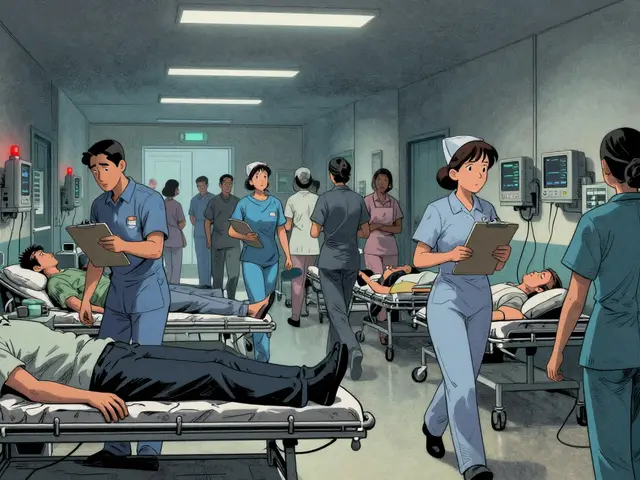
But pharmacies know this. That’s why they put clear labels on every bottle. The label doesn’t just say the drug name - it tells you the manufacturer and what the pill looks like now. Many pharmacies also give you a small card or printed sheet explaining the change.
Pharmacists are trained to point out these changes when you pick up your prescription. They’ll say, “This one’s different, but it’s the same medicine.” If you’re unsure, ask. Don’t guess.
What You Should Do When Your Pill Looks Different
It’s simple: check the label. Don’t assume the pill is wrong just because it looks different. Here’s what to do:- Look at the name on the bottle. Is it the same drug? Yes? Good.
- Check the dosage. Is it still 10 mg? 25 mg? Same as before? Good.
- Read the label description. It should say the shape, color, and imprint (the letters or numbers on the pill).
- Compare it to your last refill. If it’s different, that’s normal.
- If you’re still unsure, call your pharmacy. They’ll confirm it’s correct.
You can also check the FDA’s online database for approved generics. Just search the drug name and you’ll see all the approved versions - including their colors and shapes. It’s a free, reliable tool.
Are Generics Really the Same?
Yes. Absolutely.The FDA requires generic manufacturers to prove their drug is bioequivalent to the brand-name version. That means it must deliver the same amount of active ingredient into your bloodstream at the same rate. The testing is strict. The review is thorough. And the FDA inspects every manufacturing facility - whether it’s for brand or generic.
Over 90% of prescriptions in the U.S. are filled with generics. That’s more than 3 billion prescriptions a year. And studies show patients get the same results - whether they take the brand or the generic.
One 2022 Consumer Reports survey found that 89% of users said their generic medication worked just as well as the brand. No difference in effectiveness. No increase in side effects. Just lower cost.
What’s Changing in the Future?
The FDA has noticed the confusion. In recent years, they’ve started recommending that generic manufacturers make their pills as close as possible in size and shape to the brand-name version - while still staying legally distinct.For example, if the brand is a white oval pill, the generic might be a white oval too - but with a different imprint or a tiny color shift. This helps reduce patient anxiety without breaking trademark rules.
Some countries, like Canada and the UK, have even stricter rules. In those places, generics must match the brand’s appearance unless there’s a medical reason not to. The U.S. is watching. Changes may come.
For now, the system works. Generics save money. They’re safe. And the appearance differences? They’re not a flaw - they’re a legal requirement designed to protect both patients and innovators.
Final Thought: Trust the Label, Not the Look
Your pill’s color doesn’t determine its power. Its name and dosage do. If you’ve been told to take a 10 mg tablet of lisinopril, it doesn’t matter if it’s blue, white, or green. As long as the label says lisinopril 10 mg, you’re getting the right medicine.Don’t let the look scare you. Talk to your pharmacist. Check the label. And remember - the system is built to keep you safe, even when the pill looks different.

Audrey Crothers
Just got my generic lisinopril today-turned from white oval to light green capsule. At first I panicked, called my pharmacy, and they laughed and said, ‘Yep, same drug, different wrapper.’ 😅 Seriously, if you’re confused, just ask. Pharmacists are lifesavers.
Laura Weemering
It’s not just trademark law-it’s corporate theater. The FDA? Complicit. The brand-name companies? They’ve spent decades conditioning us to equate color and shape with efficacy. You think this is about safety? Nah. It’s about brand loyalty, psychological branding, and keeping generics from looking ‘too similar’ to the original-so you’ll keep paying $200 for a pill that costs 50 cents to make.
And don’t get me started on the ‘imprint’ loophole-where they add a tiny ‘L10’ or ‘G35’ like it’s some secret code. Who reads that? Grandmas? People on 12 meds? It’s a design flaw disguised as regulation.
Meanwhile, Canada and the UK make generics look identical. Why? Because they don’t treat medicine like a fashion brand. Here? We’re forced to treat our prescriptions like IKEA furniture-assembly required, instructions unclear, and the manual’s in another language.
And yet, we’re told to ‘trust the label.’ But what if the label’s wrong? What if the pharmacy misreads it? What if the pill looks nothing like the one you’ve taken for 8 years-and your brain refuses to accept it? That’s not safety. That’s psychological warfare disguised as policy.
I’ve seen people stop taking their meds because the pill looked ‘wrong.’ That’s not a legal issue. That’s a public health crisis. And nobody’s fixing it.
They’ll say, ‘But generics are bioequivalent!’ Yes. But bioequivalence doesn’t fix the trauma of seeing your daily ritual changed without warning. You don’t get a memo when your antidepressant turns from blue to yellow. You just feel… betrayed.
And the FDA’s ‘recommendations’? Too little, too late. They’re not enforcing anything. They’re just… watching. Waiting. Hoping we’ll get used to it.
It’s not about trademarks. It’s about control. And we’re the ones paying for it-with our anxiety, our confusion, and sometimes, our lives.
Rob Purvis
Just want to say: I love how this post breaks it down. I’m a pharmacist’s assistant, and I see this confusion every day. People come in, eyes wide, holding their pill like it’s a bomb. We always show them the FDA’s online database-search the drug, see all the versions, compare images. It’s free, it’s official, and it’s way easier than people think.
Also, if your pill changes color? Don’t panic. Do this: check the bottle, check the name, check the dose, check the imprint. If those match? You’re good. The color? Just a dye. The shape? Just a mold. The pill’s still doing its job.
And hey-if you’re still unsure, call your doc. Or your pharmacist. No shame. Better safe than sorry.
Also, generics are 90% of prescriptions for a reason. They work. They’re safe. And they’re saving people thousands. Let’s not scare folks out of taking them because of aesthetics.
Stacy Foster
EVERYTHING is a scam. The FDA? Owned by Big Pharma. The ‘bioequivalence’ standards? Made up. The color changes? They’re hiding different fillers-silica, talc, even gluten-so you don’t know what you’re really swallowing. That’s why you feel ‘off’ after switching. It’s not your imagination. It’s the fillers. And they don’t have to list them all. Ever heard of ‘inert ingredients’? That’s just corporate speak for ‘we don’t want you to know what’s in it.’
They say it’s safe? Prove it. Where’s the long-term study on 50-year-olds switching generics every 3 months? Nowhere. Because they don’t want you to know.
And don’t get me started on the ‘imprint’-that’s a tracking chip. Seriously. Microchip. For surveillance. You think they’d let you take a pill with a number on it if it wasn’t monitoring you?
Wake up. This isn’t about trademarks. It’s about control. And they’re using your fear of the unknown to keep you docile.
Reshma Sinha
As someone from India where generics are the norm, I can say this: the system works. We’ve been using generics for decades-different colors, shapes, names-and no one dies. In fact, people live longer because they can afford meds. The ‘look’ doesn’t matter. The active ingredient does.
Here’s the real issue: education. People panic because no one taught them to read the label. Teach them. Show them the FDA database. Give them a simple chart: ‘Same drug, different look.’ Done.
Also, generics are not ‘cheap.’ They’re ‘accessible.’ And that’s powerful.
Stop fearing the color. Start trusting the science.
nikki yamashita
My grandma switched from blue to yellow metoprolol and thought she was dying. I showed her the label. She’s fine now. 😊
wendy b
Actually, the FDA's guidelines are quite clear, and the bioequivalence thresholds are rigorously enforced. You're conflating trademark law with pharmacological efficacy. The two are orthogonal. The color change? It's a legal artifact, not a clinical one. And yes, I've read the 2022 Consumer Reports meta-analysis-89% efficacy parity. The data is overwhelming. If you're still skeptical, perhaps you should consult a peer-reviewed journal instead of Reddit memes.
Robert Webb
I’ve been a nurse for 22 years, and I’ve seen patients refuse meds because the pill looked different. It’s heartbreaking. But here’s what I tell them: ‘The medicine inside doesn’t care what color it is. It only cares that it’s the right dose.’
And honestly? I think this system is kind of brilliant. It protects innovation-so companies keep developing new drugs-but it also lets generics flood the market, so people who can’t afford $500 pills can still live. That’s not a flaw. That’s a balance.
Yes, the appearance changes confuse people. But that’s a communication problem, not a legal one. We need better labeling. Better pharmacist training. Better patient education. Maybe even QR codes on pill bottles that link to a video explaining the change.
And for those who say ‘it’s a scam’? Look at the numbers. 90% of prescriptions are generics. If they didn’t work, hospitals would be full of people who stopped taking their meds. They’re not. People are living longer, healthier lives because of generics.
So yes, the pill looks different. But your health? Still protected.
Lawrence Armstrong
Just checked my last refill-same generic, different color. Looked it up on FDA’s site. Yep, approved. ✅
Also, here’s a pro tip: download the ‘Pill Identifier’ app. Takes a pic of your pill, tells you what it is. Saved me 3 times.
Stay calm. Check the label. You got this. 💊