
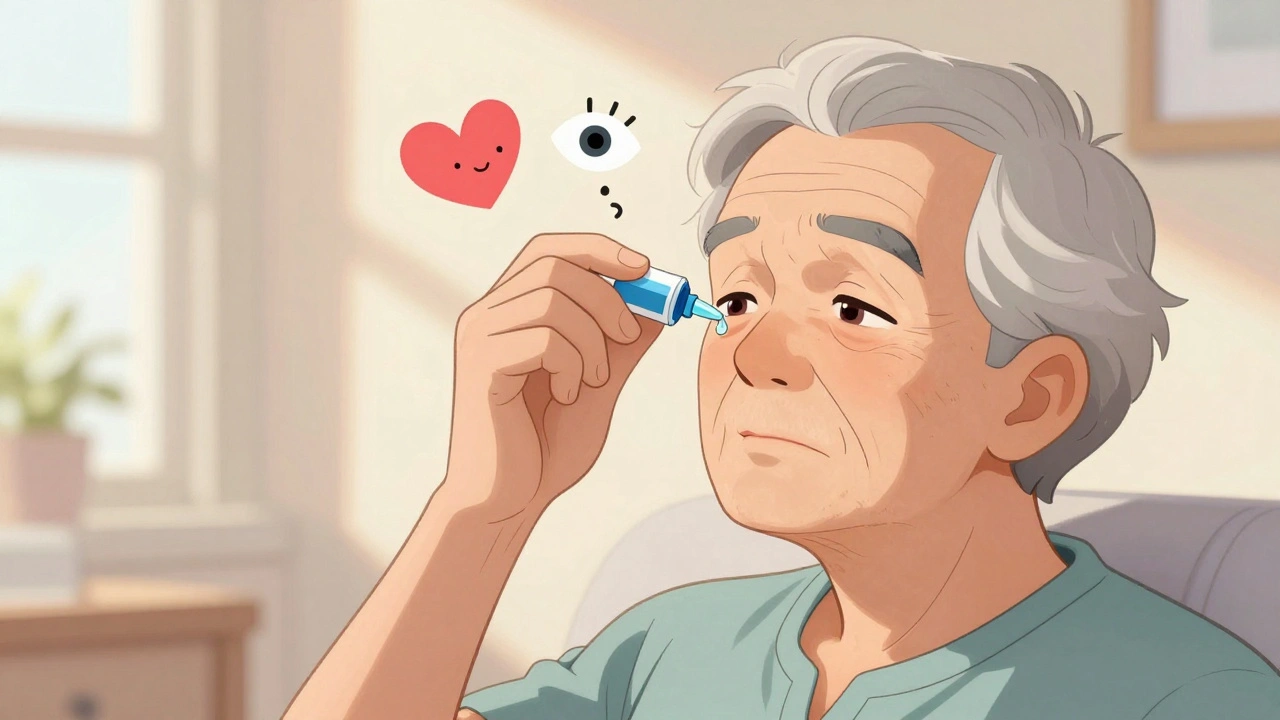
When your doctor hands you a prescription for betaxolol, it’s easy to feel confused. Is this for your eyes? Your heart? Why are you getting eye drops for something that sounds like a heart medicine? The truth is, betaxolol does both - and knowing how it works for each use can make all the difference in how you take it, what side effects to watch for, and how to get the most out of your treatment.
What Betaxolol Actually Is
Betaxolol is a beta blocker - a class of drugs that slow down your heart rate and reduce pressure in your blood vessels. But unlike older beta blockers like propranolol, betaxolol is more selective. It mostly targets beta-1 receptors, which are found in the heart and kidneys. That means it’s less likely to affect your lungs, making it safer for people with asthma or COPD.
There are two main ways betaxolol is used: as an eye drop for glaucoma, and as a pill for high blood pressure. They’re the same medicine, but the delivery method changes everything.
Why Eye Drops? The Glaucoma Connection
Glaucoma isn’t just about blurry vision. It’s a slow, silent damage to the optic nerve, usually caused by high pressure inside the eye. Left untreated, it can lead to permanent blindness. Betaxolol eye drops work by reducing how much fluid your eye produces. Less fluid = lower pressure = less risk of nerve damage.
Most patients use one drop in the affected eye once a day, usually in the morning. It’s not a quick fix - you won’t feel the pressure drop. That’s why regular eye exams are non-negotiable. Your doctor checks your eye pressure, not your symptoms.
Some people notice a slight stinging or blurry vision right after applying the drops. That usually fades in under a minute. If it lasts longer, or if your eyes become red, swollen, or painful, call your eye doctor. It could be an allergic reaction or an infection.
When Betaxolol Is Taken as a Pill
If you’re taking betaxolol tablets, it’s likely for high blood pressure or sometimes heart rhythm issues. The goal here is to lower your heart rate and reduce the force of your heart’s contractions. That takes pressure off your arteries and helps prevent heart attacks and strokes.
Typical doses range from 5 mg to 20 mg once daily. Your doctor will start low and adjust based on your blood pressure readings and how you tolerate it. Don’t change the dose yourself. Even small changes can cause dizziness or a dangerously slow heart rate.
Take it at the same time every day. Some people take it in the morning to avoid nighttime drowsiness. Others find it helps them sleep better because their heart isn’t racing. Talk to your doctor about what works best for your routine.
What You Might Feel - Side Effects Explained
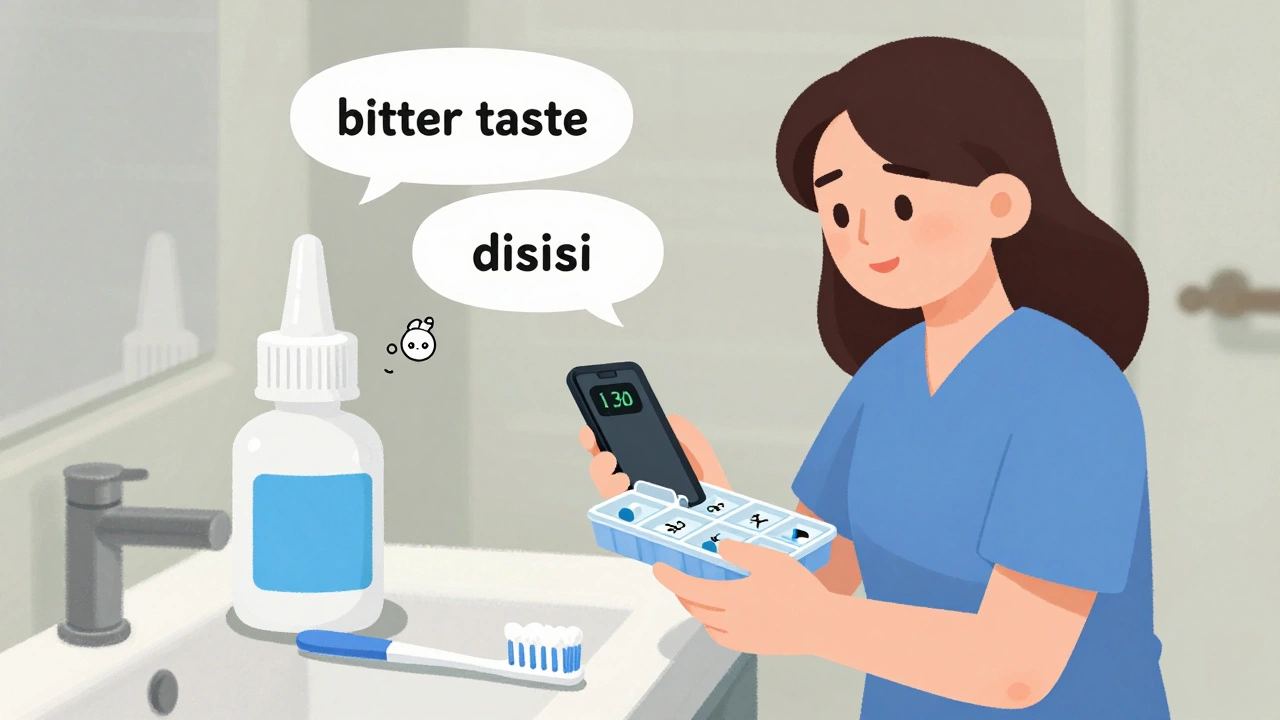
Side effects are common with any medication, but not everyone gets them. With betaxolol eye drops, most side effects are local: mild burning, dry eyes, or a bitter taste in your mouth after blinking. That bitter taste? It’s because the drops drain through your tear ducts into your throat. To reduce it, press gently on the inner corner of your eye for a full minute after applying the drop. That blocks the drainage.
With oral betaxolol, the most common side effects are fatigue, dizziness, or feeling cold in your hands and feet. These usually improve after a few weeks as your body adjusts. But if you feel faint when standing up, have trouble breathing, or notice your heart beating very slowly (less than 50 beats per minute), stop taking it and call your doctor right away.
Less common but serious side effects include worsening heart failure, depression, or sudden drops in blood sugar for people with diabetes. If you’re diabetic, check your blood sugar more often when starting betaxolol. It can hide the warning signs of low blood sugar, like a fast heartbeat or shaking.
How to Use Betaxolol Correctly
Using eye drops wrong is one of the biggest reasons they don’t work. Here’s the right way:
- Wash your hands first.
- Tilt your head back and pull down your lower eyelid to make a small pocket.
- Hold the bottle close to your eye - don’t touch your eye or eyelid with the tip.
- Squeeze out one drop. Close your eye gently. Don’t blink hard.
- Press the inner corner of your eye for 60 seconds to keep the medicine in your eye and out of your bloodstream.
- Wait at least 5 minutes before using any other eye drops.
For tablets:
- Take it with or without food - consistency matters more than timing.
- Don’t crush or split tablets unless your doctor says it’s okay.
- If you miss a dose, take it as soon as you remember. If it’s almost time for the next one, skip the missed dose. Never double up.
What to Avoid
Some things can make betaxolol less effective or more dangerous:
- Alcohol: It can lower your blood pressure even more, increasing dizziness and fall risk.
- NSAIDs like ibuprofen: These can reduce betaxolol’s effect on blood pressure. Use acetaminophen instead for pain relief.
- Other beta blockers: Never take another beta blocker with betaxolol unless your doctor specifically tells you to. It can slow your heart too much.
- St. John’s Wort: This herbal supplement can interfere with how your body breaks down betaxolol. Talk to your doctor before taking any herbs or vitamins.
When to Call Your Doctor
You don’t need to panic over every small change. But these signs need immediate attention:
- Sudden shortness of breath or wheezing
- Swelling in your ankles, feet, or hands
- Unexplained weight gain (more than 2 kg in a week)
- Severe dizziness, fainting, or chest pain
- Changes in vision - blurred vision, halos around lights, or eye pain
- Depression, confusion, or memory problems that get worse
If you’re on betaxolol for glaucoma and your vision suddenly gets worse, don’t wait. Go to the eye clinic. Glaucoma damage is often irreversible.
Working With Caregivers
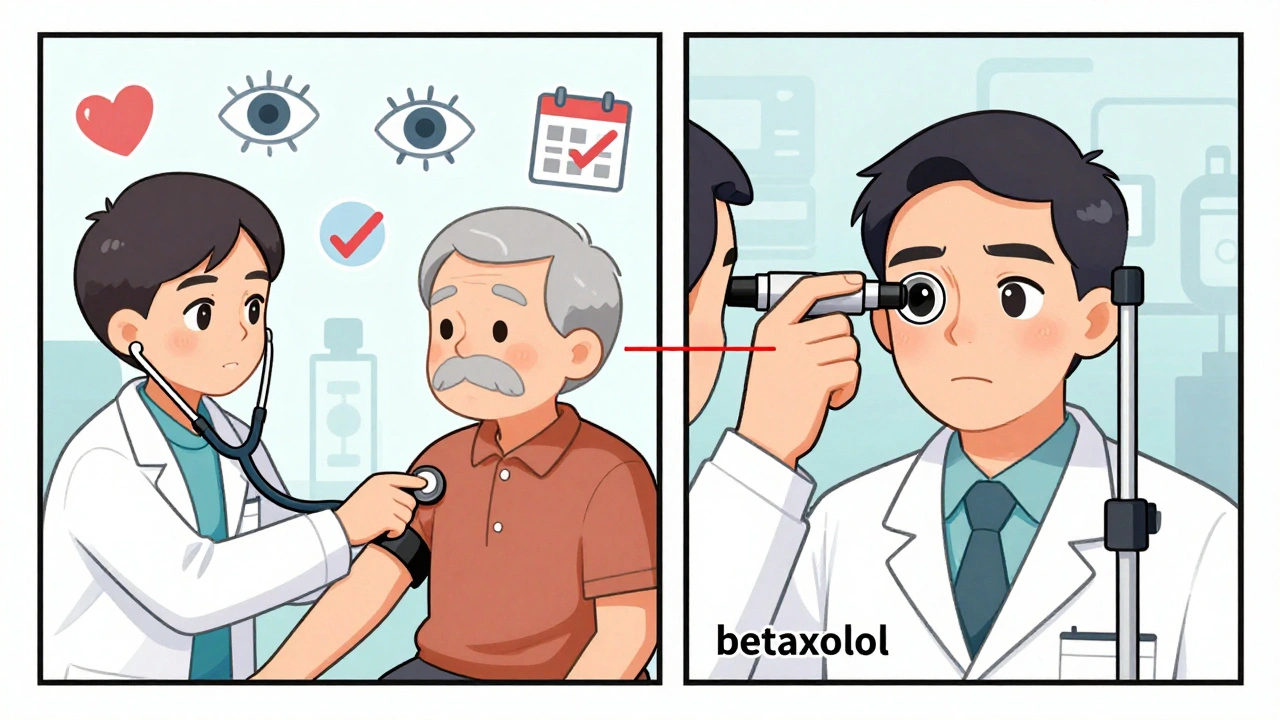
If you’re helping someone take betaxolol, your role is critical. Many older adults forget doses or mix up eye drops with other medications. Here’s how to help:
- Use a pill organizer with labeled compartments.
- Set phone alarms for eye drop times - morning and bedtime if needed.
- Keep the eye drop bottle in the same spot every day, like next to the toothbrush.
- Check the expiration date. Once opened, most eye drops last 28 days. After that, throw them out - even if there’s liquid left.
- Write down any side effects in a notebook. Bring it to appointments.
Also, remind them not to stop betaxolol suddenly. Stopping a beta blocker abruptly can cause a spike in blood pressure or trigger a heart attack. If they need to stop, it must be done slowly under medical supervision.
Alternatives and What Comes Next
Betaxolol isn’t the only option. For glaucoma, prostaglandin analogs like latanoprost are often more effective at lowering pressure and are used once daily. But they can change eye color or eyelash growth over time. For blood pressure, ACE inhibitors like lisinopril or calcium channel blockers like amlodipine are common alternatives.
Your doctor chooses betaxolol because it’s gentle on the lungs and works well for people with heart conditions. But if it’s not working after 3 months, or side effects are too much, there are other choices. Don’t assume you’re stuck with it.
Final Thoughts: Patience and Consistency
Betaxolol doesn’t give you instant results. For glaucoma, it can take weeks to see the full effect on eye pressure. For blood pressure, it may take a month to stabilize. The key is sticking with it - even when you feel fine.
Regular check-ups, tracking side effects, and knowing when to call your doctor are the real tools here. Betaxolol is a tool, not a cure. But when used right, it can protect your vision and your heart for years.
Can betaxolol eye drops affect my heart rate?
Yes, even though betaxolol eye drops are meant for the eyes, a small amount can be absorbed into your bloodstream. This can slightly lower your heart rate, especially if you’re already on other heart medications or have a slow heart rate to begin with. That’s why doctors check your pulse before prescribing it. If you feel unusually tired or dizzy after using the drops, tell your doctor.
Is betaxolol safe for older adults?
Betaxolol is generally safe for older adults, but they’re more sensitive to its effects. Lower doses are often used, especially for blood pressure. Eye drops are preferred for glaucoma in seniors because they have fewer systemic side effects than pills. Watch for dizziness, confusion, or falls - these can be signs the dose is too high.
Can I use betaxolol if I have asthma?
Unlike older beta blockers, betaxolol is considered safer for people with asthma because it’s selective for heart receptors. But it’s not risk-free. Some people still experience breathing trouble. Always tell your doctor about your asthma before starting betaxolol. If you notice wheezing or shortness of breath after using it, stop and seek help.
How long does it take for betaxolol to work for glaucoma?
It usually takes 2 to 4 weeks for betaxolol eye drops to reach their full effect in lowering eye pressure. You won’t feel this change - only an eye exam can confirm it. That’s why regular follow-ups with your eye doctor are essential. Don’t assume it’s not working if you don’t notice symptoms.
Can I drink coffee while taking betaxolol?
Caffeine can raise your blood pressure slightly, which might counteract betaxolol’s effect. It’s not dangerous, but if you’re trying to control hypertension, limiting coffee to one cup a day is wise. For glaucoma patients, caffeine doesn’t significantly affect eye pressure, so moderate intake is fine.
What happens if I stop betaxolol suddenly?
Stopping betaxolol abruptly - especially the oral form - can cause a rebound effect. Your blood pressure may spike dangerously, or your heart rate can race. In rare cases, this can trigger a heart attack. Always taper off under your doctor’s supervision. Never stop because you feel fine or think you don’t need it anymore.
If you’re managing betaxolol for yourself or someone else, remember: consistency beats perfection. Taking it daily, even when you feel fine, is what keeps your eyes and heart protected. Keep track, ask questions, and don’t hesitate to reach out to your healthcare team. Your health isn’t a one-time fix - it’s a daily habit.



Erin Nemo
Just started using the eye drops and holy crap, the bitter taste in my mouth is wild. Learned the trick about pressing the inner corner-life changer.
Suzanne Mollaneda Padin
My grandma’s been on betaxolol for glaucoma for 5 years now. She swears by the morning routine-eye drops right after brushing teeth. Never misses a day. I used to think she was being obsessive, but now I get it. Consistency really is everything.
Also, she keeps the bottle next to her coffee maker so she doesn’t forget. Genius move.
Debbie Naquin
It’s fascinating how a molecule can be repurposed across systems-ocular vs systemic-without structural change. The pharmacodynamics hinge entirely on delivery route and receptor density gradients. Beta-1 selectivity isn’t just clinical trivia; it’s evolutionary biochemistry in action.
But we treat it like a pill or drop, not a precision instrument. We’re still stuck in the 20th century of drug delivery.
ariel nicholas
Whoa-hold on. You’re telling me this $300-a-year drug is ‘safer’ for asthmatics? In America? With our $700 insulin? You think this is progress? We’re glorifying mediocrity because Big Pharma doesn’t want to innovate. Betaxolol’s just the ‘least bad’ option-and we’re calling it a win?
Meanwhile, in Canada, they’ve got cheaper generics. In India, they’re developing targeted nanocarriers. And here we are, praising a 1980s beta-blocker like it’s a miracle.
amit kuamr
My cousin in Delhi uses this for pressure. No problem. But he takes it at night. Says it helps him sleep. No dizziness. No fatigue. Maybe it's the climate. Or maybe Americans overthink everything.
Also, why are you so scared of coffee? I drink 4 cups a day. Still alive.
Rachel Stanton
As a nurse who’s helped dozens of elderly patients manage glaucoma meds, I can’t stress enough: the 60-second pressure trick is non-negotiable. Most patients don’t do it because they don’t know-and it’s not the patient’s fault. We don’t explain it well enough.
Also, if you’re on oral betaxolol and your heart rate drops below 50, don’t panic-but do call your provider. It’s not always dangerous, but it’s a signal. Track your resting pulse weekly. Use your phone’s health app. Small habits prevent big crises.
And caregivers: write down side effects. Not just ‘felt tired.’ Write: ‘Felt dizzy after lunch on Tuesday, improved by 4 PM.’ That’s the data your doctor needs.
elizabeth muzichuk
I read this and I just… cried. My mom died from glaucoma because she stopped her drops because she ‘felt fine.’ She didn’t know it was silent. She didn’t know it was stealing her sight one drop at a time.
Don’t be like my mom. Don’t wait until you can’t see your grandkids’ faces. Take the drops. Even when you’re mad. Even when you’re tired. Even when you think it’s not working.
She’s gone. I’m here. Don’t let this be you.
❤️
Karandeep Singh
betaxolol for eyes? lol i used it once and my heart felt weird. i thought it was my coffee. turns out it was the drops. dont trust these meds
Margaret Stearns
I’m 78 and I take the pills. I forgot to take mine one day and felt like I was going to pass out. Never again. I set a reminder on my phone. It says ‘Heart Time.’ Simple. Works.
Also, I use the eye drops for my other eye. My doctor said it’s fine. Is that okay?
Amber-Lynn Quinata
Okay but why is no one talking about the fact that this drug is literally designed to make you feel worse so you’ll keep taking it? 😏
Fatigue? Dizziness? Dry eyes? That’s not a side effect-that’s a feature. Big Pharma wants you dependent. You think they’d make a drug that just… fixes you? Nah. They want you coming back every month. 😒
And don’t even get me started on St. John’s Wort. I’ve been using it for 10 years. My therapist says it’s ‘holistic.’ You’re just scared of natural healing. 🙄
Also, I stopped my pills cold turkey last year. No rebound. I’m fine. You’re all just brainwashed.
Scotia Corley
It is imperative to underscore the clinical significance of pharmacokinetic variability in beta-blocker absorption across age cohorts. The systemic uptake of ocular betaxolol, while quantitatively minimal, remains statistically significant in patients with compromised nasolacrimal drainage, particularly in the geriatric population. Abrupt discontinuation constitutes a Class I contraindication under current ACC/AHA guidelines. Adherence protocols must be institutionalized, not merely recommended. This is not a suggestion. It is medical necessity.