
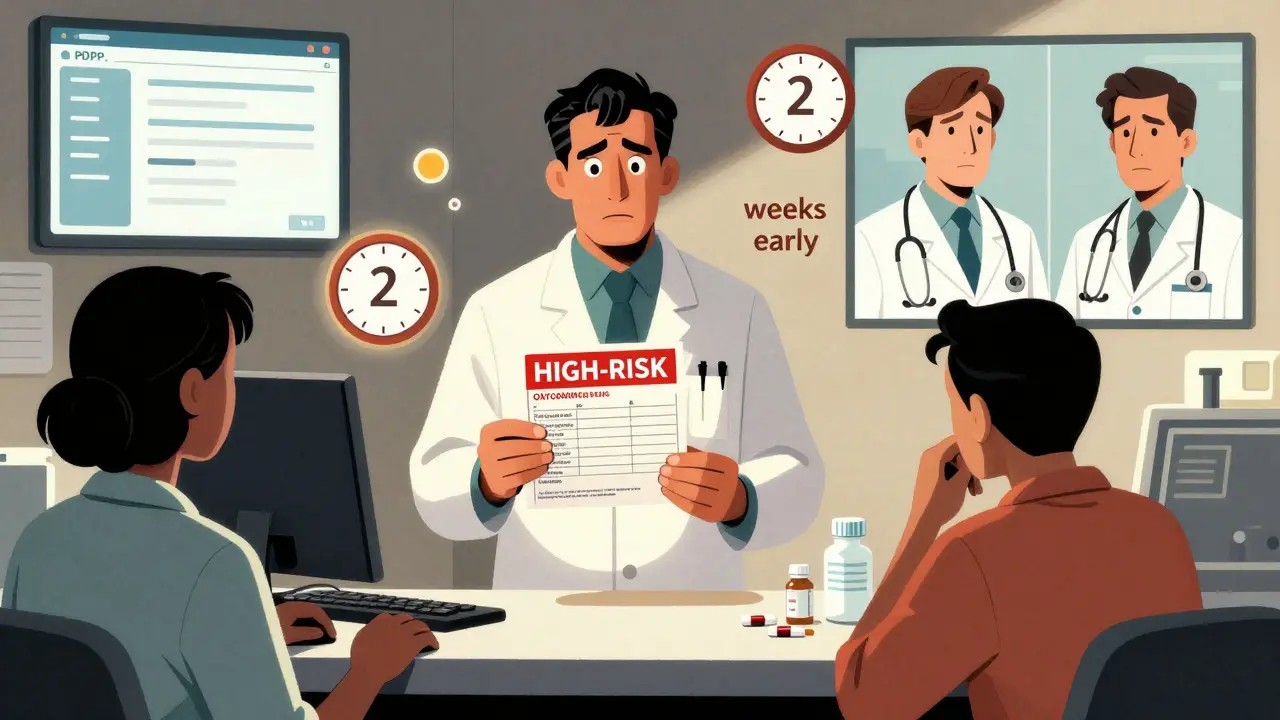
Every month, pharmacists face the same frustrating scenario: a patient walks in two weeks early for a refill of oxycodone, claiming their doctor said it was fine. Another patient shows up with a new script for lisinopril-same dosage, same pharmacy-just three days after their last one was filled. These aren’t just inconveniences. They’re red flags for early refills and duplicate therapy, two of the most common-and dangerous-medication errors in community pharmacies today.
It’s easy to assume that if a patient has taken a drug before, it’s safe to refill. But that’s exactly how mistakes happen. The CDC reports that nearly half of all cardiovascular medication failures stem from poor adherence or unsafe refill patterns. And when patients juggle multiple prescribers or pharmacies, the risk of duplicate therapy skyrockets. One study found that over 12% of patients on multiple medications received overlapping prescriptions for the same drug class without anyone catching it.
Understand the Real Risks
Early refills aren’t always about convenience. Sometimes they’re about diversion. The DEA classifies Schedule II drugs like oxycodone, fentanyl, and Adderall as non-refillable by law. Yet, patients still show up asking for them early-sometimes multiple times a month, from different doctors. This isn’t just a policy violation. It’s a warning sign of potential misuse.
Duplicate therapy is just as dangerous. Imagine a patient on warfarin gets a new script for apixaban from a cardiologist who doesn’t know they’re already on anticoagulation. Or someone with hypertension gets both lisinopril and losartan from two different providers. Both can lead to serious bleeding, kidney damage, or even death. Pharmacists are often the last line of defense. But if you’re only checking your own system, you’re missing half the picture.
Build a Clear Refill Protocol
Stop treating refill requests like emergencies. Treat them like scheduled appointments.
High-risk medications-controlled substances, anticoagulants, insulin, and psychiatric drugs-need strict rules. A simple three-tier system works:
- Low-risk meds (like nasal steroids, thyroid pills): Allow 7-day early refills if the patient has been seen in the last 6 months. No provider call needed.
- Medium-risk meds (like hypertension, diabetes, statins): Only refill if the patient has had a visit or lab test within the last 90 days. If not, pause the refill and notify the prescriber.
- High-risk meds (like opioids, benzodiazepines, stimulants): No early refills unless approved by the prescriber. Even then, only 2 days early max. Document every exception.
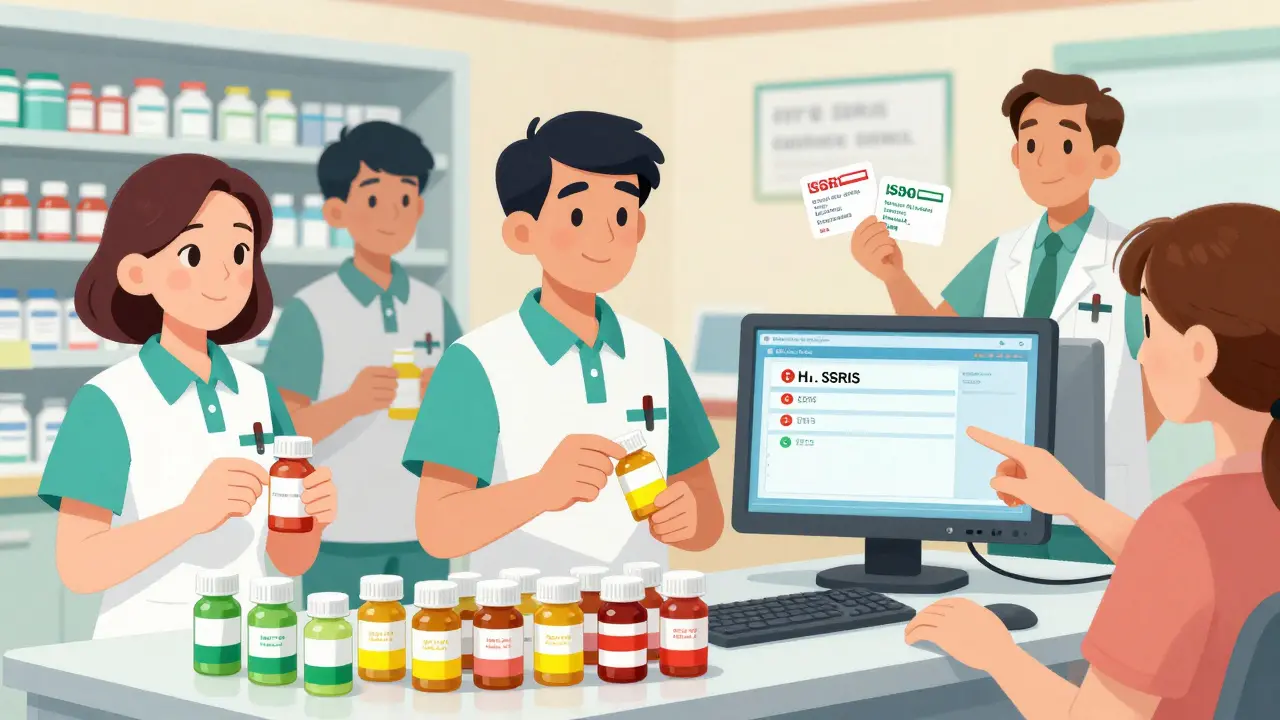
One pharmacy in Perth started using color-coded stickers on scripts: green for low-risk, yellow for medium, red for high. Staff knew instantly how to handle each one. Within three months, early refill requests dropped by 68%.
Use Technology to Your Advantage
Don’t rely on memory. Use your EHR and pharmacy software to block mistakes before they happen.
Most systems can flag:
- Refills requested before the calculated days’ supply is used up
- Prescriptions from different prescribers for the same drug class
- Patients with multiple active scripts for opioids or benzodiazepines
But here’s the key: turn on alerts for all prescriptions, not just controlled substances. A patient getting two different SSRIs from two different doctors? That’s duplicate therapy. Your system should scream about it.
Also, register for your state’s Prescription Drug Monitoring Program (PDMP). In Australia, that’s the SafeScript system. It shows you every controlled substance a patient has filled across the state-not just your pharmacy. If someone’s getting oxycodone from three different clinics in three weeks, you’ll see it. And you’re legally required to check it before dispensing.
Train Your Team to Ask the Right Questions
Pharmacists aren’t just dispensers. You’re clinical reviewers. Every refill is a chance to assess.
When a patient asks for an early refill, don’t say, “Let me check the system.” Say:
- “How’s your pain been since your last fill?”
- “Did you run out because you missed doses, or because you used more than prescribed?”
- “Have you seen another doctor recently for this issue?”
Patients often lie or downplay things. But if you ask calmly and professionally, many will open up. One patient admitted she was giving her son half her oxycodone because he had back pain after a car accident. That’s not addiction-it’s a family crisis needing intervention.
Train your technicians too. They’re the first point of contact. Teach them to recognize phrases like:
- “My doctor said I could get it early.”
- “My insurance lets me get it 5 days early.”
- “I’ll pay cash-I don’t need the insurance.”
These are classic red flags. Never accept them at face value.
Work With Prescribers, Not Against Them
Doctors aren’t trying to cause harm. But many don’t realize how often their patients are getting duplicate prescriptions.
Set up a simple process: When you block a refill due to duplication or early timing, send a note to the prescriber. Not a complaint. A collaboration.
Example: “Hi Dr. Lee, I held a refill for metoprolol for Mr. Chen because he received a similar script from Dr. Wong last week. Could we align on one agent? He’s on multiple meds and we want to avoid overlap.”
Most prescribers appreciate this. One GP in Fremantle started including a note on every script: “Do not refill early unless approved by me.” Within a month, early refill requests from his patients dropped by 80%.
Handle the Tough Cases with Compassion
Not every early refill is abuse. Sometimes it’s chaos.
A single mom loses her job. Her insulin sits in the fridge for two weeks because she can’t afford the copay. She panics, calls the pharmacy, and begs for an early refill. You say no. She ends up in the ER.
That’s a system failure-not a patient failure.
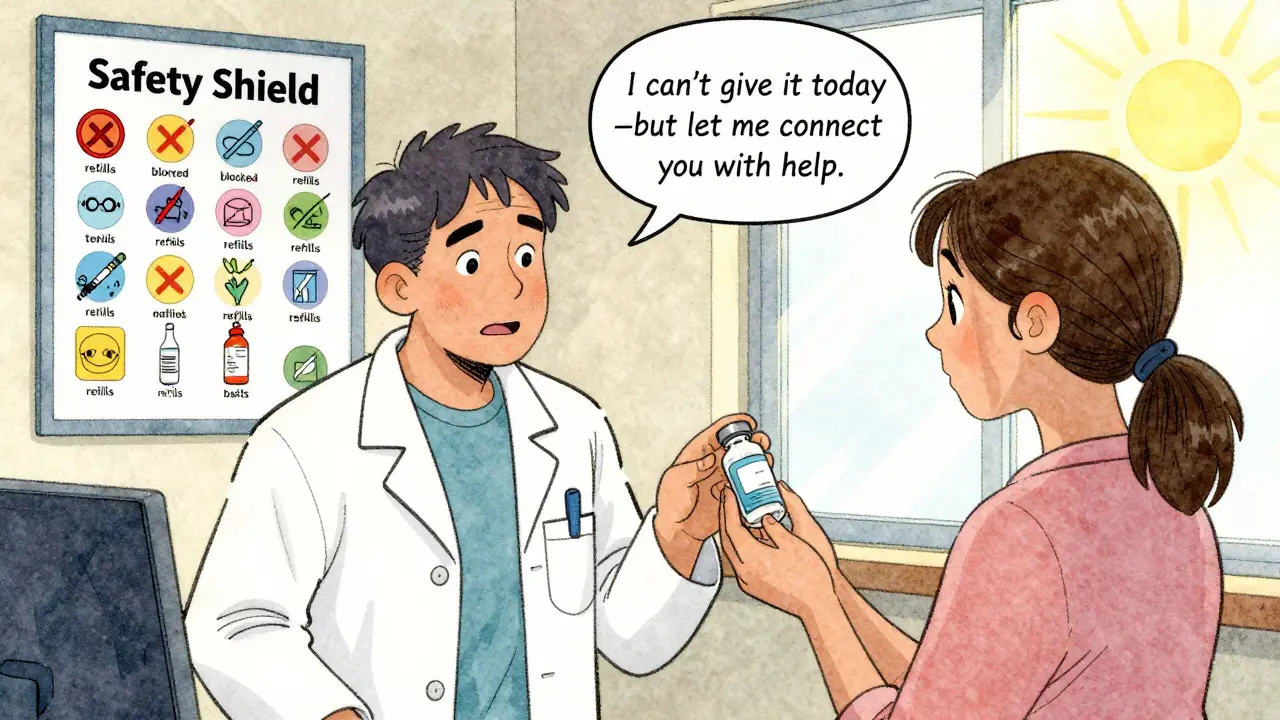
Have a plan. Know your local resources: patient assistance programs, charity pharmacies, social workers. If someone’s genuinely in crisis, help them navigate the system. Don’t just say no. Say, “I can’t give you the script today, but I can connect you with someone who can help you get it for free.”
That’s what pharmacy care looks like.
Track Your Progress
What gets measured gets improved.
Start tracking:
- Number of early refill requests per month
- Number of duplicate therapy flags caught
- Number of PDMP checks performed
- Number of prescriber communications initiated
Share the numbers with your team monthly. Celebrate wins. “We caught 12 duplicate scripts last month-that’s 12 potential hospitalizations avoided.”
One pharmacy in Mandurah started a “Safety Shield” board. Every time a refill was blocked for safety reasons, they added a sticker. After six months, the board was full. Staff felt proud. Patients noticed. Trust grew.
Final Thought: It’s Not About Control. It’s About Care.
Preventing early refills and duplicate therapy isn’t about being the pharmacy police. It’s about being the patient’s safety net.
You’re not stopping someone from getting their meds. You’re making sure they get the right ones-safely, consistently, without harm.
When you build systems, train your team, use technology, and communicate with prescribers, you turn a reactive job into a proactive shield. And that’s how you stop mistakes before they start.




Roshan Joy
Love this breakdown! The color-coded stickers idea is genius-simple, visual, and instantly actionable. We started doing something similar with sticky notes in our pharmacy (green/yellow/red) and our techs now catch 90% of duplicate scripts before they even reach the counter. Also, PDMP checks should be mandatory before every controlled substance fill-no excuses. 🙌
Adewumi Gbotemi
This one real. In Nigeria, we don’t have PDMP but we still see same thing. People come with 3 different scripts for same painkiller. We talk to them nice, ask how they feel, and sometimes they cry and say they just want to sleep. Not all bad. Pharmacy is more than pills.
Michael Patterson
Okay so let me get this straight-you’re saying pharmacists are now supposed to be part-time detectives, therapists, and medical record clerks? And you wonder why burnout is at 80%? Look, I get it, people misuse meds. But you’re putting ALL the burden on the pharmacist who’s already doing 12 jobs at once. Why not fix the broken prescriber system? Why not mandate EHR interoperability? Why not make it illegal for docs to prescribe opioids without checking a national database? You’re treating symptoms, not the disease. And btw, ‘SafeScript’? That’s Australian, not American. Just saying.
Matthew Miller
Ugh. Another ‘pharmacist as hero’ fairy tale. You think your ‘three-tier system’ stops addicts? Please. They just go to the next pharmacy, the next doctor, the next state. You’re not protecting anyone-you’re just making your job harder. And don’t get me started on ‘compassion.’ Compassion doesn’t stop fentanyl overdoses. Enforcement does. Stop being soft. If someone’s asking for oxycodone early, they’re either lying or addicted. Either way, they don’t deserve your time. Call the cops. End of story.
Madhav Malhotra
As an Indian pharmacist, I can say this hits home. We have so many patients who get meds from multiple doctors because they think ‘more = better.’ One guy was on 5 different BP pills-none of them talking to each other. We started a simple logbook, wrote down every script, and showed it to them. They were shocked. Sometimes, just showing them the truth changes everything. Also, the ‘I’ll pay cash’ line? Classic. We now ask, ‘Why cash?’ and 70% of the time, they admit they’re hiding it from family. It’s not about suspicion-it’s about connection.
Priya Patel
OMG YES. I had a patient last week who came in crying because she was out of insulin and her job cut her hours. I didn’t refill it-but I called our local free clinic, got her a 30-day supply, and walked her to the van. She hugged me. Like, actually hugged me. This job? It’s not about rules. It’s about being the person who says, ‘I see you.’ 💛
Jennifer Littler
While the protocol framework is sound, the operational scalability is questionable. In high-volume settings with limited staff, the cognitive load of triaging low/medium/high-risk scripts while simultaneously managing insurance adjudication, MTM consultations, and immunization scheduling creates systemic friction. The PDMP integration must be API-driven, not manual lookup-otherwise, compliance becomes performative. Also, the assumption that prescribers will respond to collaborative notes is optimistic; most lack EHR interoperability and are incentivized for volume, not safety. A structural overhaul, not just procedural tweaks, is required.
Jason Shriner
So let me get this straight… you turned a pharmacy into a therapy session with a sticker board? Congrats. You’ve created a cult of ‘pharmacist as savior.’ Meanwhile, the real problem-the broken healthcare system that lets 3 different doctors prescribe opioids to the same person-is still chugging along. And you’re patting yourselves on the back for catching 12 duplicates? That’s not a win. That’s a funeral. You didn’t prevent deaths-you just counted the bodies before the ambulance arrived. 🙃