
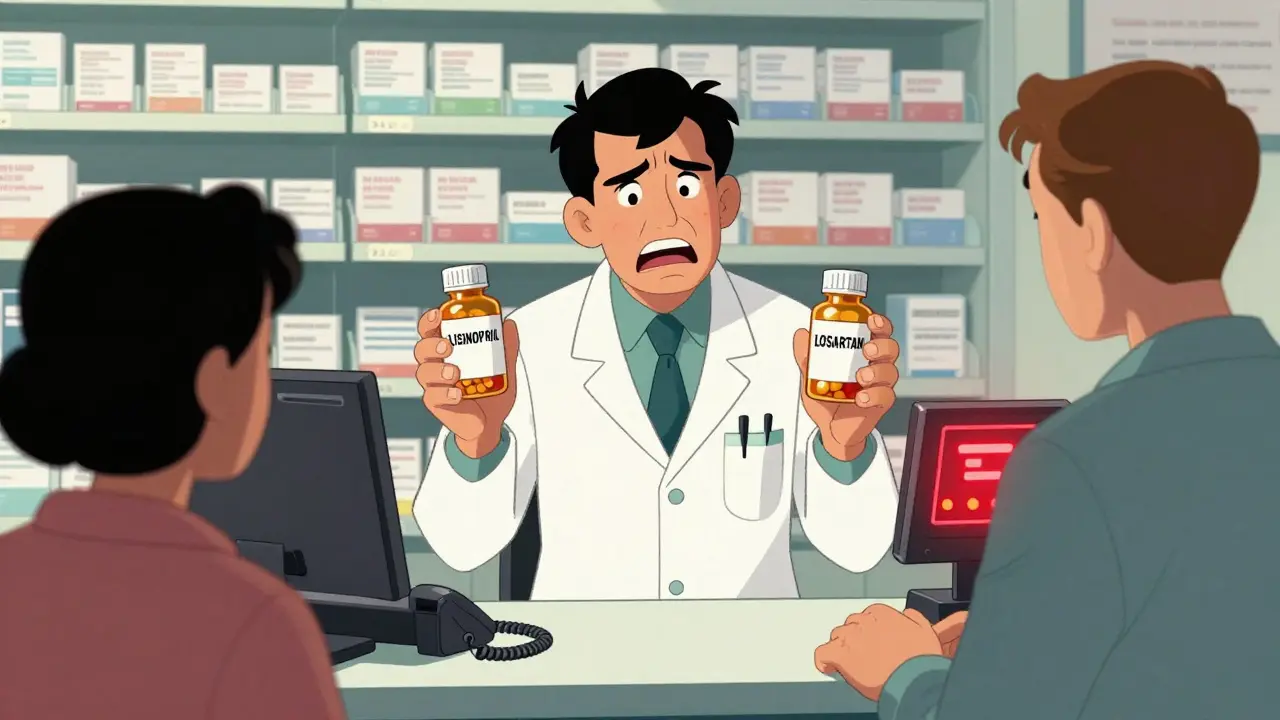
Every year, millions of patients receive the wrong medication, the wrong dose, or a drug that interacts dangerously with something they’re already taking. These aren’t hypothetical risks-they’re real, measurable, and happening right now in pharmacies from small towns to big hospitals. The global rate of dispensing errors? About 1.6%. That might sound low, but it translates to hundreds of thousands of preventable mistakes annually. And behind every number is a patient who could’ve been harmed-or worse.
What Are the Most Common Pharmacy Dispensing Errors?
Pharmacy dispensing errors aren’t random. They follow patterns. The biggest culprits? Getting the wrong drug, wrong dose, or wrong form. According to the Academy of Managed Care Pharmacy, these three types make up nearly 85% of all dispensing mistakes.- Wrong medication: Giving lisinopril instead of losartan. Mixing up amoxicillin and azithromycin. These sound-alike, look-alike drugs are the #1 cause of errors. In fact, 19% of errors come from similar-looking bottle labels or packaging.
- Wrong dose: A patient gets 50 mg of metoprolol instead of 25 mg. Or worse, a child gets an adult dose of acetaminophen. Dose miscalculations account for 28% of all errors, especially with high-alert drugs like insulin, heparin, or opioids.
- Wrong dosage form: Giving a patient an extended-release tablet when they were prescribed the immediate-release version. Crushing a tablet that shouldn’t be crushed-like extended-release morphine-can cause fatal overdoses.
Other frequent errors include:
- Dispensing an expired drug because it wasn’t checked during restocking
- Prescribing a drug for too long or too short a time
- Missing a drug interaction-like giving warfarin to someone already on an antibiotic that boosts its effect
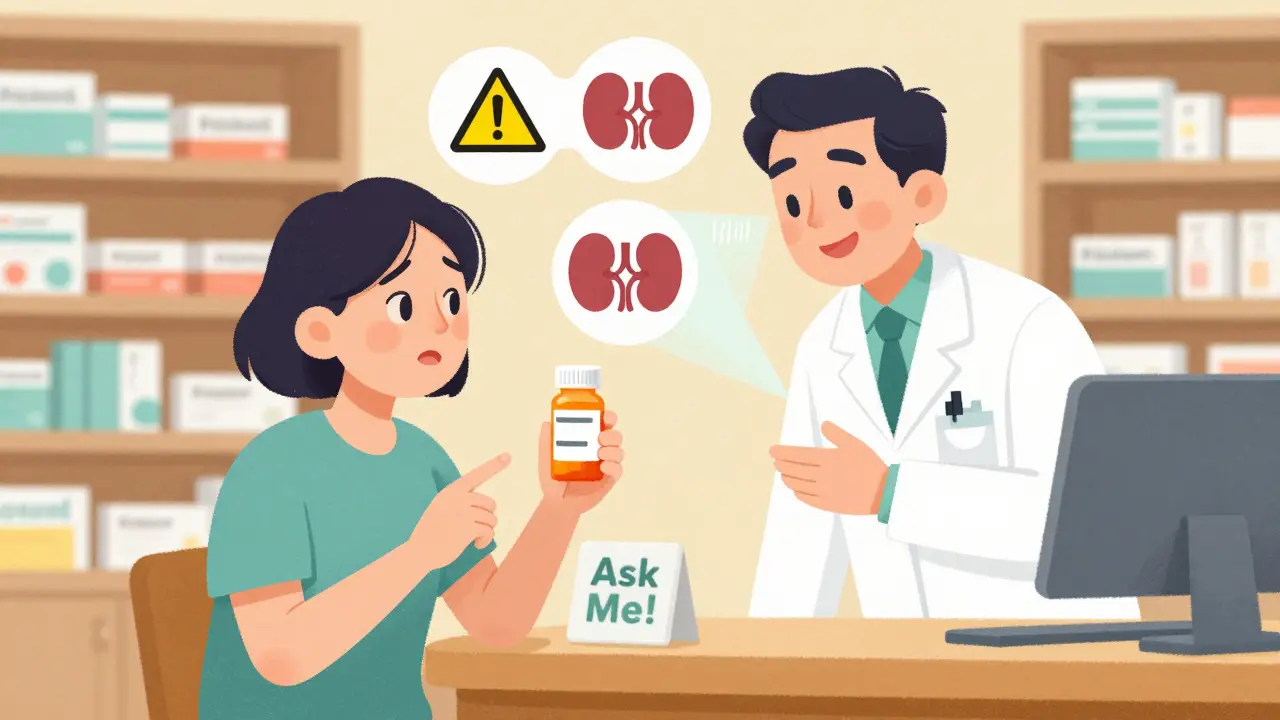
- Failing to adjust the dose for kidney or liver problems
Some drugs are riskier than others. Anticoagulants like warfarin are involved in 31% of serious errors. Antibiotics? 28%. Opioids? 24%. And here’s the kicker: 41% of antibiotic errors happen because the pharmacist didn’t check the patient’s allergy history.
Why Do These Errors Keep Happening?
It’s not because pharmacists are careless. Most are highly trained, focused, and dedicated. The problem isn’t people-it’s the system.Workload is the biggest factor. One study found that 37% of errors happen when pharmacists are rushed-juggling 10+ prescriptions at once, interrupted by phone calls, patients asking questions, or technicians needing help. Interruptions during the final check step increase error risk by over 12%.
Handwritten prescriptions still exist, and they’re dangerous. Nearly half of all errors trace back to illegible handwriting. Even when prescriptions are electronic, they often lack critical info-like a patient’s weight, kidney function, or current meds. Without that, even the smartest system can’t catch a dangerous interaction.
Sound-alike names are another silent killer. Think of Hydralazine vs. Hydroxyzine, or Clonidine vs. Clonazepam. When a prescription is called in verbally, these mix-ups happen more often. The FDA reports that 22% of verbal prescription errors come from similar-sounding drug names.
And then there’s the human factor: fatigue, stress, lack of training, and poor communication between prescribers and pharmacists. One pharmacist on Reddit shared that their new computer system flooded them with 50 alerts per prescription. They started ignoring them. That’s alert fatigue-and it’s just as dangerous as being rushed.
How to Prevent Dispensing Errors: Proven Strategies
The good news? Most of these errors are preventable. And the fixes aren’t fancy-they’re practical, tested, and working right now in pharmacies around the world.1. Use barcode scanning
Barcode scanning at the point of dispensing is one of the most effective tools. A 2021-2023 survey of 127 hospitals found it cut dispensing errors by nearly half. It caught 52% fewer wrong drugs, 49% fewer wrong doses, and 45% fewer wrong forms. One community pharmacy in Perth reported catching 12 dangerous errors in their first month of using scanners.
2. Implement double-checks for high-alert drugs
Insulin, heparin, morphine, IV potassium-these aren’t ordinary meds. They can kill if given wrong. The solution? Two trained staff members independently verify the drug, dose, route, and patient before release. One hospital reported a 78% drop in errors after putting this rule in place.
3. Use Tall Man lettering
This is simple: make similar-sounding drugs look different on screens and labels. Instead of prednisone and prednisolone, write PREDNISONE and prednISOLONE. The Institute for Safe Medication Practices found this cut sound-alike errors by over 56% across 214 pharmacies.
4. Build in automated alerts
Computer systems should flag:
- Allergies (even if the patient says they’re fine)
- Drug interactions (especially with anticoagulants or antidepressants)
- Dose limits (e.g., max daily acetaminophen = 4,000 mg)
- Renal or hepatic adjustments (e.g., reducing metformin if creatinine is high)
But here’s the catch: too many alerts cause fatigue. The trick is to make them smart. Only trigger alerts for high-risk combinations. And never let the system override the pharmacist’s judgment.
5. Standardize processes
Checklists work. Not because pharmacists are forgetful, but because humans are prone to lapses under pressure. A simple checklist for high-risk prescriptions-verify patient, verify drug, verify dose, verify route, verify allergies, verify interaction-cuts errors by 60% or more.
6. Improve communication
When a doctor writes “take 1 tab daily,” does that mean 1 tablet per day? Or 1 tablet every 24 hours? Ambiguity kills. Encourage prescribers to use full names, specify frequency (“daily” not “qd”), and include weight and lab values when relevant. Pharmacists should call back when something’s unclear-no shame in asking.
Technology Isn’t the Magic Bullet
Robotic dispensing systems, AI tools, and electronic prescribing sound like the future. And they are-partly. A 2023 study showed AI reduced errors by over 52% in test hospitals. Robotic arms cut errors by 63%. But they’re expensive ($150K-$500K per system) and don’t fix the root causes.One hospital installed a new CPOE system and saw a 43% drop in errors-until 18% of new errors appeared because staff started overriding alerts without reading them. Technology helps, but it can’t replace human vigilance. The best systems combine smart tech with clear protocols and trained staff.
And don’t forget the human side. Pharmacists who feel supported, have time to counsel patients, and aren’t constantly rushed make fewer mistakes. One pharmacy in Western Australia cut its error rate by 40% simply by hiring an extra technician to handle label printing and inventory-freeing up pharmacists to focus on checking prescriptions.
What Patients Can Do
You’re not powerless. Even if you’re not a pharmacist, you can protect yourself:- Keep a current list of all your meds-including supplements and OTC drugs-and bring it to every appointment.
- Ask: “Is this the same as what I was taking before?” If it looks different, question it.
- Read the label when you pick up your prescription. Does the name, dose, and instructions match what your doctor told you?
- Ask the pharmacist: “What’s this for? What side effects should I watch for?”
- If you’re given a new drug, don’t assume it’s safe with your others. Ask about interactions.
Patients who ask questions reduce their risk of being harmed by a dispensing error by up to 60%.
The Future Is Clearer-But Only If We Act
The World Health Organization and the Institute for Safe Medication Practices are working on a global standard for classifying medication errors. By 2025, pharmacies will be expected to report errors using the same system worldwide. That means better data, faster learning, and fewer repeat mistakes.By 2030, integrated systems that link EHRs, pharmacy databases, and real-time clinical alerts could cut dispensing errors by 75%. But only if we stop blaming individuals and start fixing systems.
Dispensing errors aren’t inevitable. They’re a sign that the system needs work. And with the right tools, training, and culture, they can be dramatically reduced-maybe even eliminated.
It’s not about being perfect. It’s about building systems so strong that even when people make mistakes, the system catches them before they reach the patient.
What is the most common type of pharmacy dispensing error?
The most common dispensing error is giving the wrong medication, dosage strength, or dosage form-accounting for about 32% of all errors. This includes mixing up similar-sounding drugs like lisinopril and losartan, or giving an extended-release tablet instead of an immediate-release version.
How many medication errors happen each year in the U.S.?
An estimated 7 million patients in the U.S. are affected by medication errors each year. This includes errors in prescribing, dispensing, and administration. The FDA receives over 100,000 medication error reports annually, but experts believe many more go unreported.
Can barcode scanning really reduce pharmacy errors?
Yes. A national survey of 127 hospital pharmacies showed barcode scanning reduced dispensing errors by 47.3%. It was especially effective for wrong drug errors (down 52.1%) and wrong dose errors (down 48.7%). Community pharmacies have also reported catching multiple dangerous errors in their first month of use.
Why are anticoagulants like warfarin so risky in pharmacies?
Anticoagulants like warfarin have a narrow therapeutic window-small changes in dose can cause serious bleeding or clotting. They also interact with many foods, supplements, and other drugs. About 31% of serious medication errors involve anticoagulants, often because allergies, kidney function, or current meds weren’t checked.
What should I do if I think I received the wrong medication?
Don’t take it. Call your pharmacist immediately and ask them to verify the prescription against your doctor’s order. If the label doesn’t match what your doctor told you, or the pill looks different, ask for an explanation. Never assume it’s a mistake you made-pharmacists expect questions and appreciate them.
Do electronic prescriptions reduce errors?
Yes, but not perfectly. Computerized prescribing reduces errors from handwriting and missing info by about 43%. However, it can introduce new errors-like alert fatigue, where pharmacists start ignoring warnings. The best systems combine e-prescribing with smart alerts and human verification.
Final Thoughts: It’s a System Problem, Not a People Problem
Pharmacists aren’t the enemy. They’re on the front lines of a broken system. The real issue isn’t laziness or incompetence-it’s workload, poor communication, outdated tools, and lack of support. The solutions exist: barcode scanning, double-checks, better training, smarter software, and a culture that encourages asking questions instead of punishing mistakes.Every pharmacy has the power to make this safer. Start small. Pick one high-risk drug. Implement a double-check. Add a checklist. Talk to your team. Track your progress. You don’t need a million-dollar robot to save a life. You just need to care enough to fix the small things.



Ellie Stretshberry
i just got my blood pressure med last week and the pill looked totally different from last time. i didn't say anything cause i didn't wanna be annoying but now i'm second guessing everything. maybe i should've asked.
Zina Constantin
Barcodes are a game-changer. My aunt works at a community pharmacy in Ohio and they implemented them last year. They caught seven dangerous errors in the first month alone. It’s not magic-it’s just basic safety. Why isn’t this mandatory everywhere?
Dan Alatepe
bro. i had a cousin get the wrong anticoagulant. she ended up in the ER bleeding out. it was a mix-up between warfarin and something else. the pharmacist was swamped. no one’s evil here. the system’s just broken. we need to stop acting like it’s someone’s fault and fix the damn machine.
Angela Spagnolo
I... I didn't realize how many errors happen... I mean, I knew they happened, but not like... this many. And the part about alert fatigue? That's terrifying. I think... maybe we need to stop expecting pharmacists to be perfect? And just... give them space? To breathe? To check? Please?
Sarah Holmes
This post is dangerously naive. You attribute errors to 'system failure' while ignoring the systemic collapse of professional standards. Pharmacists are not clerks. They are licensed professionals. If they are overwhelmed, they should not be working. There is no excuse for negligence, regardless of workload. The solution is not more scanners-it is accountability.
Jay Ara
in india we dont have barcode scanners in most pharmacies but we have one thing that works better sometimes-family. old people bring their meds to their kids or grandkids to check. if you dont know what the pill is, ask someone who does. simple but it saves lives.
Bryan Woods
The data presented here is compelling and aligns with peer-reviewed literature from the Journal of the American Pharmacists Association. It is essential to recognize that while technology enhances safety, human factors remain the most variable-and therefore most critical-component in error prevention.
Ryan Cheng
Just had a pharmacist call me last month because my prescription said 'take one daily' and they weren't sure if that meant once a day or every 24 hours. She called my doctor, got it clarified, and saved me from a possible overdose. That's the kind of care we need more of. Not robots. People who care enough to ask.