
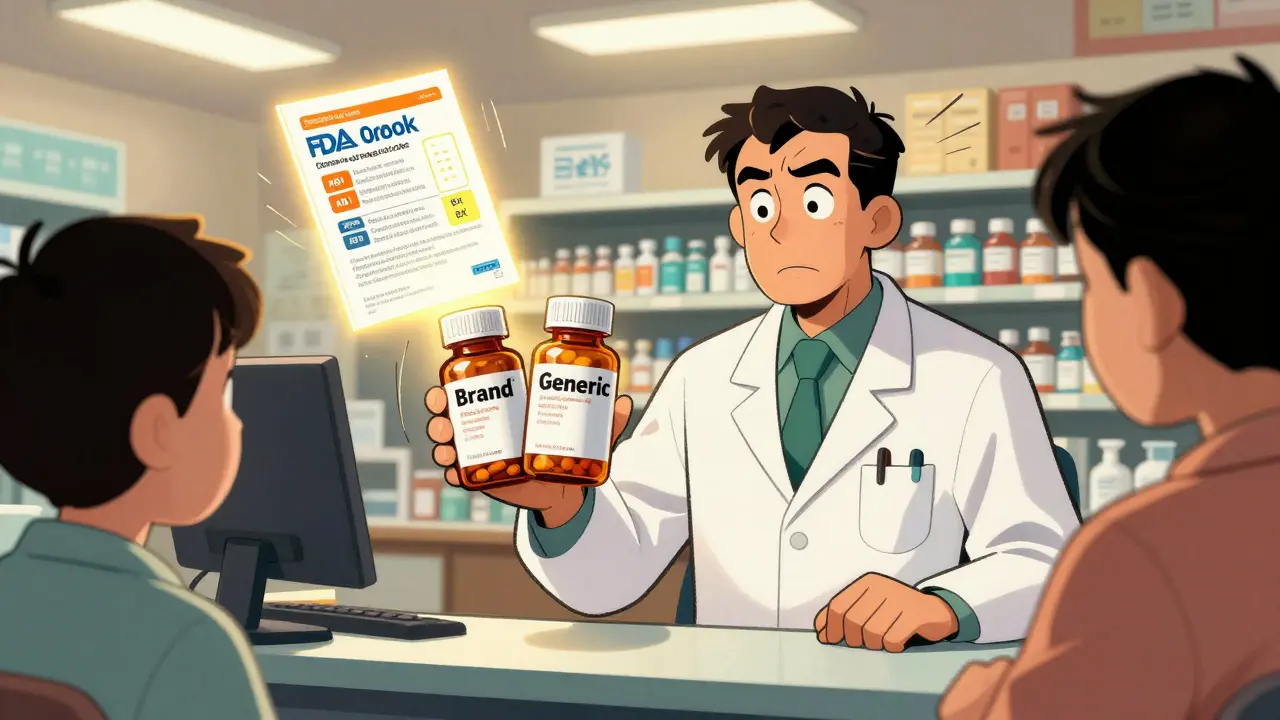
Every day, pharmacists make decisions that affect patient safety - and one of the most high-stakes choices they face is whether to substitute a brand-name drug with a generic. It’s not just about cost. It’s about bioequivalence, therapeutic ratings, state laws, and sometimes, a single milligram difference that can change everything. With over 90% of prescriptions filled with generics in the U.S., and new generic approvals rising 17% year over year, staying current isn’t optional. It’s essential.
Why Generics Knowledge Is Non-Negotiable
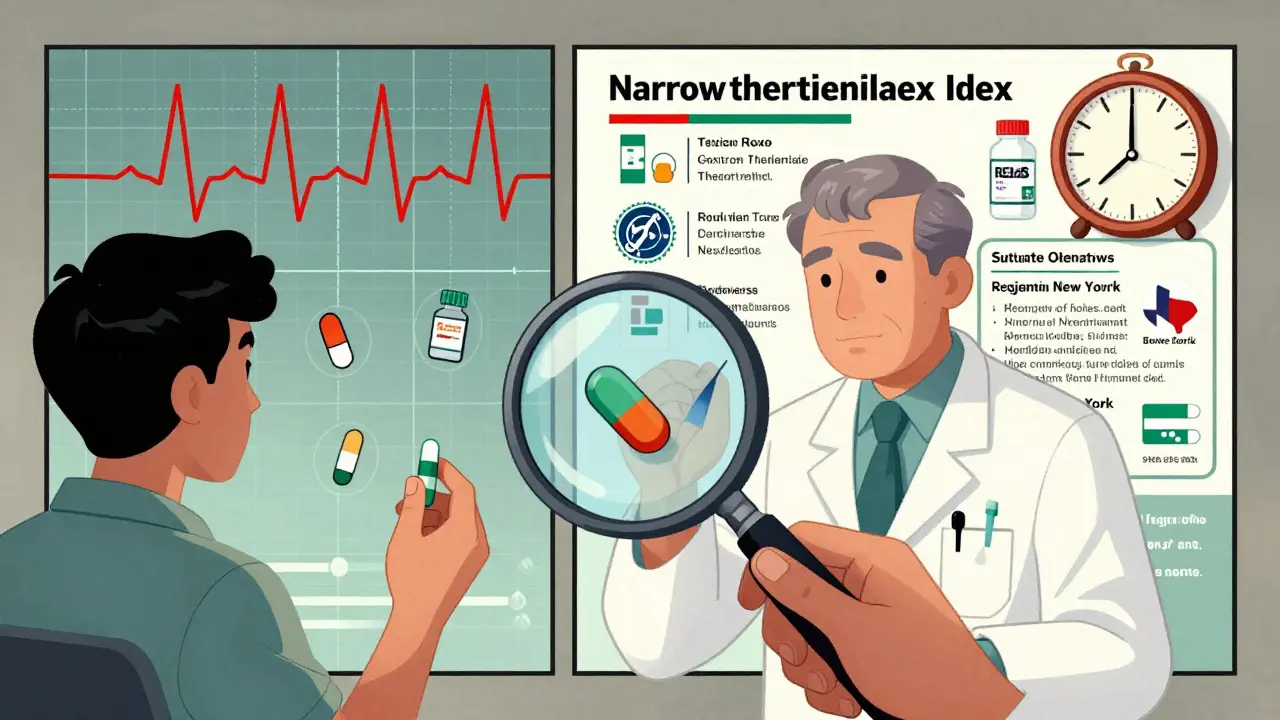
The FDA requires generic drugs to match brand-name drugs in strength, purity, and quality. But here’s the catch: they don’t have to be identical in inactive ingredients, dissolution rate, or manufacturing process. That’s where therapeutic equivalence comes in. The FDA’s Orange Book lists over 1,200 therapeutic equivalence ratings, updated monthly. A drug rated AB means it’s interchangeable. A drug rated BX? Not so much. Get this wrong, and you risk underdosing a patient on levothyroxine or overdosing someone on warfarin - both narrow therapeutic index drugs where small changes can lead to hospitalization.
Between 2021 and 2023, 42.7% of all pharmacy malpractice claims involved errors tied to generic substitution. That’s not a statistic. That’s a pharmacist who missed a rating change. That’s a patient who had a seizure because a switch wasn’t monitored. Continuing education isn’t just about checking a box - it’s about preventing harm.
What the Law Demands
All 50 U.S. states require pharmacists to complete continuing education to renew their licenses. Most require between 15 and 30 hours every two years. But here’s where it gets messy: each state sets its own rules. Illinois mandates 30 hours, including one hour on sexual harassment prevention, one on implicit bias, and - starting January 2025 - one hour on cultural competency. Texas has unique rules for narrow therapeutic index drugs. California requires you to keep CE records for two years. New York wants certificates submitted with your renewal. And if you hold licenses in multiple states? You’re playing a game of regulatory whack-a-mole.
ACPE - the Accreditation Council for Pharmacy Education - is the national standard-bearer. Any CE you take must be ACPE-accredited or approved by your state board. And not all CE is created equal. There are three types: knowledge-based (lectures), application-based (case studies), and certificate programs. Pharmacists who take application-based courses report 4.7 out of 5 satisfaction ratings. Those who sit through dry lectures? 3.2. Why? Because you learn better by doing. By walking through a real case where a patient’s INR spiked after a generic switch - not just memorizing a table.
The Generics Landscape Is Changing Fast
In 2023 alone, the FDA approved 983 new generic drug applications. That’s more than three new generics every day. And it’s not just about pills anymore. Biosimilars - complex biologic generics - are exploding. The American Society of Health-System Pharmacists found that 78% of hospital pharmacists feel unprepared to handle them. Why? Because biosimilars aren’t like regular generics. They’re not interchangeable unless the FDA labels them as such. And even then, substitution rules vary by state and payer.
Then there’s the CREATES Act. It was passed to stop brand-name companies from blocking generic manufacturers from getting samples to test against. But that doesn’t mean the road to market is smooth. Pharmacists need to understand how patent litigation, REMS programs, and distribution restrictions affect which generics are actually available in their pharmacy. A drug might be approved by the FDA, but if it’s not on your formulary or can’t be sourced due to supply chain issues, it doesn’t matter.
What You Need to Know Right Now
Here’s what you can’t afford to ignore in 2026:
- Therapeutic equivalence ratings - Know how to read the Orange Book. Understand what AB1, AB2, and BX mean. Don’t rely on outdated apps or memory.
- Biosimilars - ACPE now requires all generics-focused CE to include biosimilar interchangeability content. Effective January 2025, you’ll need to demonstrate this knowledge to renew your license.
- State substitution laws - If you’re in a state that allows automatic substitution, know the exceptions. Some states require patient consent for certain drugs. Others ban substitution for insulin or seizure medications.
- Compounding - If your pharmacy compounds generics, USP Chapters 795, 797, and 800 apply. These aren’t suggestions. They’re legal standards.
And don’t assume your hospital or chain pharmacy is covering you. A 2023 ASHP survey showed 68% of hospital pharmacies now require more generics training than state law mandates. That’s because they’ve seen the errors. They’ve seen the lawsuits. They know what’s at stake.
How to Choose the Right CE
Not all CE is worth your time. Here’s how to pick the right one:
- Look for application-based content - Case studies beat lectures. Find courses that ask you to make a decision, not just recall a fact.
- Check the provider - Pharmacist’s Letter, Wolters Kluwer, and PocketPrep are trusted. Avoid random websites with no ACPE accreditation.
- Match it to your state - If you’re in Texas, take a course that covers your state’s rules on narrow therapeutic index drugs. If you’re in New York, make sure your CE meets their submission requirements.
- Track your hours - Save certificates. Even if your state doesn’t ask for them now, they might later. Keep digital and paper copies.
Pharmacists who complete at least five hours of generics-specific CE each year make 37% fewer substitution errors. That’s not a guess. That’s data from the American Pharmacists Association. That’s the difference between a patient getting the right dose and ending up in the ER.
The Future Is Personalized
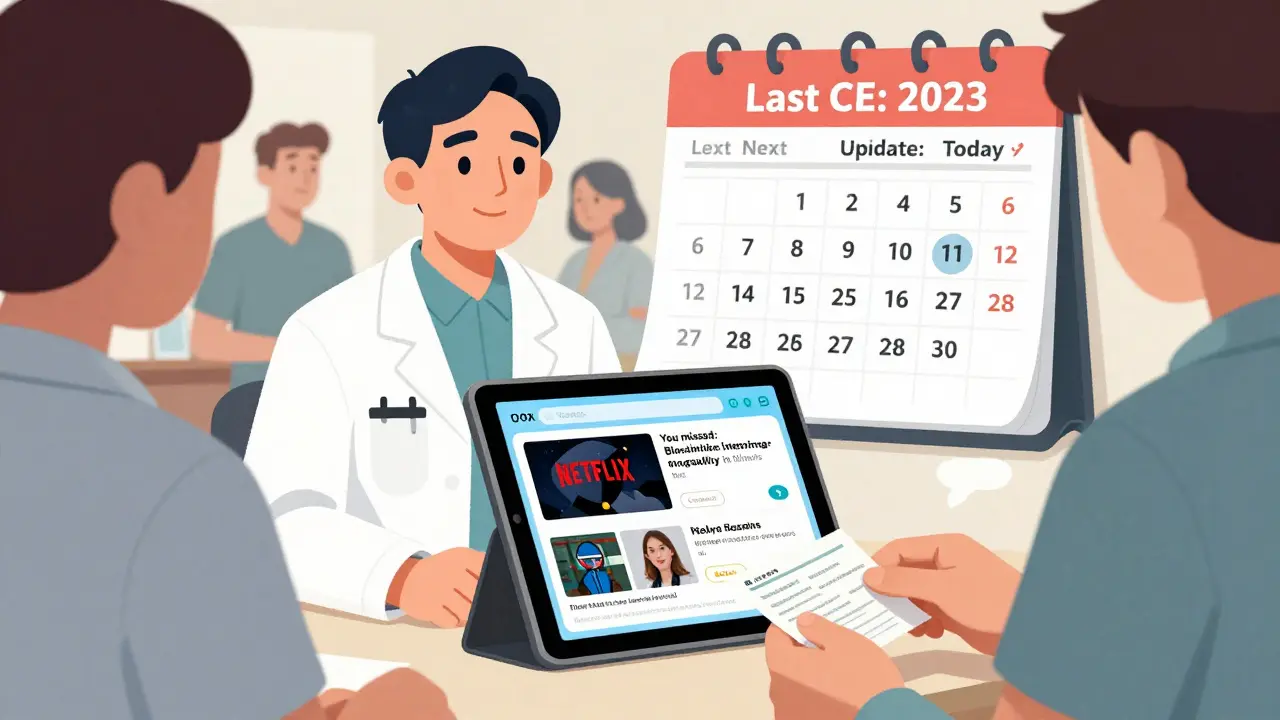
AI-powered CE platforms are coming. By 2027, one in three pharmacists will use a system that identifies their knowledge gaps and pushes targeted content - like a Netflix algorithm for pharmacy law. These tools analyze your practice patterns, your state’s regulations, and recent FDA updates to recommend exactly what you need to learn. Pilot programs at CVS Health already cut generics-related errors by 28% using just-in-time learning modules triggered at the point of sale.
But here’s the truth: technology won’t replace your judgment. It will sharpen it. You still have to decide. You still have to ask the patient if they’ve had issues with the generic before. You still have to call the prescriber if something doesn’t add up.
Don’t Wait Until Renewal Time
Waiting until your license is about to expire to tackle your CE is like waiting until your car’s oil light comes on to check the engine. By then, it’s too late. The FDA updates the Orange Book monthly. State laws change. New biosimilars hit the market. If you’re not updating your knowledge regularly, you’re falling behind.
Set a reminder every quarter. Spend 30 minutes reading a Pharmacist’s Letter update. Watch a 15-minute case study on PocketPrep. Join a local pharmacy association meeting. Talk to colleagues about a recent substitution issue. That’s continuing education - not just the credits, but the habit.
Because when a patient walks up to your counter and says, ‘I’ve been on this generic for years - why is it different now?’ - you need to know why. Not because you took a course. But because you care enough to stay current.
Do I need different CE for each state I’m licensed in?
Yes. Each state sets its own continuing education requirements, including hours, topics, and documentation rules. If you hold licenses in multiple states, you must meet the requirements for each one. Some states accept reciprocal CE credits, but many don’t. Always check with your state board before registering for a course.
What’s the difference between a generic and a biosimilar?
Generics are chemically identical copies of small-molecule drugs. Biosimilars are highly similar - but not identical - copies of complex biologic drugs made from living cells. While generics can be automatically substituted in most cases, biosimilars can only be substituted if the FDA designates them as "interchangeable." Even then, state laws may require prescriber approval or patient notification.
How often is the FDA Orange Book updated?
The FDA updates the Orange Book monthly. New therapeutic equivalence ratings, patent expirations, and exclusivity periods are added or changed each month. Pharmacists should check the official Orange Book website at least once a month or use a reliable CE platform that pushes updates automatically.
Are there free CE options for generics?
Yes. Pharmacist’s Letter offers free, ACPE-accredited modules on therapeutic equivalence, ethics, and substitution laws. Other providers like the American Pharmacists Association and state pharmacy associations also offer low-cost or free CE for members. Always verify ACPE accreditation before completing any course.
What happens if I don’t complete my CE requirements?
If you don’t complete your required continuing education, your pharmacy license will not renew. You may face fines, mandatory remedial training, or even temporary suspension. In some states, you’ll have to retake the MPJE or NAPLEX. More importantly, practicing without a valid license is illegal and exposes you to liability.
Next Steps for Pharmacists
If you’re behind on CE, start here:
- Log into your state board’s website and check your current CE status.
- Identify which topics you’re missing - especially generics, biosimilars, and state-specific laws.
- Choose one ACPE-accredited application-based course this week. Don’t wait.
- Set a quarterly reminder to review the FDA Orange Book updates.
- Join a local pharmacist group or online forum to discuss real cases.
You didn’t become a pharmacist to chase credits. You became one to protect people. The best way to honor that promise is to never stop learning - especially when it comes to generics.


Jodi Harding
Generics aren’t the enemy - complacency is.
Max Sinclair
I’ve been in this game for 22 years, and the one thing I’ve learned? The Orange Book is your Bible. Not the app your tech uses. Not the memo from corporate. The actual FDA document. I print it monthly. I highlight changes in yellow. I’ve saved patients because I checked it. No CE course beats that habit.
Nishant Sonuley
Oh, so now we’re all pharmacists? Let me guess - you’re the one who reads the FDA’s monthly updates while sipping your artisanal cold brew, right? Meanwhile, in India, we’re still fighting to get *any* generic on the shelf without a 3-month wait. You guys have ACPE, Orange Book, biosimilars, and state-by-state chaos… and you’re still complaining? My cousin’s pharmacy in Jaipur uses a handwritten logbook because the internet goes down every monsoon. At least you have a choice. We just pray the pill looks like the last one.
Emma #########
I had a patient last week ask why her blood pressure meds suddenly made her dizzy. Turned out the generic switched from one manufacturer to another - same active ingredient, different fillers. She’d been on it for 8 years. I called the prescriber, we switched back, and she cried. Not because of the cost. Because she felt like her body didn’t recognize the pill anymore. That’s the human side nobody talks about.
Andrew McLarren
It is imperative to underscore that adherence to ACPE-accredited continuing education is not merely a regulatory obligation, but an ethical imperative grounded in the Hippocratic Oath. The proliferation of biosimilars and the increasing complexity of therapeutic equivalence ratings necessitate a structured, evidence-based approach to professional development. Failure to maintain currency in these domains constitutes a breach of fiduciary duty to the patient.
Andrew Short
Let’s be real - the FDA’s Orange Book is a joke. Big Pharma writes the rules. They pay the reviewers. They delay generics with patent trolling and REMS abuse. And now you want pharmacists to memorize AB1 vs AB2 like it’s some sacred scripture? Wake up. The system is rigged. You’re just the front-line scapegoat getting blamed when the drug fails. The real criminals? The CEOs who profit from this mess. You think your CE credits change that? They don’t. They just make you feel better while the system burns.
christian Espinola
Did you know the FDA’s Orange Book is edited by ex-pharma execs? And the ACPE? Half their board members have stock in CE providers. You think your ‘application-based’ course is teaching you truth? Nah. It’s teaching you what the industry wants you to believe. I’ve seen the leaked emails. Biosimilars aren’t ‘highly similar’ - they’re half-baked knockoffs. And your ‘interchangeable’ label? That’s just a marketing term to get you to swap without asking. You’re not saving lives. You’re enabling corporate fraud.
Chuck Dickson
Hey - if you’re reading this and you’ve been putting off your CE? Do it today. Not tomorrow. Not next month. TODAY. I used to be the guy who waited until December. Then I missed a rating change on levothyroxine - patient went into atrial fibrillation. Didn’t kill them, but it changed everything. Now I do 30 minutes a week. Podcast during my commute. Case study over lunch. I even got my whole team to start a ‘Generics Thursday’ chat. You don’t need to be perfect. You just need to show up. And you? You’re worth more than a license renewal deadline.
Robert Cassidy
They want us to ‘stay current’? Fine. But who gave them the right to dictate what we must learn? The state boards? The FDA? The pharmaceutical lobby? We’re not automatons. We’re thinkers. And if I’m forced to sit through another 2-hour webinar on ‘cultural competency’ while my state ignores the fact that 40% of generics are sourced from unregulated labs in China - then maybe the real problem isn’t my CE hours. It’s the entire system. We’re being trained to be compliant, not critical. And that’s the most dangerous thing of all.
Naomi Keyes
Wait - you said ‘state laws vary’? Really? Let me count: Illinois requires one hour on sexual harassment, one on implicit bias, one on cultural competency - that’s three hours of non-pharmacy content. Texas requires specific NTI drug protocols. New York requires certificate submission. California requires two-year retention. ACPE accreditation? Mandatory. And you’re telling me this isn’t bureaucratic madness? How is a pharmacist supposed to manage this? And why is no one talking about how the cost of CE is skyrocketing? I paid $350 for a 3-hour course last year. That’s not education - that’s extortion. And don’t even get me started on the ‘application-based’ hype - most of them are just fancy PowerPoint with a quiz at the end.
Andrew Qu
For anyone overwhelmed by the state-by-state mess - here’s a free tip: Use the NABP’s CE Tracker. It auto-syncs with your state boards and flags what you’re missing. I used to spend hours digging through PDFs. Now I get weekly emails: ‘You’re 2 hours short on Texas NTI requirements.’ Saved me when I got audited. Also - join your state pharmacy association. They often have free, state-specific CE webinars. You don’t need to buy everything. Just be smart.
Danny Gray
So we’re supposed to trust the Orange Book? But what if the ratings are wrong? What if the FDA doesn’t catch a bioequivalence issue until after ten thousand patients have been dosed? And who’s auditing the auditors? The same people who approved the original brand-name drug? The system’s built on faith, not data. We’re just the priests chanting the liturgy while the altar cracks.
Tyler Myers
They say ‘AI-powered CE’ is coming. Yeah, right. Next they’ll have robots filling prescriptions. You think algorithms can read a patient’s eyes when they say ‘this generic makes me feel weird’? Nah. That’s why I still call every prescriber before swapping. And I tell patients: ‘I don’t trust these generics either.’ They appreciate honesty. The system wants you to be a cog. I’m a human. And I’m not letting tech replace my judgment.
Stacey Marsengill
I had a patient cry in my aisle last week because her generic Adderall made her feel ‘like a zombie.’ She’d been on it for years. Switched manufacturers. Same dosage. Same ‘AB’ rating. But the fillers? Different. She said it felt like her soul got swapped out. I refunded her. I called the doctor. I filed a report. And I cried too. Not because of the paperwork. Because no CE course prepares you for that look in someone’s eyes when they realize their medicine - their stability - has been quietly replaced by a cheaper version of something that’s not quite the same.
Jay Clarke
Let’s be honest - most of this CE is performative. You take it to keep your license. You don’t retain 20% of it. The real learning happens in the trenches. The guy who swapped the wrong generic and had to call a family after the seizure. The pharmacist who stayed late to track down a biosimilar’s distribution chain because the wholesaler lied. That’s the education that sticks. The rest? Just a checkbox. And if you’re waiting for AI to fix it - you’re already behind.