
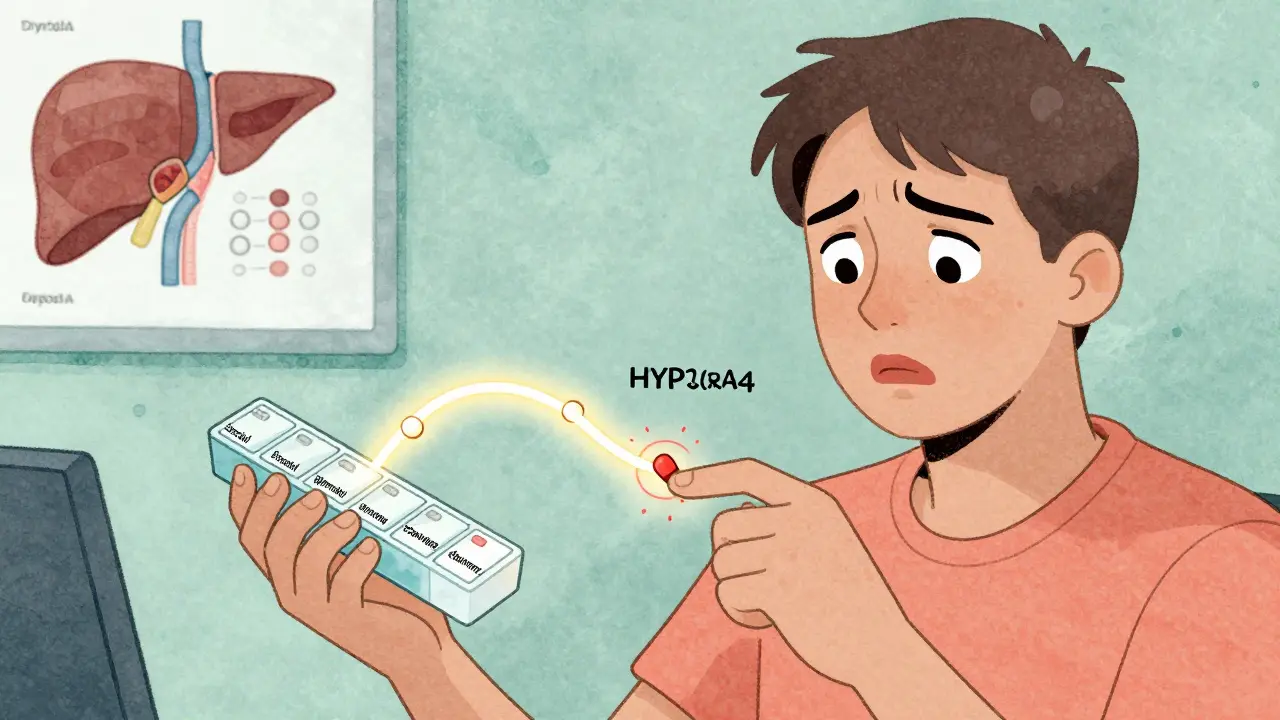
When someone starts gender-affirming hormone therapy (GAHT), they’re not just changing their hormones-they’re changing how their body processes everything else. Whether you’re on estradiol for feminizing therapy or testosterone for masculinizing therapy, those hormones don’t work in a vacuum. They interact with other medications you might be taking, sometimes in ways that aren’t obvious-and sometimes in ways that can be dangerous if you don’t know what to watch for.
How GAHT Works: The Basics You Need to Know
Gender-affirming hormone therapy comes in two main forms: feminizing and masculinizing. Feminizing therapy usually involves estradiol-given as patches, pills, or injections-and one or more anti-androgens like spironolactone or cyproterone acetate. Masculinizing therapy typically uses testosterone, delivered as gels, injections, or pellets. Some people also use GnRH agonists like leuprolide to suppress natural hormone production before starting GAHT.
These hormones don’t just float around freely. They’re broken down by specific enzymes in your liver and gut. Estradiol mostly goes through the CYP3A4 enzyme system. Testosterone is handled by 5-alpha reductase and aromatase. That’s where things get tricky. If another medication affects those same enzymes, it can make your hormones work too hard or not hard enough.
Antiretrovirals and GAHT: A High-Stakes Mix
Transgender people are 3.4 times more likely to be living with HIV than cisgender people. That means many people on GAHT are also taking antiretroviral therapy (ART). And here’s the problem: some HIV drugs can seriously mess with hormone levels.
Enzyme-inducing drugs like efavirenz can drop estradiol levels by 30-50%. That’s not just a numbers game-it can mean your feminizing therapy stops working. You might notice less breast development, more acne, or a return of unwanted body hair. On the flip side, drugs like cobicistat-boosted darunavir can boost estradiol levels by 40-60%. That raises your risk of blood clots, high blood pressure, and stroke.
Good news? Not all HIV meds cause problems. Dolutegravir and other integrase inhibitors don’t interfere much. In fact, they might slightly raise estradiol-but not enough to need a dose change. The key is knowing which drug you’re on. If you’re switching HIV meds or starting a new one, get your estradiol levels checked 2-4 weeks later.
PrEP and Hormones: No Big Risk, But Still Monitor
If you’re on tenofovir/emtricitabine (Truvada or Descovy) for PrEP, you can breathe easier. A 2022 study of 172 transgender people showed no meaningful change in hormone levels or PrEP effectiveness when taken together. Hormone levels shifted by less than 5%. Tenofovir levels changed by just 3.2%-well within safe limits.
That’s a big relief. But it doesn’t mean you can ignore it. Some people report changes in how they feel-more fatigue, mood shifts-when starting both at once. That’s not necessarily a drug interaction. It could be your body adjusting to two major changes at once. Still, if you notice anything off, talk to your provider. Get your hormone levels checked after 8-12 weeks.
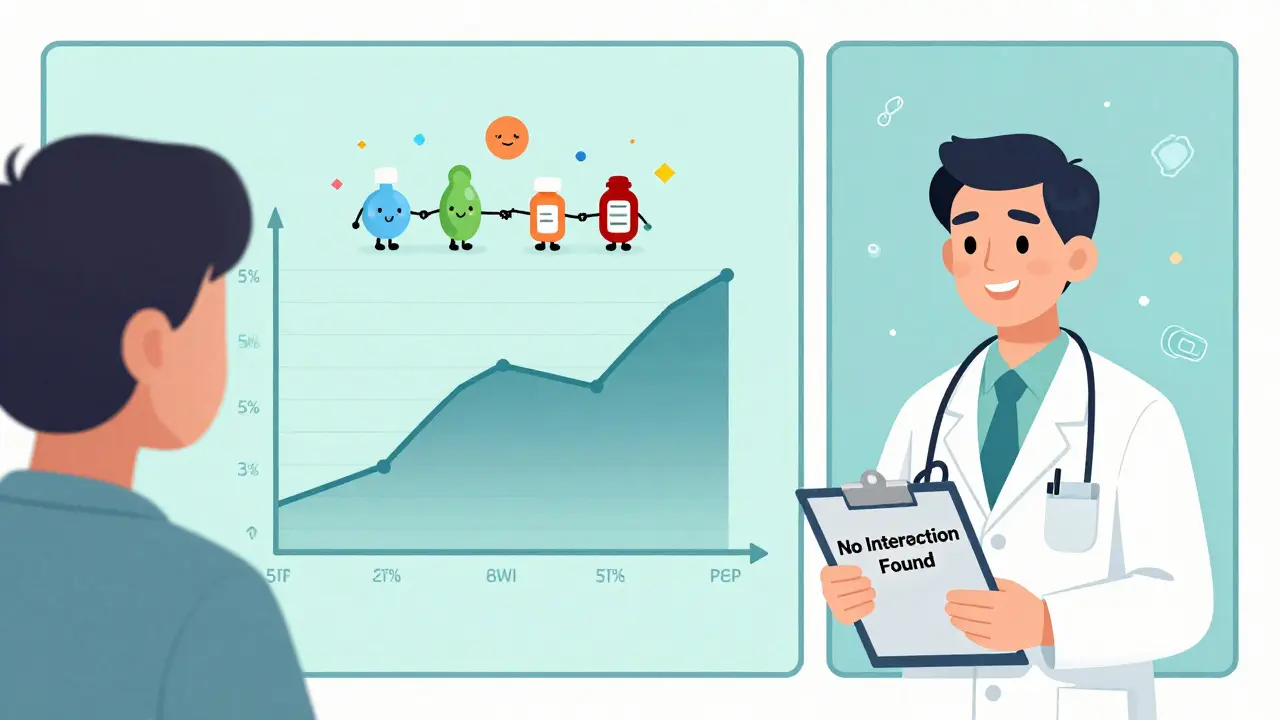
Psychiatric Medications: The Silent Conflict
Transgender people are 2.5 times more likely to have depression, anxiety, or other mental health conditions. That means many are on SSRIs, mood stabilizers, or antipsychotics. And here’s where things get messy.
Fluoxetine (Prozac) and other SSRIs can slow down how fast your body breaks down estradiol by blocking the CYP2D6 enzyme. That can lead to higher estrogen levels than expected. You might get more breast tenderness, headaches, or nausea.
On the other side, drugs like carbamazepine (used for seizures and bipolar disorder) are strong CYP3A4 inducers. They can make estradiol less effective-sometimes so much that people stop seeing physical changes from their hormones. One study found that 17 out of 12,000 people on testosterone needed a 25-50% increase in their antidepressant dose after starting GAHT because their depression came back.
The problem? Most antidepressant trials never included transgender people. We’re guessing based on limited data. That’s why experts now say: don’t assume your psychiatric meds will work the same after starting GAHT. Track your mood. Keep a journal. If you feel worse after 4-6 weeks, talk to your prescriber. You might need a dosage tweak.
Other Common Medications That Can Interfere
You might not think of everyday drugs as risky-but they can be.
- Antibiotics: Rifampin (used for TB) is a strong CYP3A4 inducer. It can make estradiol less effective.
- Seizure meds: Phenytoin and phenobarbital act like carbamazepine-speed up hormone breakdown.
- St. John’s Wort: This herbal supplement is a known CYP3A4 booster. It’s not regulated, and it can tank your hormone levels.
- Grapefruit juice: It blocks CYP3A4. If you’re on oral estradiol, drinking grapefruit juice daily can raise your estrogen levels dangerously high.
Even over-the-counter painkillers like ibuprofen or naproxen can raise your risk of blood clots when combined with estrogen. That’s why many providers avoid prescribing high-dose NSAIDs to people on feminizing therapy.

What You Should Do Right Now
Here’s the practical checklist-if you’re on GAHT and another medication:
- Make a full list of every pill, patch, injection, supplement, and herb you take. Include doses and how often you take them.
- Bring it to every appointment. Don’t assume your provider remembers what you said last time. Write it down. Show them the list.
- Ask: "Could this change how my hormones work?" Don’t wait for them to bring it up. Most doctors haven’t been trained on this.
- Get hormone levels checked 4-6 weeks after starting any new medication. Estradiol and testosterone levels should be stable after 8-12 weeks. If they’re not, something’s off.
- Track symptoms. Note changes in mood, energy, skin, breast tenderness, or libido. These aren’t just "side effects"-they’re data points.
What’s Still Unknown
We don’t know everything. The research is still catching up.
For example: What happens when you take cabotegravir (the long-acting HIV shot) with estradiol? We have two case reports-nothing more. What about brexanolone, a new postpartum depression drug? No data at all. And what about newer antidepressants like esketamine or vilazodone? Almost no studies.
The NIH is running a study called Tangerine (NCT04899005), tracking 300 transgender adults on GAHT and psychiatric meds through 2025. That’s a start. But right now, you’re often the first person in your doctor’s office to be on this combo.
That doesn’t mean you can’t get good care. It just means you need to be your own advocate. Keep records. Ask questions. Push for lab tests. If your provider says "there’s no interaction," ask them to show you the evidence. Most of the time, they won’t have it.
Bottom Line: Safety Is Possible-But You Have to Be Involved
Gender-affirming hormone therapy is safe. The risk of serious side effects is extremely low when it’s monitored. But safety doesn’t mean "set it and forget it." It means staying alert. Medications don’t exist in isolation. Your hormones are part of a complex system-and so are the drugs you take for HIV, depression, seizures, or pain.
If you’re on GAHT and another medication, don’t assume everything’s fine. Don’t wait for your provider to catch it. Check your levels. Track your symptoms. Speak up. The science is evolving. You’re not just a patient-you’re part of the research.
Can I take birth control pills with feminizing hormone therapy?
No. Birth control pills contain synthetic estrogen (ethinyl estradiol), which is much stronger than the natural estradiol used in gender-affirming therapy. Taking both together increases your risk of blood clots, stroke, and heart attack without adding any benefit. If you need contraception, talk to your provider about non-hormonal options like copper IUDs or condoms.
Does testosterone interact with thyroid medication?
Yes, but indirectly. Testosterone can lower thyroid-binding globulin, which may make your free thyroid hormone levels appear higher on blood tests-even if your actual thyroid function hasn’t changed. If you’re on levothyroxine, your provider may need to adjust your dose after starting testosterone. Don’t change your dose on your own. Get a full thyroid panel (TSH, free T4, free T3) 6-8 weeks after starting testosterone.
Can I drink alcohol while on GAHT?
Moderate alcohol is generally safe, but heavy drinking increases liver stress. Both estrogen and testosterone are processed by the liver. If you drink heavily, you raise your risk of liver damage, especially if you’re also on spironolactone or cyproterone acetate. Stick to no more than 1 drink per day. If you have fatty liver disease or high triglycerides, avoid alcohol entirely.
Do I need to stop my hormones before surgery?
It depends. For most surgeries, you don’t need to stop. But for major procedures with high clotting risk-like gender-affirming genital or chest surgery-some surgeons ask you to pause estrogen for 2-4 weeks to reduce blood clot risk. Testosterone usually doesn’t need to be stopped. Always talk to both your surgeon and endocrinologist. Never stop hormones on your own without medical advice.
What if I can’t afford regular hormone level tests?
Tracking symptoms is your next best tool. Keep a simple log: mood, energy, skin changes, breast tenderness, hair growth, or loss. If you notice sudden shifts after starting a new med, it’s likely an interaction. Ask your provider for a one-time test to confirm. Many clinics offer sliding-scale labs. Community health centers and LGBTQ+ health organizations often have free or low-cost testing programs. Don’t let cost stop you from safety.



Brandon Boyd
Man, I wish I had this info when I started my journey. I was on Prozac for years and never realized it was messing with my estradiol levels. I thought my mood swings were just "hormone chaos" - turns out my doctor didn’t even know about CYP2D6 interactions. Got my levels checked after reading this, and boom - my dose was way too low. Now I’m stable, no more crying at traffic lights. Just please, if you’re on SSRIs and GAHT, don’t wait until you’re in crisis. Talk to someone who gets it.
Hanna Spittel
guyssss 🤯 grapefruit juice is a SECRET HORMONE KILLER?? i’ve been drinking it every morning for my "detox" 😭 i’m switching to orange juice rn. also why is no one talking about how st. john’s wort is basically a backdoor to hormone collapse??
Paul Huppert
This is the most useful thing I’ve read all year. Thank you for writing it. I’ve been on T for 18 months and just started dolutegravir last month. No changes yet, but I’ll get tested in 4 weeks like you said. Small steps.
Lawver Stanton
Look, I get it - you’re trying to scare people into doing lab tests. But let’s be real: most of us don’t have insurance, can’t afford to see an endo every 6 weeks, and our primary care docs think "transgender" is a lifestyle choice. You’re giving us a 5-step checklist like it’s a Starbucks order. Meanwhile, I’m choosing between my hormones and my rent. This article reads like it was written by someone who’s never missed a meal because they spent their last $40 on bloodwork. I’m not lazy. I’m broke. And no, I can’t "track symptoms" when I’m working two jobs and sleeping 4 hours a night.
Sara Stinnett
How quaint. You treat hormone therapy like a chemistry set, as if biology is a spreadsheet. But you ignore the elephant in the room: the medical system was never designed for us. You cite studies like gospel, yet the NIH’s "Tangerine" study has a sample size smaller than my local Starbucks’ morning rush. You want us to be advocates? Fine. But don’t pretend that "ask your provider" is a solution when your provider has never met a trans person before Tuesday. This isn’t about enzyme pathways - it’s about institutional abandonment. And you’re offering a flashlight in a blackout.
John Chapman
Y’all are overcomplicating this 😤 I’ve been on T + Truvada + ibuprofen for 3 years and I’m fine. My skin’s clear, my voice dropped, I’m lifting heavier than ever. If your body’s reacting badly, maybe you’re not eating right or sleeping enough. Stop blaming meds and start taking responsibility. 💪🔥
Frank SSS
Bro, I’m just here to say I took St. John’s Wort for "anxiety" and my boobs shrunk. Like, overnight. I thought I was having a relapse. Turns out, my estradiol was in the toilet. Now I’m on a 300% dose and still feel like I’m melting. This isn’t science - it’s Russian roulette with your body. And the worst part? No one warned me. I found out by Googling "why did my tits disappear" at 2am. Thanks, internet.
Brady K.
Let’s not pretend this is about "drug interactions." This is about capitalism weaponizing medical ignorance. The pharmaceutical industry doesn’t want you to know that grapefruit juice is cheaper than your next estradiol prescription. They don’t want you to know that rifampin - a $2 generic - can undo months of hormone progress. We’re being sold a narrative of "personal responsibility" while the system siphons profits from our vulnerability. You’re not just managing hormones - you’re resisting a medical-industrial complex that sees you as a data point, not a person.
linda permata sari
As someone from Indonesia, I just want to say - this article saved my life. In my country, trans people are told "just pray" or "take herbal tea." No labs. No doctors who understand. I found this post through a queer forum and cried for an hour. I’m now on dolutegravir and estradiol, and my provider actually listened when I said "check my levels." I didn’t know it was possible to be seen. Thank you. From Jakarta, with love. 🌸
Kayla Kliphardt
I’ve been on GAHT for 5 years and just started carbamazepine for seizures. I didn’t realize my testosterone was dropping until I started feeling exhausted and emotionally flat. Got tested - levels were 40% lower. My neurologist had no idea. I had to print this article and hand it to him. He adjusted my dose. I’m okay now. Just… don’t wait until you’re falling apart to speak up.