
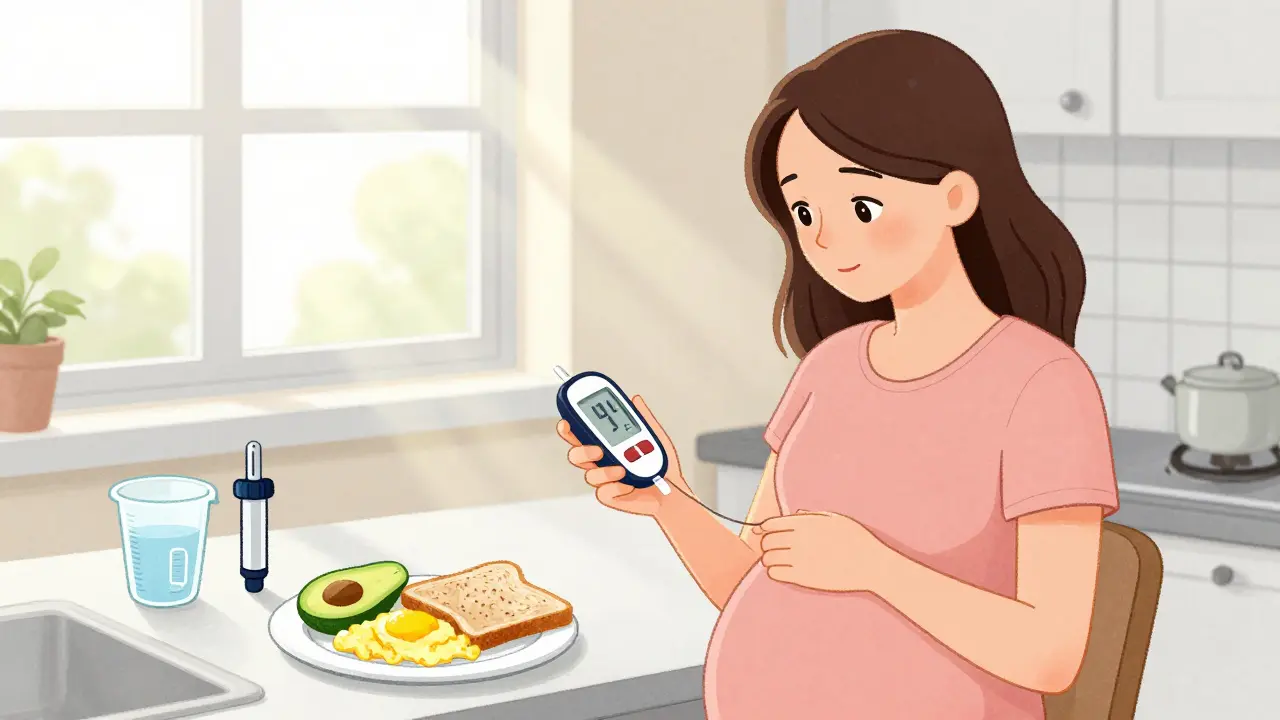
When you're pregnant, your body changes in ways you never expected. One of the most surprising? Your pancreas suddenly has to work three times harder just to keep your blood sugar in check. That’s because the placenta releases hormones that block insulin - your body’s natural key to unlocking glucose from your bloodstream. For about 1 in 10 pregnant women, this system gets overwhelmed. That’s gestational diabetes - high blood sugar that starts during pregnancy and usually disappears after birth. But if it’s not managed, it can lead to big problems: a baby too big to deliver safely, low blood sugar in the newborn, or even preeclampsia for the mother.
What Your Blood Sugar Numbers Should Be
Knowing your numbers isn’t just about following rules - it’s about protecting your baby and yourself. The American Diabetes Association sets clear targets for gestational diabetes:
- Fasting or before meals: under 95 mg/dL (5.3 mmol/L)
- One hour after eating: under 140 mg/dL (7.8 mmol/L)
- Two hours after eating: under 120 mg/dL (6.7 mmol/L)
These aren’t suggestions. They’re the line between a smooth pregnancy and one that could end in the NICU. Most women check their blood sugar four to six times a day - before breakfast, and one or two hours after each meal. Some use continuous glucose monitors (CGMs), which track sugar levels all day long. Studies show CGMs cut the risk of having a baby over 9 pounds by nearly 40%. That’s huge.
Food Is Your First Tool
More than 70% of women with gestational diabetes control their blood sugar with diet and movement alone. No pills. No shots. Just smart eating.
Carbs aren’t the enemy - but how and when you eat them matters. Aim for 35-40% of your daily calories from complex carbs. That’s about 45 grams per meal and 15-30 grams per snack. Think whole grains, beans, lentils, oats, and sweet potatoes - not white bread or sugary cereal.
Here’s what a typical day looks like:
- Breakfast: 2 scrambled eggs, 1 slice whole wheat toast, ½ avocado
- Snack: Greek yogurt with ½ cup berries
- Lunch: Grilled chicken salad with ½ cup quinoa, olive oil dressing
- Snack: Apple with 1 tablespoon almond butter
- Dinner: Baked salmon, 1 cup broccoli, ⅓ cup brown rice
- Bedtime snack (if needed): 6 whole grain crackers with 1 oz cheese
Notice the pattern? Every carb comes with protein or fat. That’s not an accident. Pairing an apple with peanut butter slows down sugar absorption by about 30%. Eating protein first - chicken or fish - then veggies, then carbs - lowers post-meal spikes by 25-40%, according to patient surveys from UCSF Health.
Portion control is non-negotiable. One cup of cooked rice? That’s one meal’s worth. Two slices of bread? That’s it. Too much at once = sugar spike. Use measuring cups at first. You’ll get better with time.
Movement Isn’t Optional
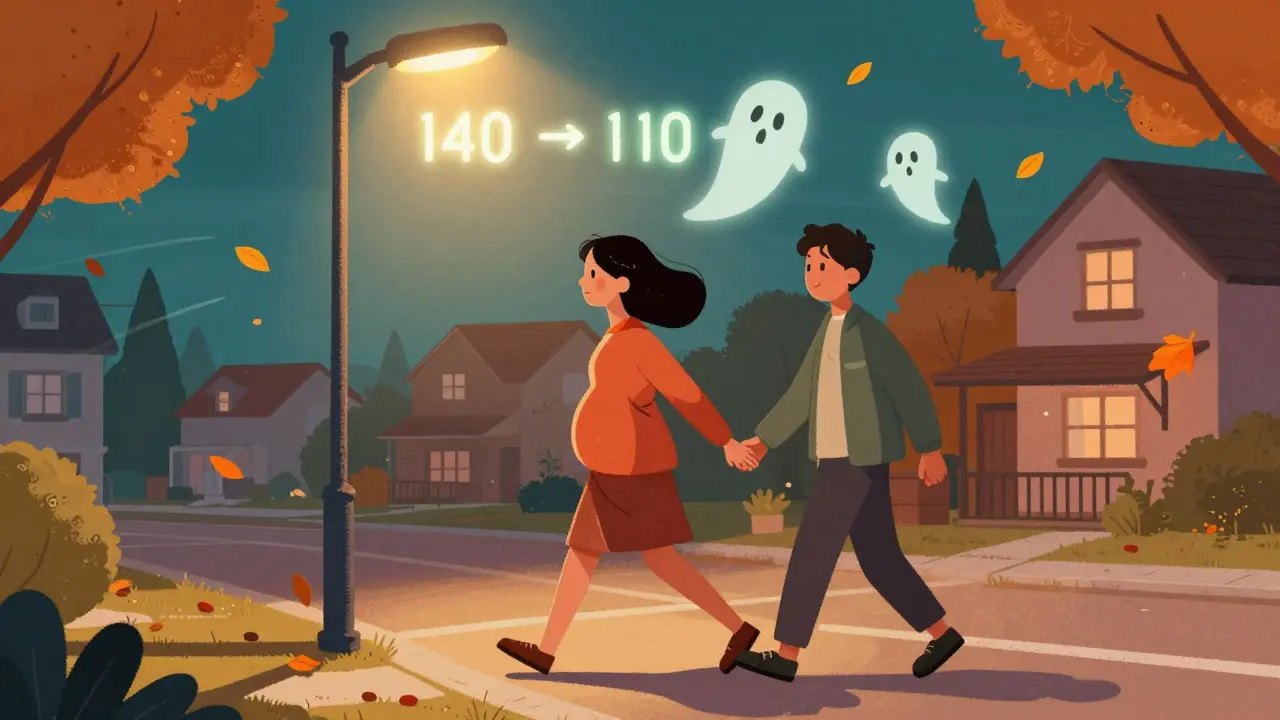
Walking after meals isn’t just good for you - it’s a blood sugar lifeline. Thirty minutes of brisk walking five days a week can drop your post-meal sugar by 20-30 mg/dL. Do it 15-30 minutes after eating, and you’ll see the difference in your readings.
Swimming, prenatal yoga, or even dancing around your living room counts. The goal is consistent movement - not intensity. A 2023 study found that women who walked after dinner had lower fasting glucose the next morning. Some saw drops of 15-25 mg/dL just from a daily 20-minute walk.
If you’re tired, start small. Ten minutes after lunch. Then fifteen. Then thirty. Progress matters more than perfection.
When Diet and Exercise Aren’t Enough
Even with perfect meals and daily walks, 15-30% of women still need insulin. That doesn’t mean you failed. It means your body needed a little extra help.
Insulin is safe during pregnancy. It doesn’t cross the placenta, so it won’t affect your baby. Many women worry about shots - but most find the pens easy to use after a few tries. Your doctor or diabetes educator will show you how. Some use insulin only at night to manage fasting highs. Others need it with meals.
Metformin is sometimes used, especially in places where insulin is hard to access. But it’s not the first choice. The MiTy trial showed that 30% of women on metformin still needed insulin later. And long-term effects on the baby? Still being studied.
The bottom line: if your numbers stay high after two weeks of diet and exercise, insulin isn’t a backup - it’s the next step. And it works.
What No One Tells You
Most women with gestational diabetes feel alone. They’re told to cut carbs, check sugar, walk daily - but no one talks about the emotional toll. One in two women say the diagnosis felt like a failure. Some cry when they see the glucometer. Others feel guilty about snacks.
But here’s the truth: gestational diabetes isn’t your fault. It’s caused by hormones your body makes to feed your baby. You didn’t eat too much sugar. You didn’t skip the gym. Your body just needed more help than usual.
Join a support group. Reddit’s r/GestationalDiabetes has over 500 active posts a week. Women share meal ideas, insulin tips, and reassurance. One common tip: “I eat my protein first, then veggies, then carbs.” It’s simple. And it works.
Don’t let conflicting advice from your OB and dietitian overwhelm you. Write down your questions. Bring them to one appointment. Get clear answers. Most clinics now have certified diabetes educators (CDCES) on staff. Use them.
What Happens After the Baby Is Born
Good news: for most women, gestational diabetes disappears after delivery. The placenta is gone. The insulin-blocking hormones vanish. Blood sugar usually returns to normal within days.
But here’s the catch: half of women who had gestational diabetes will develop Type 2 diabetes within 10 years. That’s not a prediction - it’s a warning.
That’s why you need a 6-12 week postpartum glucose test. A 75-gram oral glucose tolerance test. Fasting over 126 mg/dL? Two hours over 200 mg/dL? That’s Type 2 diabetes. Anything in between? Prediabetes. Either way, it’s your wake-up call.
And here’s the best part: you can stop it. The TODAY2 study showed that losing just 5-7% of your body weight after pregnancy cuts your risk of Type 2 diabetes by 58%. That’s not about extreme diets. It’s about keeping the same eating habits you used during pregnancy. Keep the veggies. Keep the protein. Keep walking. Keep checking your sugar - at least once a year.
What to Do Right Now
If you’ve just been diagnosed:
- Get your glucose meter and test strips today.
- Book your first appointment with a certified diabetes educator.
- Start logging your meals and blood sugar numbers - even if you’re not sure what they mean yet.
- Go for a 15-minute walk after your next meal.
- Find one person to talk to - a friend, a support group, a counselor.
You’re not alone. And you’re not broken. You’re managing a temporary condition with tools that work - if you use them.
By the time your baby is born, you’ll look back and realize: you did this. Not perfectly. But consistently. And that’s what saved you both.

Sarah Mailloux
I was diagnosed with GD at 28 weeks and thought I was doomed but this post nailed it. Eating protein first changed everything. My post-meal numbers dropped like a rock. No more panic attacks over apples. I started walking after dinner and now I actually look forward to it. My OB said I'm one of the few who didn't need insulin. You got this.
Jami Reynolds
Let me be clear: gestational diabetes is not a natural condition. It is a manufactured crisis driven by Big Ag and the pharmaceutical-industrial complex. The real cause? Glyphosate in your organic kale. The ADA targets? A front for insulin manufacturers. CGMs are surveillance tools disguised as health aids. You're being manipulated into believing you need constant monitoring. Trust your body. Eat real food. Avoid all processed carbs. And never, ever trust a doctor who says 'it's just hormones.' It's not just hormones. It's a cover-up.
Frank Geurts
As a father of two daughters born in the United States, and having witnessed the profound cultural shift in maternal health awareness over the past two decades, I feel compelled to express my deep appreciation for the clarity and compassion embedded in this article. The emphasis on dietary sequencing-protein, vegetables, then carbohydrates-is not merely a medical recommendation; it is a cultural reclamation of ancestral wisdom. In many South Asian and Mediterranean households, this practice has been instinctual for generations. The modern medical framework, while valuable, often overlooks the intuitive knowledge passed down through families. I urge all expectant mothers: honor your body’s rhythm, not just its numbers. And if you feel overwhelmed-reach out. You are not alone. You are part of a global lineage of women who have nourished life with quiet strength.
Mike Berrange
Let’s be real-this post is full of contradictions. You say carbs aren’t the enemy, then list exact gram counts like we’re on a military diet. You say insulin isn’t failure, but the whole tone implies you should avoid it at all costs. And who the hell is measuring rice in thirds? This isn’t cooking, it’s chemistry. Also, why is walking after dinner magically better than walking at 6 a.m.? No study says that. You’re just repeating what some nurse told you. And don’t get me started on Reddit support groups. People there think cinnamon tea cures diabetes. I’ve seen it.
Dan Mack
They told me gestational diabetes was temporary. Then they gave me a glucose meter. Then they said if I don’t hit these numbers, my baby could be 10 pounds. Then they said I might need insulin. Then they said I’ll probably get Type 2 later. Then they said to join a Reddit group. I’m not pregnant anymore. I’m a walking anxiety experiment. And now they want me to lose 5% of my body weight? I just gave birth. My body just did a marathon. You want me to diet? No. I’m done. I’m not your lab rat.
Amy Vickberg
Thank you for writing this. I cried reading it because no one ever told me it wasn’t my fault. I thought I ate too much pizza. I thought I was lazy. I thought I failed. But you’re right-it’s hormones. It’s biology. I started walking after lunch with my husband and we talk about the baby. It’s not about numbers anymore. It’s about us. I’m proud of myself. And if you’re reading this and feeling guilty? You’re not broken. You’re becoming. Keep going. One step. One meal. One breath.
Nishant Garg
In India, we call this 'gravid diabetes'-and our grandmothers always said: eat slowly, chew well, never skip breakfast, and never eat sweets without dal. The science here is beautiful, but the wisdom is ancient. I’ve seen women in rural Punjab manage this with millet roti, bitter gourd curry, and a 20-minute walk after sunset. No CGMs. No insulin. Just rhythm. The body remembers. The key isn’t restriction-it’s harmony. Protein with every bite. Movement as ritual. Not punishment. And when you feel alone? Call your mother. Or your aunt. Or the neighbor who made you lentil soup last week. We’ve been doing this longer than glucose meters have existed.
Nicholas Urmaza
Just got diagnosed yesterday. Read this whole thing in one go. Took a walk after dinner. Checked my sugar. 112. Not bad. I’m booking my CDCES appointment tomorrow. No panic. No guilt. Just action. I’m not perfect. But I’m trying. And that’s enough.