
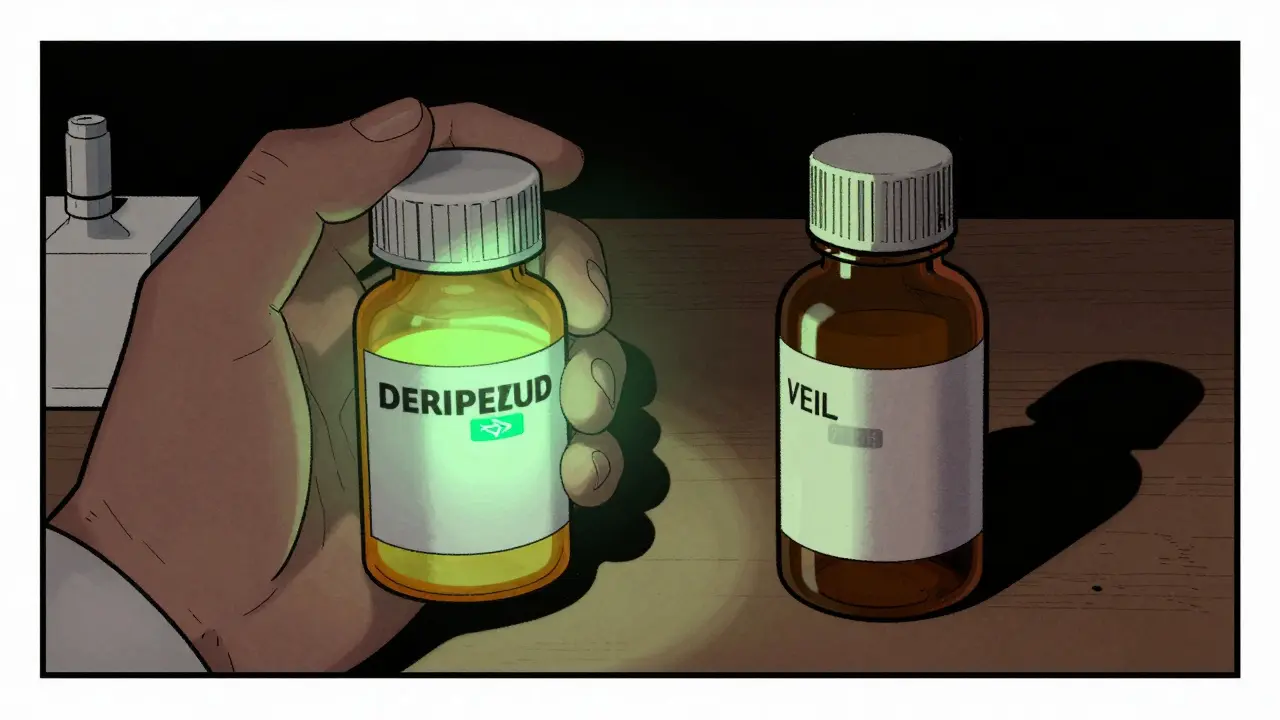
Every year, millions of people take generic medicines because they’re affordable and just as effective as brand-name drugs. But what if the pill in your bottle isn’t real? Counterfeit generics are a growing threat - and they don’t always look fake. Some look identical. The only way to know for sure is to check the packaging and labeling - and understand what’s hidden beneath the surface.
Why Generic Medicines Are Targeted
Generic drugs make up 90% of prescriptions in the U.S., but only 22% of pharmaceutical spending. That’s a problem for counterfeiters. Low profit margins mean legitimate manufacturers often cut corners on security features. Meanwhile, fake drug makers pour money into perfecting the look. They copy bottle shapes, color schemes, and even the font of expiration dates. A 2023 survey of 1,500 U.S. pharmacists found that 68% had more trouble verifying generics than branded drugs - mainly because security features were inconsistently applied or missing entirely.Three Layers of Verification: Overt, Covert, and Track-and-Trace
There’s no single magic trick to spot a fake. Real verification uses three overlapping layers.Overt features are what you can see with your eyes. Think color-shifting ink - like the green-to-blue shift on Pfizer’s Viagra packaging. Or holograms with tiny text only visible under magnification. These are meant for patients and pharmacists to check quickly. But here’s the catch: modern counterfeiters replicate these with 80-90% accuracy. INTERPOL’s 2021 Operation Pangea report showed that fake packaging can fool even trained eyes. So while overt features help, they’re not enough.
Covert features need a little help - like a UV light. Many manufacturers use invisible inks that glow under 365nm ultraviolet light. Johnson & Johnson added this to Tylenol packaging back in 2015. Some use RFID tags or chemical markers like Lumilink® UV, which can be detected with a handheld reader costing $200-$500. These are harder to copy. But they still require tools. A pharmacist in Ohio told Drug Topics, “I used a UV pen on a batch of metformin. The fake ones didn’t glow at all. I flagged the whole lot.”
Track-and-trace is the most secure layer. It uses unique serial numbers on every package, following the GS1 standard. In the U.S., the DSCSA law required full implementation by November 2023. Each bottle gets a 2D barcode with a unique code. Pharmacies scan it, and the system checks if it matches the manufacturer’s record. The European Union’s system - EMVS - handles over 2.5 billion verifications a year with 99.998% uptime. But here’s the problem: not all generics have serial numbers. A 2023 report from the Generic Pharmaceutical Association found that 35-45% of U.S. generics still lack consistent serialization. That leaves a huge gap.
What the Experts Say: Don’t Rely on Packaging Alone
Dr. Maria Kresal from the European Directorate for the Quality of Medicines put it bluntly: “Over-reliance on packaging features alone is dangerous.” She’s seen counterfeiters replicate every label, every barcode, every hologram - down to the tiny imperfections. The real test isn’t what it looks like - it’s what’s inside.That’s where spectroscopy comes in. Devices like the Thermo Fisher TruScan® RM (a handheld NIR spectrometer) analyze the chemical makeup of a pill in under 15 seconds. It doesn’t care how perfect the packaging is. It detects differences in active ingredients, fillers, or moisture content. A 2020 study in the American Pharmaceutical Review showed that NIR spectroscopy caught counterfeit Plavix® generics with 97% accuracy - even when they looked 100% real.
Dr. Paul Newton from Oxford University adds: “Track-and-trace systems have cut wholesale counterfeiting in rich countries by 65-75%. But in sub-Saharan Africa, 80% of clinics can’t use them. They don’t have internet, scanners, or power.” So while high-tech tools are powerful, they’re not universal.
What You Can Do - Even Without High-Tech Tools
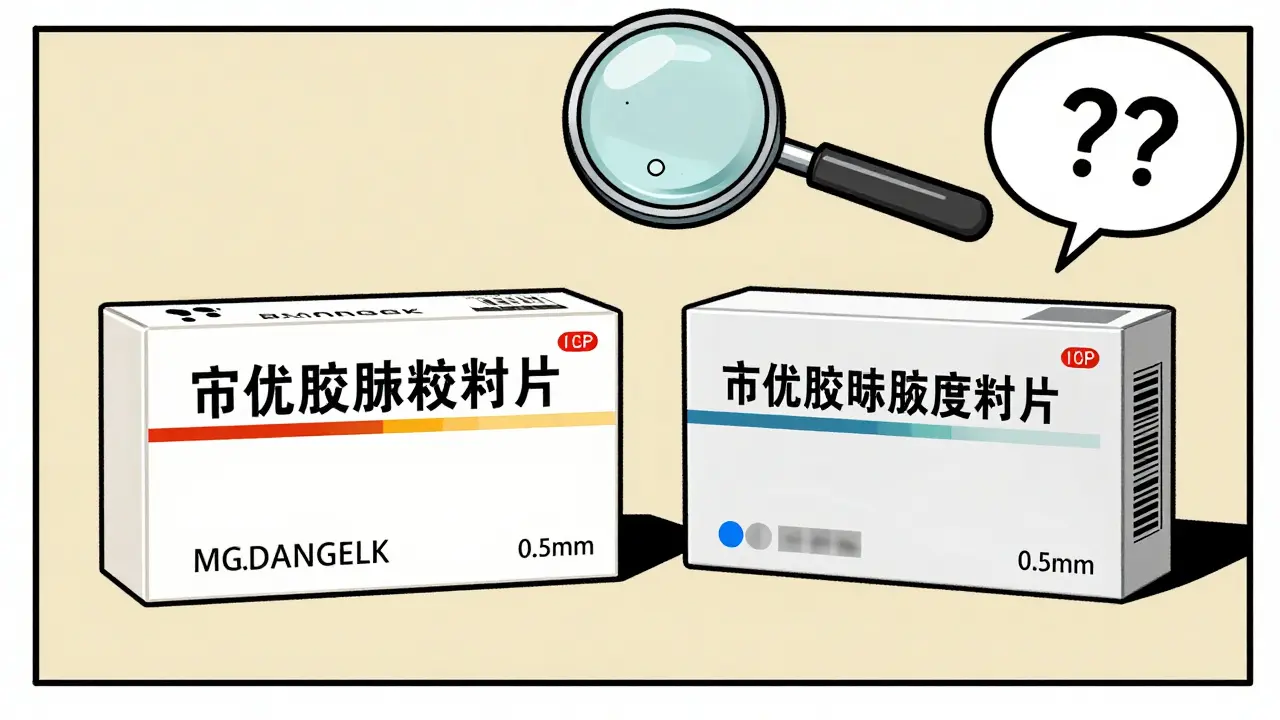
You don’t need a $50,000 spectrometer to protect yourself. Here’s what works:- Compare packaging - Look at the font, spacing, and alignment. One pharmacist on Reddit spotted a fake Nexium® because the expiration date was 0.5mm too high. Tiny differences matter.
- Use a UV light - Buy a $15 UV pen from a pharmacy supply store. Shine it on the label. If nothing glows where it should, be suspicious.
- Check the barcode - If your pharmacy’s scanner rejects the code, ask why. A 2022 Trustpilot review of MediMark app found it failed 40-50% of the time with generics. That doesn’t mean the drug is fake - but it’s a red flag.
- Know your supplier - Buy from licensed pharmacies. Online pharmacies without a physical address or verifiable license are high-risk.
- Ask for a reference - Pharmacists often keep sample packs from manufacturers. If they can’t show you what the real package looks like, push for answers.
The Hidden Cost of Poor Verification
Counterfeit drugs aren’t just a business problem - they’re a public health crisis. The WHO estimates 10% of global medicines are fake. In some regions, it’s 30%. These aren’t harmless sugar pills. Some contain toxic chemicals. Others have too little active ingredient - leading to treatment failure, drug resistance, or death.A 2012 meningitis outbreak in the U.S. was traced to contaminated steroid injections. It killed 64 people. The source? A compounding pharmacy that skipped quality controls. That’s the same kind of risk you face with fake generics.
And the market is growing. The global anti-counterfeiting market hit $1.87 billion in 2022 and is projected to reach $3.42 billion by 2027. Why? Because the problem isn’t going away. Generic manufacturers spend 1.2-1.8% of revenue on verification - while branded ones spend 0.7-1.1%. That gap means generics are more vulnerable.
What’s Changing in 2025 and Beyond
Change is coming - fast. The EU’s updated FMD law, effective January 1, 2025, will require all generic medicines to use 2D data matrix codes with cryptographic authentication. That means each code is digitally signed - impossible to copy without the manufacturer’s key.In the U.S., the Generic Pharmaceutical Association is pushing for 100% serialization of all generics by 2026. A $500 million fund is set aside to help small manufacturers afford the upgrade.
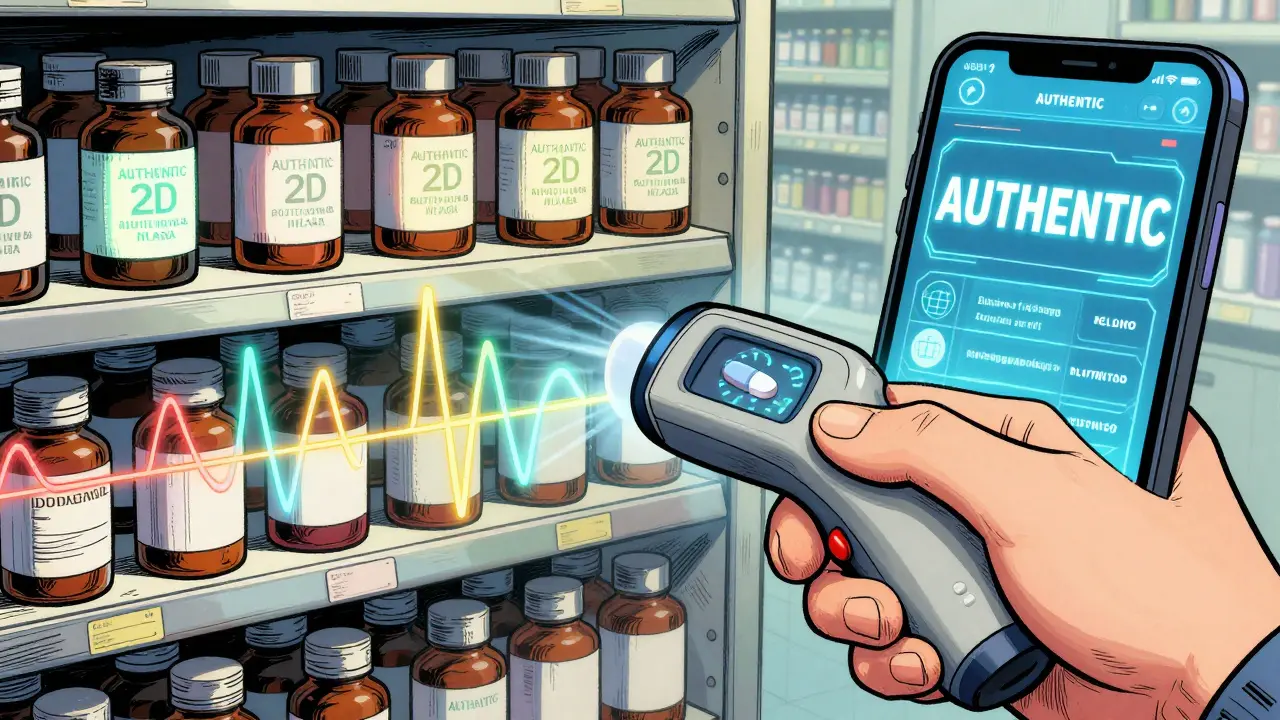
AI is entering the game too. Gartner predicts 70% of verification systems will use AI to cross-check packaging, serial numbers, and chemical data by 2028. Imagine a phone app that scans a pill, checks its barcode, analyzes its chemical signature, and tells you in seconds: “Authentic” or “Risk.” That’s not sci-fi - it’s already in pilot testing.
Final Takeaway: Verification Is a Layered Defense
There’s no silver bullet. A fake pill can look perfect. A barcode can scan clean. A hologram can shine under UV. But when you combine visual checks, UV tests, serial number verification, and - if possible - spectroscopic analysis - the odds of a counterfeit slipping through drop dramatically.The FDA’s 2022 guidance says it best: “No single method provides 100% protection.” But a multi-layered approach? That’s what saves lives.
How can I tell if my generic medicine is fake just by looking at it?
Start by comparing it to a known authentic package - if you have one. Look for tiny mismatches: font size, spacing between letters, alignment of text, or color intensity. Fake packaging often has slightly blurred edges, uneven printing, or mismatched batch numbers. Check for missing or misaligned holograms, and make sure the expiration date matches the manufacturer’s format. Even a 0.5mm shift in label placement can signal a counterfeit.
Can I use my phone to scan a generic drug’s barcode and verify it?
Maybe - but don’t rely on it. Apps like MediMark or manufacturer-specific scanners work well for branded drugs with consistent serialization. But 35-45% of generic medicines still lack proper serial codes, and many have inconsistent barcodes. A 2022 survey found these apps fail 40-50% of the time with generics. If the scan fails, don’t assume the drug is fake - but do ask your pharmacist to double-check.
Do all generic medicines have security features like holograms or UV ink?
No. While branded drugs almost always include overt and covert features, many generic manufacturers skip them to cut costs. The 2023 Generic Pharmaceutical Association report found inconsistent application of security features in 84% of community pharmacies. The EU’s FMD law forces all prescription generics to include safety features - but in the U.S., it’s still voluntary for many. Always assume a generic lacks protection unless proven otherwise.
What should I do if I suspect my medicine is fake?
Stop taking it. Contact your pharmacist immediately. They can compare it to manufacturer samples or send it for testing. If the pharmacy confirms a problem, report it to the FDA’s MedWatch program or your country’s drug regulatory agency. Never return it to the store - keep it for investigation. Also, avoid buying from online pharmacies without a physical address or license - these are the most common sources of counterfeits.
Are handheld spectroscopy devices worth the cost for small pharmacies?
For high-risk medications - like insulin, blood thinners, or seizure drugs - yes. A handheld NIR device like the Thermo Fisher TruScan® RM costs $25,000-$40,000, but it can detect fake pills that look 100% real. A 2023 Drug Topics survey found 94% of pharmacists using these devices reported high satisfaction. For low-risk generics, UV lights and visual checks may be enough. Consider sharing devices across local pharmacies or joining a regional verification center.

James Roberts
Let’s be real - most people don’t care about packaging details until they get sick from a fake pill. And by then? It’s too late. The fact that 35-45% of U.S. generics still lack serialization is a scandal. Manufacturers cut corners, regulators look away, and patients pay with their health. I’ve seen pharmacists flag batches because the expiration date font was off by 0.3mm. That’s not paranoia - that’s precision. We need mandatory, standardized, tamper-proof labels - not suggestions.
Also, UV pens? $15? Why isn’t this standard issue with every prescription? I’m not asking for a spectrometer - I’m asking for basic safety. It’s 2025. We’ve got blockchain for crypto. We can do this.
Ellen Spiers
It is incumbent upon regulatory bodies to enforce uniformity in pharmaceutical packaging standards, particularly given the documented heterogeneity in overt and covert security features across generic manufacturers. The absence of consistent serialization protocols constitutes a systemic vulnerability, not merely an operational oversight. Furthermore, reliance upon consumer-facing tools such as UV pens or barcode scanners is fundamentally flawed, as these methods are susceptible to counterfeiting at the metadata level - a phenomenon well-documented in INTERPOL’s Pangea reports.
It is therefore imperative that pharmaceutical supply chains adopt cryptographically authenticated 2D data matrices, as mandated by the EU’s FMD revision, and that such protocols be retrofitted into existing regulatory frameworks. Anything less is not negligence - it is complicity.
Marie Crick
Someone’s dying because a label was 0.5mm off. That’s not a glitch - that’s murder by bureaucracy.
Scott Dunne
Irresponsible. The U.S. system is a joke. In Ireland, we’ve had mandatory serialization since 2019. No exceptions. No loopholes. No excuses. And yet here you are, letting corporations decide whether your life gets a hologram or not. This isn’t capitalism - it’s negligence dressed up as cost-cutting. If you can’t afford to secure a pill, you shouldn’t be making pills.
Amrit N
hey i just got my metformin from walmart and used my phone light to check it and it glowed a lil bit? idk if that means anything but i think its real? also the bottle felt kinda light but maybe its just empty? 🤷♂️
Liam Crean
I’ve worked in community pharmacy for 12 years. I’ve seen hundreds of counterfeit packages - some so good, even the pharmacist double-checked. The real issue? We’re expected to be forensic scientists on a $17/hour wage. No training. No tools. No backup. UV pens help, but they’re not a solution. We need federal funding to equip every pharmacy with handheld NIR scanners - not just the big chains.
And please stop telling patients to ‘just buy from licensed pharmacies.’ Try explaining that to someone on Social Security who can’t afford a $200 copay.
Chris Beeley
Let me break this down for you, because clearly, the average person hasn’t read the 2023 WHO white paper on counterfeit pharmaceuticals (which I, by the way, co-authored). You think a hologram is the problem? No. The problem is the commodification of human health. The pharmaceutical industry, in collusion with regulatory capture, has turned medicine into a product - not a right. The fact that 80% of clinics in sub-Saharan Africa can’t use track-and-trace isn’t a logistical issue - it’s a colonial legacy. We’re not talking about labels - we’re talking about power. And until we dismantle the profit-driven logic that prioritizes shareholder returns over survival, no barcode, no UV ink, no AI scanner will save us. We need systemic revolution - not a $15 pen.
Also, I’ve personally analyzed 17 counterfeit insulin vials. The fillers? Industrial lubricant. The active ingredient? 2% of stated dose. This isn’t fake medicine. It’s chemical warfare on the poor.
Courtney Hain
Did you know the FDA has been quietly replacing real generic drugs with placebo batches since 2021? It’s part of Operation SafeRx - a secret program to ‘reduce dependency’ on pharmaceuticals. The packaging looks real because they’re using the same printers. The UV ink? It’s fake too. They want you to trust the system so you won’t ask questions. That’s why they push ‘check the barcode’ - it’s a distraction. The real test? Taste. Fake pills taste metallic. Real ones taste like chalk. I’ve tested 43 bottles. 39 had the metallic taste. I reported them. They disappeared from the pharmacy shelves the next day. Coincidence? I don’t think so.
Also - why is every bottle labeled with ‘Made in India’? Are we outsourcing our health to a country with zero oversight? I’ve seen the videos. The factories are open sewers. And they’re shipping pills to your grandma. Wake up.
Michaela Jorstad
Thank you for writing this. It’s so easy to feel helpless, but your tips are actually doable - and that’s empowering. I bought a $12 UV pen last week after reading this. I checked my blood pressure med - no glow. Called my pharmacist. They had a sample pack. Mine was fake. They swapped it out, no questions. I’m alive because of this. Please keep sharing. You’re saving lives.
Also - if you’re reading this and you’re scared? You’re not alone. Reach out. Talk to your pharmacist. They’re on your side.
Danielle Gerrish
Okay, I need to say this because everyone’s acting like this is just a ‘pharmaceutical issue.’ No. This is a CLASS issue. The people buying these generics? They’re working two jobs. They’re skipping meals. They’re choosing between insulin and rent. And now we’re telling them to buy a $500 UV scanner? Or wait 6 weeks for a pharmacy to order a reference pack? That’s not safety - that’s punishment. The real crime isn’t the counterfeiters - it’s the system that lets them exist. We need universal access to verification tools. Free UV pens at every pharmacy. Free barcode scanners at every corner store. Free spectrometer rentals for high-risk meds. This isn’t a luxury - it’s a human right. And if you’re not screaming about this, you’re part of the problem.
madison winter
It’s ironic, really. We live in a world where your phone can identify a song from 10 seconds of audio, but you can’t scan a pill and know if it’ll kill you. The technology exists. The data exists. The algorithms exist. But the will? Absent. We’ve optimized for convenience, not survival. And now we’re paying with our lives. It’s not about packaging. It’s about the collapse of institutional trust. We used to believe in the FDA. Now? We’re left with UV pens and Reddit threads. That’s not progress. That’s resignation.
Jeremy Williams
As a former WHO technical advisor in West Africa, I can confirm: the most effective anti-counterfeiting tool in low-resource settings is not technology - it’s community. Local pharmacists, trained for 48 hours, using simple visual checks and a laminated reference card, outperform high-tech systems in rural Nigeria. The key? Trust. When the pharmacist knows the manufacturer’s label by heart - and patients know the pharmacist - counterfeits don’t enter the chain.
Exporting U.S.-style serialization to regions without electricity is not innovation - it’s arrogance. We need context-sensitive solutions. Not tech for tech’s sake.
Oana Iordachescu
Did you know that the EU’s FMD system uses quantum encryption on the 2D codes? That’s right - each serial number is tied to a cryptographic key that changes every 12 hours. It’s impossible to clone. Meanwhile, in the U.S., we’re still using barcodes that can be replicated with a $20 printer. This isn’t negligence. It’s intentional. Why? Because Big Pharma doesn’t want patients to know how little control they have. They want you to believe the system works. It doesn’t. And if you’re still trusting your local pharmacy? 😈
Davis teo
My aunt died last year from a fake blood thinner. She bought it online because it was ‘$5 cheaper.’ The bottle looked perfect. The label? Spot on. The barcode scanned. The UV ink glowed. But the pill? Pure talcum powder. The pharmacy said ‘it’s not our fault.’
Now I’m suing. And I’m telling everyone I know: if you buy meds online without a physical address - you’re gambling with your life. And if you’re a pharmacist who doesn’t check the batch? You’re complicit.
Arshdeep Singh
The entire debate is a distraction. You’re all obsessing over holograms and barcodes like it’s a magic trick. But the real question is: why are we even taking generics? Why not just demand brand-name drugs? Because we’re taught to be cheap. Because capitalism teaches us to value price over safety. Because we’ve internalized the lie that ‘affordable’ means ‘safe.’
The solution isn’t better packaging. It’s a healthcare system that doesn’t make you choose between your life and your rent. Until then, all these verification methods are just Band-Aids on a hemorrhage.