
GLP-1 Meal Planner Calculator
Meal Composition Guide
For GLP-1 medications (Ozempic, Wegovy, etc.), follow these ratios during dose titration:
Protein
25-30g per meal
Fat
Under 15g per meal
Carbs
Under 40g per meal
Your meal meets guidelines
This meal composition helps minimize nausea and other GI side effects.
When you start a GLP-1 receptor agonist like Ozempic, Wegovy, or Trulicity, the promise is clear: better blood sugar control, meaningful weight loss, and improved heart health. But for many, the first few weeks bring something else entirely-nausea, vomiting, bloating, or diarrhea. These aren’t rare side effects. They’re common. In fact, up to 70% of people on these medications experience some kind of gastrointestinal discomfort. And for 1 in 5, it’s bad enough to quit.
The good news? You don’t have to suffer through it. The GI side effects of GLP-1 drugs aren’t random. They’re predictable. And they’re manageable-with the right meal plan and the right dosing strategy.
Why GLP-1 Drugs Cause GI Problems
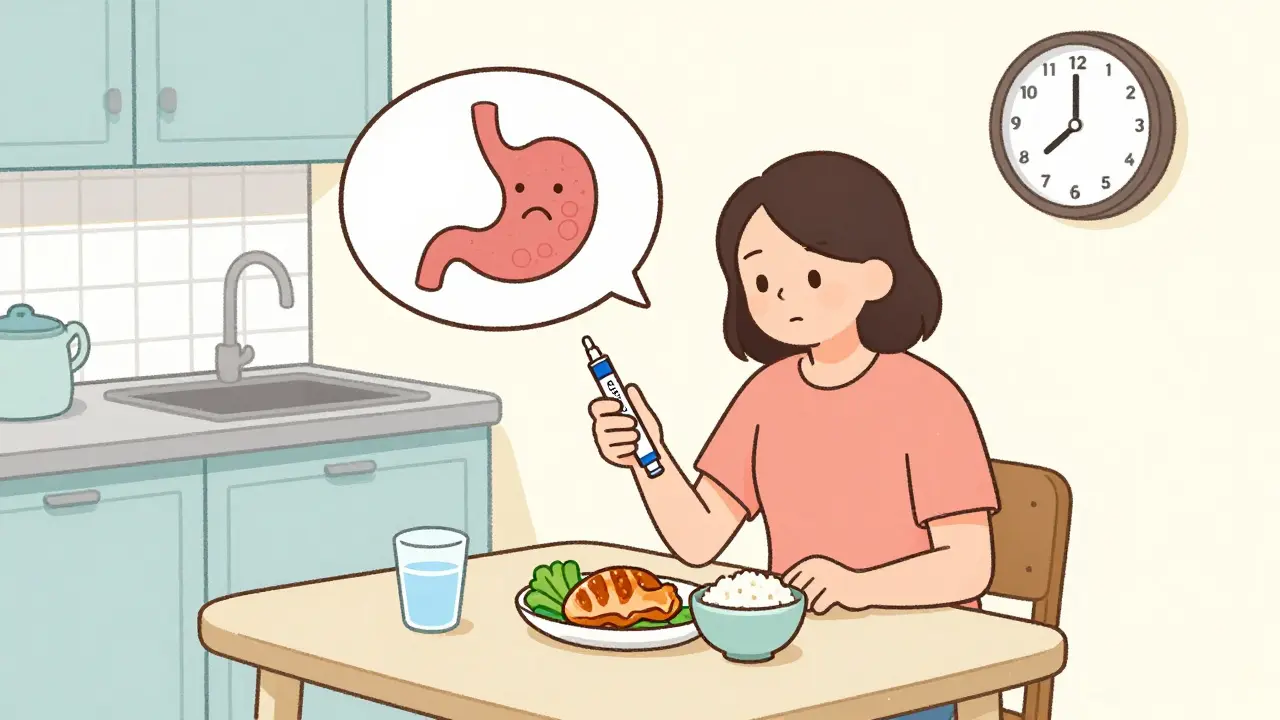
GLP-1 medications work by slowing down how fast your stomach empties. That’s why they help control blood sugar after meals and make you feel full longer. But that same mechanism is what causes nausea and bloating. Your stomach holds food longer than usual. That means pressure builds up. Your brain gets signals it doesn’t like. That’s nausea. If it gets worse, vomiting follows. Diarrhea happens because food moves unevenly through your intestines. Constipation? That’s when things slow down too much.
It’s not your fault. It’s not bad luck. It’s pharmacology. And it gets better-usually. Studies show nausea peaks around week 4, then drops sharply. By week 56, only about 5.5% of users still feel it. But that doesn’t mean you should just wait it out. How you eat and how you increase your dose makes all the difference.
The Dose Titration Mistake Most People Make
Most prescriptions come with a fixed schedule: increase every 4 weeks. But that’s not how your body works. If you feel nauseous after a dose increase, pushing forward is the worst thing you can do. You’re not building tolerance-you’re training your body to associate medication with discomfort.
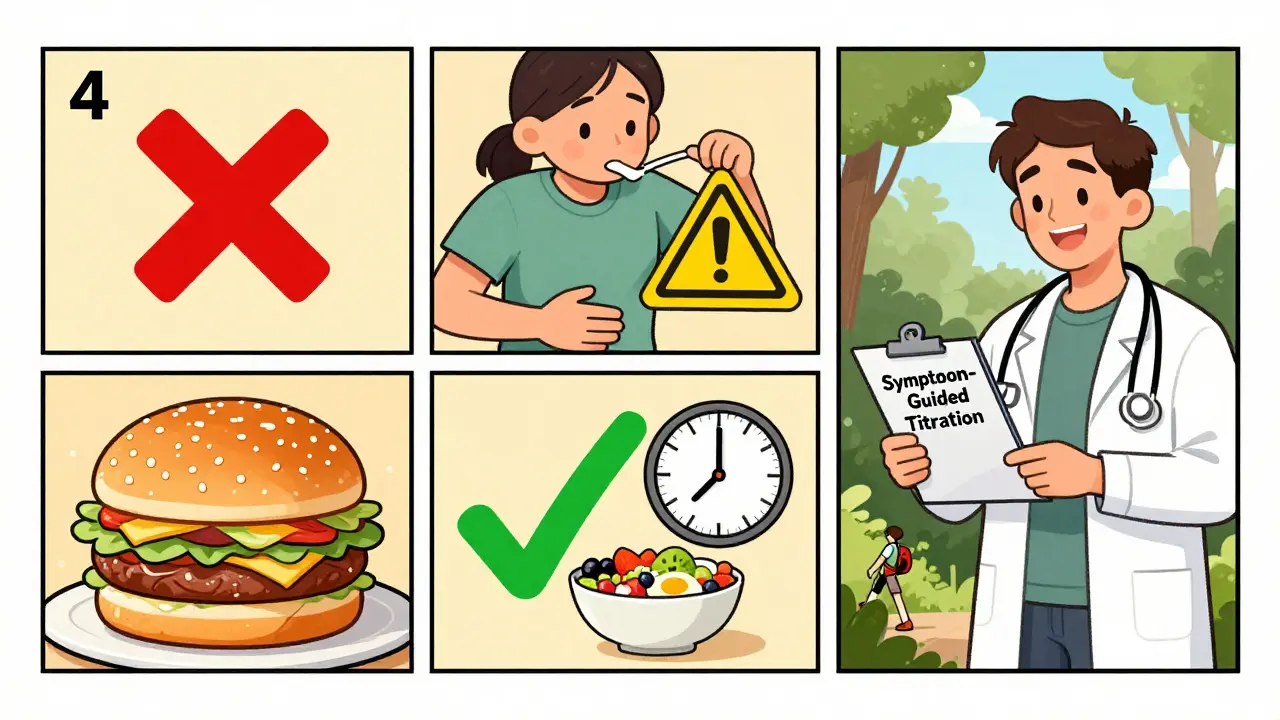
Experts now agree: titrate based on symptoms, not calendar dates. The Endocrine Society and the American Diabetes Association both recommend this: don’t increase your dose until nausea has been gone for at least 7 full days. If you’re vomiting more than twice a week? Hold the dose. Wait 4 to 6 weeks. Then try again.
One study found that people who followed this symptom-guided approach had 37% fewer treatment dropouts than those who stuck to the standard schedule. Another showed that delaying the final dose increase by just 2 weeks cut discontinuation rates by nearly half.
For semaglutide (Wegovy), that means instead of rushing to 2.4 mg in 16 weeks, you might need 20-24 weeks. For liraglutide (Saxenda), don’t rush to 3.0 mg daily. If you’re still feeling queasy at 2.4 mg, stay there. Your body will adapt.
Meal Planning That Actually Works
What you eat matters more than you think. GLP-1 drugs don’t react well to large meals, high fat, or sugary foods. Here’s what the data says works:
- Keep meals small. Aim for 300-400 calories per meal. Most people who quit GLP-1 therapy were eating meals over 600 calories during titration.
- Focus on protein. Get 25-30 grams of protein in each meal. Protein digests slowly and helps stabilize blood sugar. A morning meal with 20-25g protein within 30 minutes of waking can reduce nausea by 40%.
- Limit fat. Keep fat under 15g per meal. High-fat meals slow digestion even more, worsening bloating and nausea.
- Avoid sugar spikes. Don’t eat more than 20g of simple carbs at once. No juice, no candy, no white bread.
- Space meals out. Eat every 3-4 hours. Don’t skip meals. Don’t eat late at night.
- Drink smart. Limit fluids to 120-180 ml (4-6 oz) with meals. Drink water between meals, not with them. Avoid carbonated drinks completely-they add gas and pressure.
Registered dietitians at Joslin Diabetes Center recommend a 30-40-30 ratio: 30g protein, under 40g carbs (mostly complex), and under 30g fat per meal during titration. It’s not a diet. It’s a survival plan.
Timing Matters More Than You Think
When you take your dose and when you eat are just as important as what you eat.
For once-weekly medications like semaglutide or dulaglutide, take it first thing in the morning with water only. Wait 30 to 60 minutes before eating anything. That gives your body time to process the drug before food hits your stomach.
Some users report a 25-30% drop in nausea when they switch from evening to morning dosing. Why? Your body’s natural rhythm slows digestion overnight. Taking the dose in the morning aligns better with your natural gastric activity.
And if you’re still struggling? Try eating your first meal 2 hours after your injection. One Reddit user with daily nausea said it dropped to mild within 3 days after making that change. It’s simple. It’s not magic. But it works.
What to Do When Symptoms Hit
Not everyone can avoid nausea entirely. When it happens, here’s what to do:
- First 24-48 hours: Stick to clear liquids-water, broth, herbal tea. No solids.
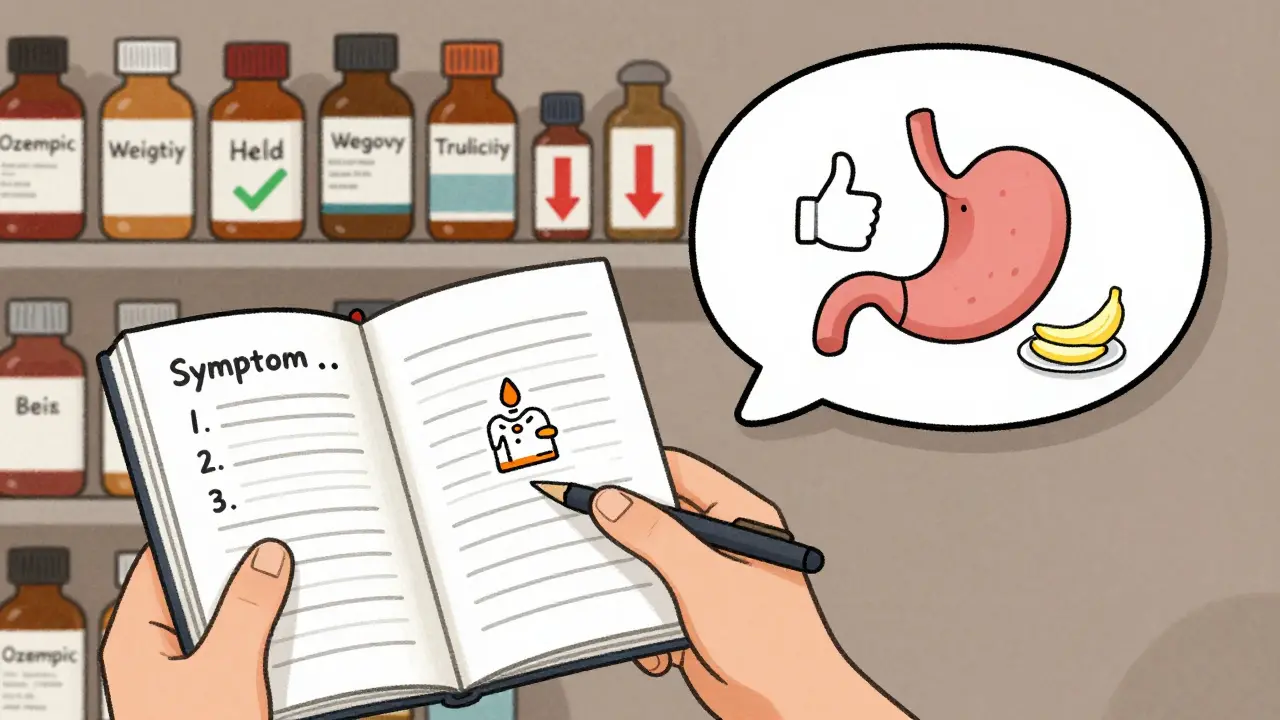
- Next 2-3 days: Move to bland, easy foods. Think bananas, rice, applesauce, toast (the BRAT diet). No spices, no oil.
- Then: Slowly reintroduce protein-rich, low-fat meals. Don’t jump back to normal portions.
- If you vomit more than twice a week: Hold the dose for 7-10 days. Restart at the previous level. Don’t try to jump back up.
- Keep a symptom log. Note what you ate, when you took your dose, and how you felt. Patterns emerge fast.
Mayo Clinic’s internal data shows that 68% of people who were ready to quit could stay on treatment after doing this-reducing their dose temporarily and waiting.
What Doesn’t Work
Don’t fall for these myths:
- “Just take it with food.” That might help a little, but it doesn’t fix the root problem. Food delays absorption, but doesn’t reduce gastric pressure.
- “Use anti-nausea meds.” Ondansetron or ginger supplements might help temporarily, but they don’t teach your body to adapt. They mask symptoms, not fix the issue.
- “I’ll tough it out.” Pushing through severe nausea increases your risk of dehydration, electrolyte imbalance, and long-term aversion to the drug.
These aren’t signs of weakness. They’re signals. Listen to them.
Why This Matters Now
More than 10 million Americans are on GLP-1 drugs. Prescriptions have jumped 137% since 2021. But 22% of people stop within 6 months-mostly because of GI issues. That’s not just a personal setback. It’s a public health problem. These drugs reduce heart attacks and strokes in high-risk patients. They change lives.
Manufacturers know this. Novo Nordisk now offers free dietitian support with Wegovy. Eli Lilly gives Mounjaro users biweekly check-ins. These aren’t perks-they’re survival tools. And they work. Users in these programs have 15-20% higher adherence rates.
For you, it’s simpler. You don’t need a program. You need clarity. Stick to small meals. Slow down your dose. Listen to your body. The side effects aren’t permanent. But how you handle them now will determine whether you get the long-term benefits-or give up too soon.
Can GLP-1 side effects last longer than a few months?
For most people, nausea and vomiting fade within 8-12 weeks. But a small subset-about 5-10%-may have persistent symptoms beyond 6 months. This is more likely if they rushed their dose increases, ate large or high-fat meals, or had prior digestive issues like IBS. If symptoms last longer than 6 months, talk to your doctor. You may need a lower dose, a different GLP-1 drug, or a diagnostic check for gastroparesis or other conditions.
Is it safe to skip a dose if I’m too nauseous?
Yes, if you’re vomiting or can’t keep fluids down. Missing one dose won’t ruin your progress. In fact, holding the dose for 1-2 weeks when symptoms are moderate can reset your tolerance. Never skip multiple doses without talking to your provider, but don’t force yourself to take it if you’re sick. Dehydration is more dangerous than a missed injection.
Do all GLP-1 drugs cause the same side effects?
No. Short-acting drugs like exenatide (Byetta) cause more nausea and vomiting-up to 40% of users. Long-acting drugs like semaglutide and dulaglutide cause less nausea but more diarrhea. Liraglutide sits in the middle. If nausea is your main issue, liraglutide may be easier to start with. If diarrhea is worse, semaglutide might be better once you’re past the early phase. Your doctor can help match the drug to your symptom pattern.
Can I still drink alcohol on GLP-1 meds?
Alcohol can worsen nausea and lower blood sugar, especially in the first few months. If you drink, wait until you’re fully titrated and stable. Then limit it to occasional, small amounts. Never drink on an empty stomach. Always eat protein first. Avoid sugary mixers. And monitor your blood sugar-GLP-1 drugs can make hypoglycemia more likely when combined with alcohol.
What if I’m still losing weight too fast and feel weak?
Rapid weight loss on GLP-1 drugs is common, but if you’re feeling dizzy, fatigued, or losing muscle, you’re not getting enough calories or protein. Increase your protein intake to 30g per meal, add healthy fats like avocado or olive oil in small amounts, and eat every 3-4 hours-even if you’re not hungry. Your body needs fuel to adapt. Don’t let the scale dictate your nutrition. Focus on strength and energy, not just weight.



William James
man, i wish i'd had this guide when i started ozempic. i thought i was just 'bad at dieting' or something, but it was all about how i was eating. small meals, protein first, no chugging water with food? game changer. i'm 6 months in and still going strong. your body isn't broken-it's just being asked to adapt too fast. slow down, listen, and it'll thank you.
David McKie
oh please. 'symptom-guided titration'? that's just code for 'give up and blame the drug.' people who can't handle a little nausea shouldn't be on these meds in the first place. this isn't a spa retreat-it's medicine. if you can't tolerate the side effects, maybe you don't need the benefits. toughen up. the world doesn't hand out gold stars for sensitivity.
Southern Indiana Paleontology Institute
look, i'm from indiana and i've seen my share of fads. this 'glp-1 thing' is just another corporate scam. they got you scared of your own blood sugar so you'll buy a $1000/month shot. and now you're told to eat like a rabbit? protein this, fat that. who made you the nutrition pope? i eat meat, potatoes, and beer. and i'm fine. your body ain't a lab rat.
Joanna Reyes
i've been on liraglutide for 11 months now, and honestly, the meal plan advice here saved me. i used to eat big dinners after work-fried chicken, rice, gravy-and i'd be curled up on the floor for hours. once i switched to 300-calorie meals with 30g protein, spaced every 3.5 hours, and drank water only between meals? nausea dropped from daily to once a week. i even started enjoying breakfast. it's not about willpower-it's about aligning your habits with the drug's mechanics. this isn't just advice-it's science you can live with.
Nerina Devi
thank you for writing this. as someone from india who's now managing type 2 diabetes with semaglutide, i was terrified i'd have to give up my dal and roti. but i started with half a roti, added lentils for protein, skipped the ghee, and waited 45 minutes after my shot before eating. no more bloating. no more guilt. it's not about giving up your culture-it's about adapting it. you can still have flavor, warmth, and tradition. you just need to listen to your body, not the marketing.
Dinesh Dawn
just wanted to say this was super helpful. i'm on my 3rd month of wegovy and i almost quit last week. then i read this and changed my routine-morning dose, 2-hour wait, small chicken and broccoli bowl. within 3 days, the nausea was gone. i didn't even realize how much i'd been stressing over it. sometimes the fix is simple. you just need someone to say it out loud.
Vanessa Drummond
okay but why is no one talking about how this is a privilege? people who work two jobs, don't have access to protein-rich foods, or live in food deserts can't 'eat every 3-4 hours.' this advice sounds great on paper, but for a lot of us, it's just another way to blame the patient. i'm still on the drug, but i'm also still hungry. and i'm tired of being told to 'listen to my body' when my body is just trying to survive.
Nick Hamby
the elegance of this approach lies not in its complexity, but in its alignment with physiological reality. the gastrointestinal tract is not a passive conduit; it is a dynamic, rhythmically regulated organ system. by imposing external pharmacological modulation without adjusting temporal and nutritional variables, we create an artificial conflict. the solution, therefore, is not pharmacological, but ecological: harmonize the dosing regimen with circadian biology and macronutrient kinetics. this is not a workaround-it is a restoration of homeostatic equilibrium.
kirti juneja
omg this is the real deal. i was ready to quit after week 2-felt like my stomach was a balloon full of angry bees. then i tried the 30-40-30 thing. protein shake for breakfast, grilled chicken at lunch, no carbs after 7pm. and guess what? i didn't just survive-I started feeling *good*. like, i could walk without feeling like i'd swallowed a brick. also, i started cooking with turmeric and ginger-natural anti-inflammatories, no side effects. this isn't just medicine. it's a lifestyle upgrade.
Haley Gumm
you're all missing the point. the real issue isn't the meal plan or the titration-it's that we're treating a metabolic disorder like a cosmetic tweak. these drugs are powerful. they're not 'diet aids.' if you're on them, you're in a high-risk category. and if you're not monitoring your electrolytes, liver enzymes, and hydration? you're playing russian roulette. this post is helpful, but it's not enough. we need more data, more screening, more accountability. not just 'eat small meals'-we need a system.
Gabrielle Conroy
THIS. THIS. THIS!!! 😭💖 I literally cried when I read this. I was ready to quit after 3 weeks-vomiting every time I ate. Then I tried the 60-minute wait + protein-first thing. First day: mild nausea. Second day: zero. Third day: I ate a whole chicken breast and didn't feel like dying. I'm now 4 months in and lost 38 lbs. I even started hiking! Please, please, please-listen to this advice. It's not magic. It's just smart. You got this!! 💪🍎🍗
Spenser Bickett
so let me get this straight… you're telling me if i just stop eating like a human and start eating like a lab rat, i'll feel better? cool. so the solution to a $1000/month drug's side effects is… more discipline? more rules? more guilt? thanks for making me feel like a failure for having a stomach. i'll just go back to my pizza.
Christopher Wiedenhaupt
the data presented here is methodologically sound and aligns with clinical guidelines from the ADA and Endocrine Society. however, real-world adherence remains low due to socioeconomic and educational barriers. future interventions should integrate nutritional counseling into primary care workflows, not rely on patient self-education via online forums. while the advice is correct, accessibility is the true bottleneck.