
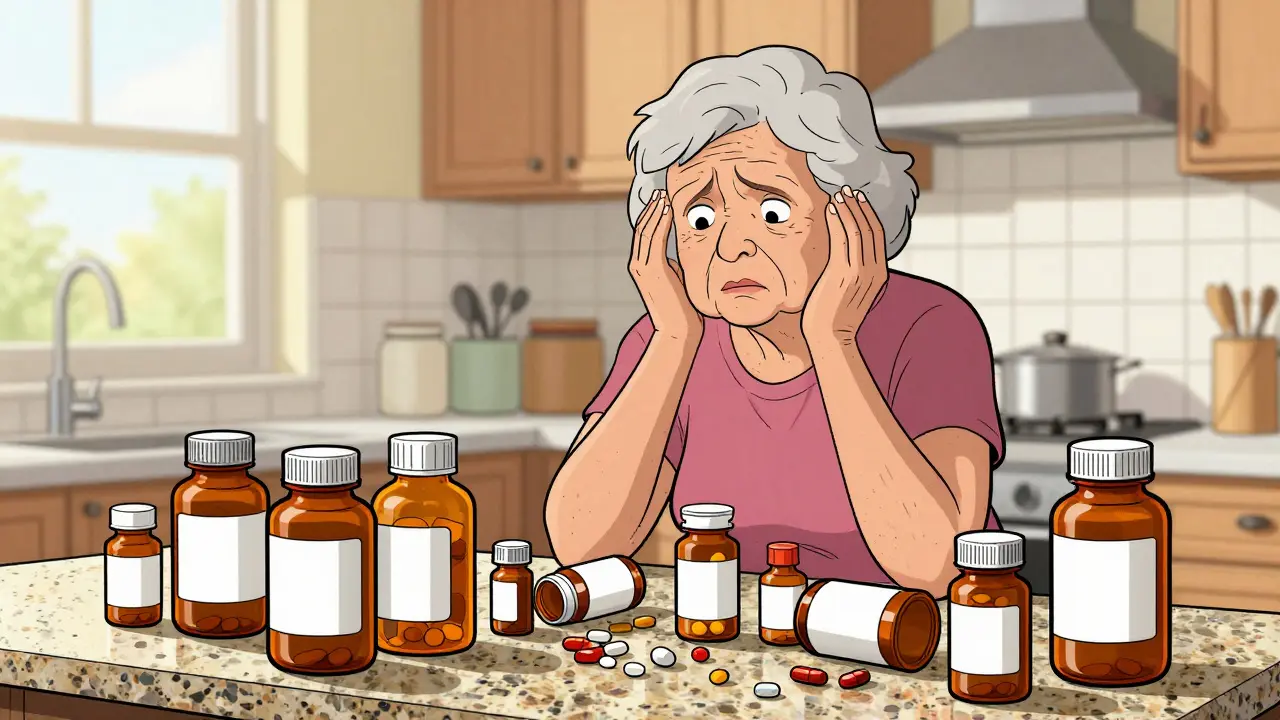
Imagine a grandmother who takes ten different pills a day. One is for blood pressure, another for cholesterol, and three others for joint pain and diabetes. By Tuesday afternoon, she can't remember if she took her heart medication or if that's the one she's supposed to take with food. This isn't just a "senior moment"-it's a dangerous healthcare gap. When someone doesn't take their meds exactly as prescribed, it's called medication adherence is the behavior of taking medication exactly as prescribed by a healthcare provider. For older adults, failing to hit this mark isn't just about forgetfulness; it's a complex mix of cost, confusing schedules, and physical struggle.
The stakes are incredibly high. We're talking about a scenario where non-adherence contributes to roughly 200,000 deaths annually. It's not just about the individual, either; the economic burden is staggering, with costs reaching up to 125 billion euros in the European Union alone. If the medicine doesn't get into the patient, it can't do its job, which leads to more hospital visits and a faster decline in quality of life.
The Polypharmacy Trap
One of the biggest hurdles is Polypharmacy, which is the concurrent use of multiple prescription drugs, often more than are medically necessary. It sounds like a clinical term, but in real life, it looks like a handful of plastic bottles on a kitchen counter. About 54% of adults over 65 take four or more prescription meds, and some take ten or more every single week.
Why does this matter? Because the more pills you add, the more likely you are to miss one. Research shows that people managing three or four daily doses have much lower adherence rates than those who only take a pill once a day. Plus, the risk of Adverse Drug Reactions-where two or more drugs clash-spikes. In fact, about 35% of ambulatory older adults experience these reactions annually, and nearly a third of those cases end up in the hospital. The scary part is that these reactions often look like aging; a fall or a bout of confusion might be blamed on "getting old" when it's actually a drug interaction.
Why Seniors Stop Taking Their Meds
It's easy to assume that people just forget, but the reasons for missing doses are often systemic. We can break these barriers into three main groups:
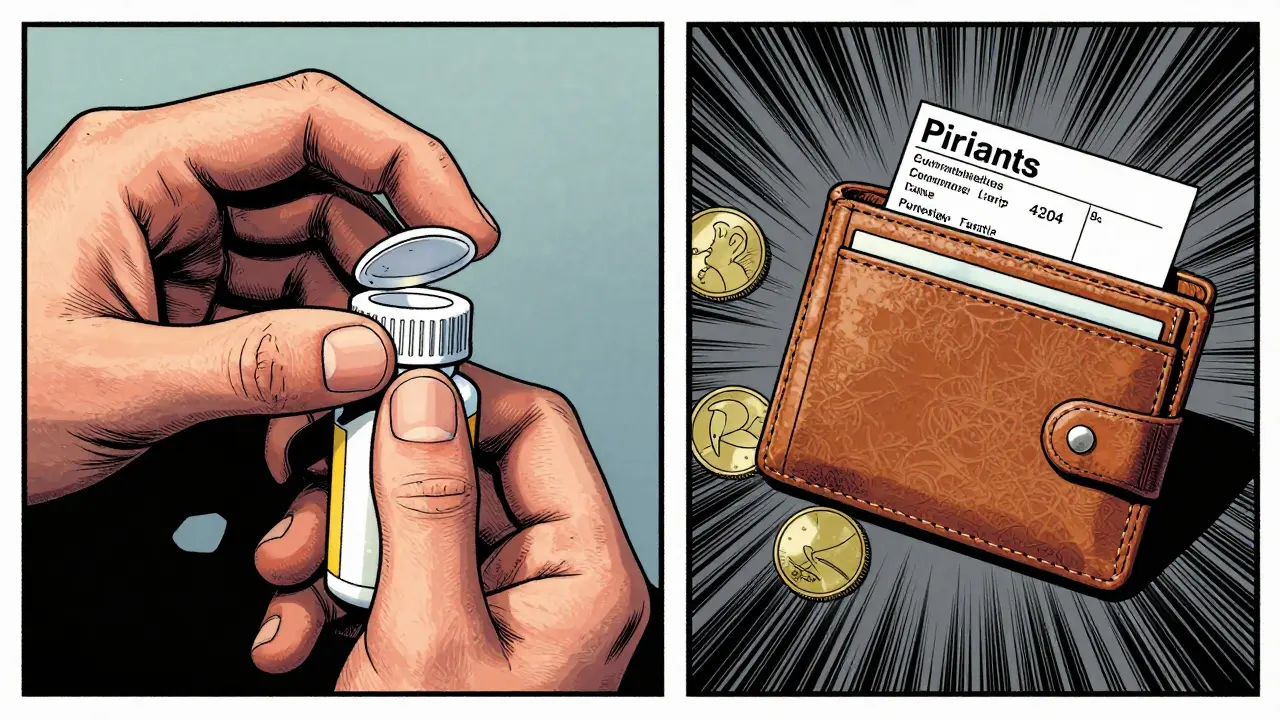
- Patient-Related Barriers: This includes cognitive decline, where forgetfulness or confusion about dosage takes over. Physical issues also play a role-think of someone with arthritis struggling to open a child-proof cap or someone with failing vision who can't read the tiny print on a label.
- Medication-Related Barriers: This is mostly about the complexity of the regimen. If a patient has to take different pills at 8 AM, 12 PM, 4 PM, and 8 PM, the margin for error is huge.
- Healthcare System Barriers: Poor communication between a primary doctor and a specialist can lead to duplicate prescriptions or conflicting advice, leaving the patient confused about which instruction to follow.
Then there's the money. Even with insurance, out-of-pocket costs are a massive wall. Data shows that women and minority groups, particularly Black and Hispanic older adults, face higher rates of cost-related non-adherence. In some heartbreaking cases, seniors have to choose between buying their medication and buying food. Those facing food insecurity are six times more likely to skip doses or delay filling a prescription just to make ends meet.
Breaking Down the Barriers: What Actually Works
If we want to fix this, we can't just tell patients to "try harder." We need concrete tools. The most effective solutions target the specific barrier the person is facing. For example, if the problem is memory, a high-tech automated dispenser is a game-changer. If the problem is cost, navigating pharmacy assistance programs is the priority.
| Barrier Type | Specific Challenge | Effective Solution |
|---|---|---|
| Cognitive/Physical | Forgetfulness, dexterity issues | Pill organizers, automated dispensers |
| Clinical/Regimen | Too many doses per day | Switching to once-daily extended release |
| Socioeconomic | High cost of drugs | Generic alternatives, patient assistance |
| Educational | Confusion over instructions | Simplified, large-print visual guides |
One of the most powerful things a doctor can do is a comprehensive medication review. This isn't just a quick glance at a list; it's a deep dive where the provider asks, "Does this drug still serve a purpose given the patient's current goals?" Reducing the total number of pills is often the fastest way to increase adherence.
The Role of Social Support and Environment
We often overlook the "human" side of medicine. Interestingly, research from Brazil indicates that social and family support issues are actually the biggest barrier to adherence-more so than memory or the complexity of the drugs themselves. A senior who feels isolated or lacks a caregiver to help organize their meds is far more likely to struggle.
On the flip side, a structured routine can be a protective factor. Some people who are retired or have a history of a major health event, like a stroke, actually show better adherence. Why? Because they've developed a strict daily schedule and a heightened awareness of their health. Turning medication into a ritual-like taking pills immediately after the morning coffee-helps bake the habit into the day.
Next-Gen Strategies for Caregivers
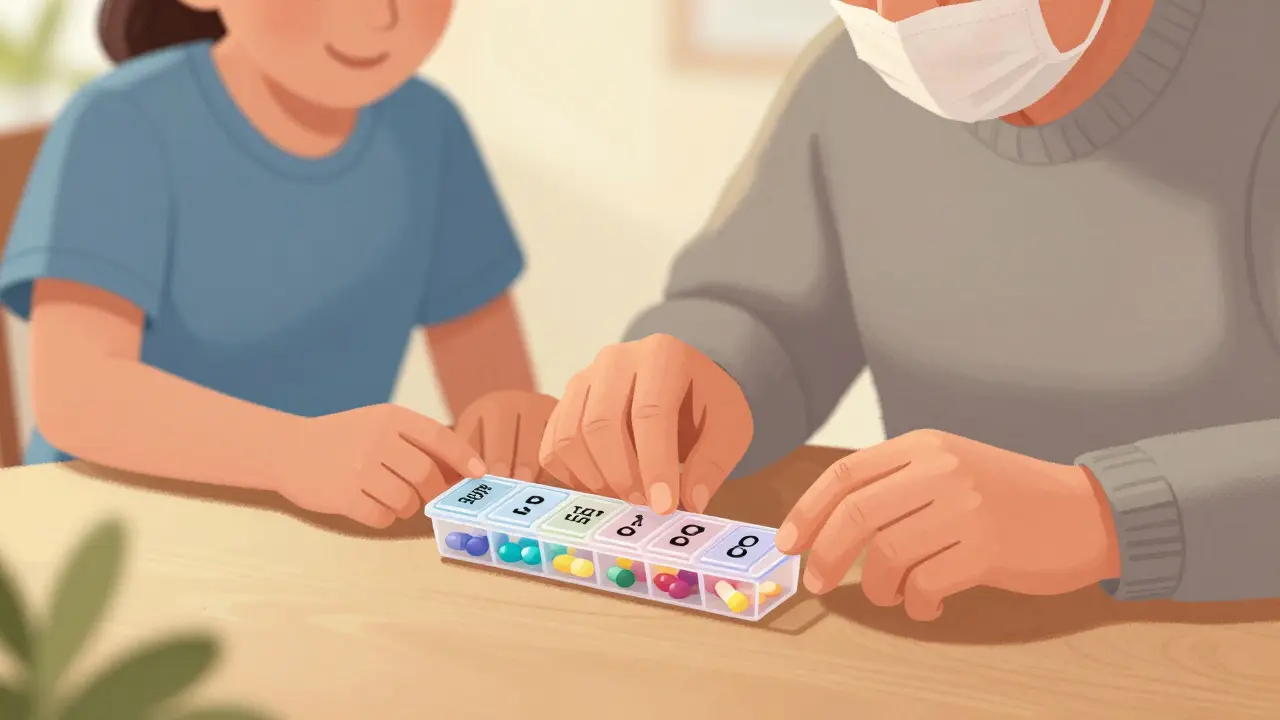
If you're helping a parent or a loved one, don't just ask, "Did you take your pills?" Instead, create a system that removes the guesswork. Use a Pill Organizer, which is a plastic container with separate compartments for different days and times of the week. This allows you to see at a glance if a dose was missed.
Also, watch for "self-adjusting." Some seniors stop taking a drug because they don't like the side effects or they think they've "gotten better." They might quietly lower the dose without telling their doctor. Encourage them to keep a simple log of how they feel after taking a new medication so they can discuss it with their provider rather than just quitting the treatment.
What is the most common cause of missed medications in seniors?
While memory loss is a major factor, social determinants-like a lack of family support and low health literacy-often play a larger role. Many seniors also struggle with the sheer number of medications (polypharmacy), making it easy to miss a dose in a complex schedule.
How does polypharmacy increase the risk of hospitalization?
Taking multiple medications increases the chance of adverse drug reactions. These reactions can cause falls, dementia-like confusion, or urinary incontinence. Because these symptoms look like typical aging, they often go untreated until they lead to an emergency room visit.
Can changing the timing of a medication improve adherence?
Yes. Simplifying a regimen from multiple daily doses to a single once-daily dose significantly boosts the likelihood that a patient will stay consistent. Reducing the "pill burden" is one of the most effective clinical interventions.
What should I do if a senior is skipping doses due to cost?
First, talk to the prescribing doctor about generic alternatives. Next, look into pharmaceutical company patient assistance programs or public drug coverage options. It's vital to let the doctor know about the cost issue, as they may be able to prioritize the most critical medications over optional ones.
Are there tools for people with poor eyesight or dexterity?
Yes. Automated pill dispensers can remove the need to open difficult bottles. For vision impairment, use large-print labels, color-coded caps, or apps that read medication labels aloud using a smartphone camera.


Jay Vernon
Pill organizers really save the day! 💊✨
Benjamin cusden
It is quite elementary that the failure lies within the fragmented nature of our healthcare system. The obsession with polypharmacy as a 'trap' is a simplistic interpretation of a far more systemic failure in pharmacological oversight and physician communication. One would think the concept of a comprehensive medication review would be standard practice across all demographics, yet here we are discussing it as if it were a revolutionary strategy.