

Imagine waking up after eight hours of sleep, but still feeling like you haven’t slept at all. Not just tired - uncontrollably sleepy. You’re in the middle of a meeting, driving to work, or talking to a friend, and your eyes shut without warning. This isn’t laziness. It’s narcolepsy - a neurological disorder that hijacks your brain’s ability to manage wakefulness and sleep. Around 1 in 2,000 people live with it, and most don’t even know they have it until years after symptoms start.
What Narcolepsy Really Feels Like
Narcolepsy isn’t just feeling drowsy after a late night. It’s a constant, overwhelming urge to fall asleep - multiple times a day - no matter how much rest you get at night. People with narcolepsy often have 4 to 6 sleep attacks daily, each lasting 15 to 30 minutes. Afterward, they feel refreshed… for a few minutes. Then the pull returns.
But sleepiness is only half the story. About 70% of people with narcolepsy also experience cataplexy - sudden muscle weakness triggered by strong emotions like laughter, surprise, or anger. You might drop your coffee cup, slump in your chair, or even collapse. Your mind stays awake, but your body shuts down for 30 seconds to two minutes. It’s terrifying, embarrassing, and isolating.
Nighttime sleep isn’t restful either. Eighty-five percent of people with narcolepsy wake up 4 to 6 times during the night, even if they spend 8+ hours in bed. They might dream vividly while half-asleep - hallucinations that feel terrifyingly real. Or they might wake up unable to move, fully aware but paralyzed for a minute or two. These symptoms aren’t rare. They’re the norm.
How It’s Diagnosed
Many people go years without a diagnosis because doctors mistake narcolepsy for depression, ADHD, or just poor sleep habits. The truth? It’s a brain wiring problem. The hypothalamus - the part of your brain that controls sleep-wake cycles - stops making hypocretin (also called orexin), a chemical that keeps you alert. In Type 1 narcolepsy, this loss is severe, often due to an autoimmune reaction. Type 2 has less hypocretin loss and no cataplexy.
To confirm it, you need two tests. First, an overnight sleep study (polysomnography) to rule out sleep apnea or other disorders. Then, a Multiple Sleep Latency Test (MSLT) the next day. You’re given five 20-minute nap opportunities, two hours apart. If you fall asleep in under 8 minutes on average - and enter REM sleep in at least two of those naps - narcolepsy is likely. Some centers also test spinal fluid for hypocretin levels below 110 pg/mL, which confirms Type 1.
Stimulants: The First-Line Treatment for Daytime Sleepiness
There’s no cure yet. But there are drugs that help you stay awake. Stimulants are the most common first choice. They don’t fix the broken hypocretin system. They just boost the brain’s wakefulness signals.
Modafinil (Provigil) is the most prescribed. It’s not a traditional stimulant like caffeine or amphetamines. Instead, it gently increases dopamine levels and may support the remaining hypocretin pathways. Most people take 200 mg in the morning. If it doesn’t help after two weeks, the dose can go up to 400 mg. In clinical trials, 70% of users saw a 5-point drop on the Epworth Sleepiness Scale - enough to go from feeling constantly exhausted to being able to work, drive, and socialize without falling asleep.
Armodafinil (Nuvigil) is the longer-lasting version of modafinil. It’s the R-enantiomer, meaning it stays in your system longer - about 15 hours instead of 12. That means one daily dose, no afternoon crash. In a 2019 trial, 65% of users dropped their Epworth score below 10 - the threshold for normal daytime sleepiness.
But not everyone responds to modafinil. For those with severe daytime sleepiness - Epworth scores above 16 - traditional stimulants like methylphenidate (Ritalin) or mixed amphetamine salts (Adderall) are more effective. Eighty percent of users report better alertness. But here’s the catch: these drugs come with risks. They can raise blood pressure, speed up heart rate, cause anxiety, appetite loss, and emotional numbness. About 45% of people stop taking them within a year because of side effects.

Comparing the Options
Choosing a stimulant isn’t just about what works - it’s about what you can tolerate.
| Medication | Dose Range | Effect on Sleepiness (ESS Reduction) | Side Effect Risk | Abuse Potential |
|---|---|---|---|---|
| Modafinil | 200-400 mg/day | 5.2 points | Low (<5% discontinuation) | Very low |
| Armodafinil | 150-250 mg/day | 5.8 points | Low | Very low |
| Methylphenidate | 10-60 mg/day | 7.8 points | High (25% discontinuation) | Moderate |
| Adderall | 5-60 mg/day | 7.8 points | High | High |
| Solriamfetol | 75-150 mg/day | 7.5-9.8 points | Moderate (hypertension risk) | Low |
Modafinil and armodafinil are safer. They don’t cause the jittery highs and crashes of amphetamines. Most users say they feel “clean energy” - not wired, just awake. But their effect is milder. If your sleepiness is crushing your job or relationships, you might need something stronger.
Solriamfetol (Sunosi) is newer. It blocks dopamine and norepinephrine reuptake, similar to traditional stimulants, but without the same abuse risk. It works well - up to 9.8-point ESS reduction - but can raise blood pressure. About 7% of users in trials crossed into hypertensive range. That means regular checks are a must.
What About Other Treatments?
Stimulants only treat sleepiness. They don’t touch cataplexy. For that, sodium oxybate (Xyrem) is the gold standard. It’s not a stimulant - it’s a sedative taken at night. It improves nighttime sleep and reduces cataplexy by 85%. But it’s tightly controlled. You need a special prescription program (REMS), and it comes with a high sodium load - a problem for people with heart or kidney issues.
Pitolisant (Wakix) is another option. It boosts histamine in the brain to promote wakefulness. It’s as effective as modafinil, has no abuse risk, and doesn’t raise blood pressure. But it’s expensive - around $850 a month. Insurance often fights it.
Real People, Real Results
Sarah Johnson, a 34-year-old teacher in Ohio, used to nap under her desk during class. Her Epworth score was 18 - severely impaired. After switching from modafinil to armodafinil 250 mg, her score dropped to 6. She could now teach full days without falling asleep. She still takes naps on weekends, but she’s back in the classroom - and thriving.
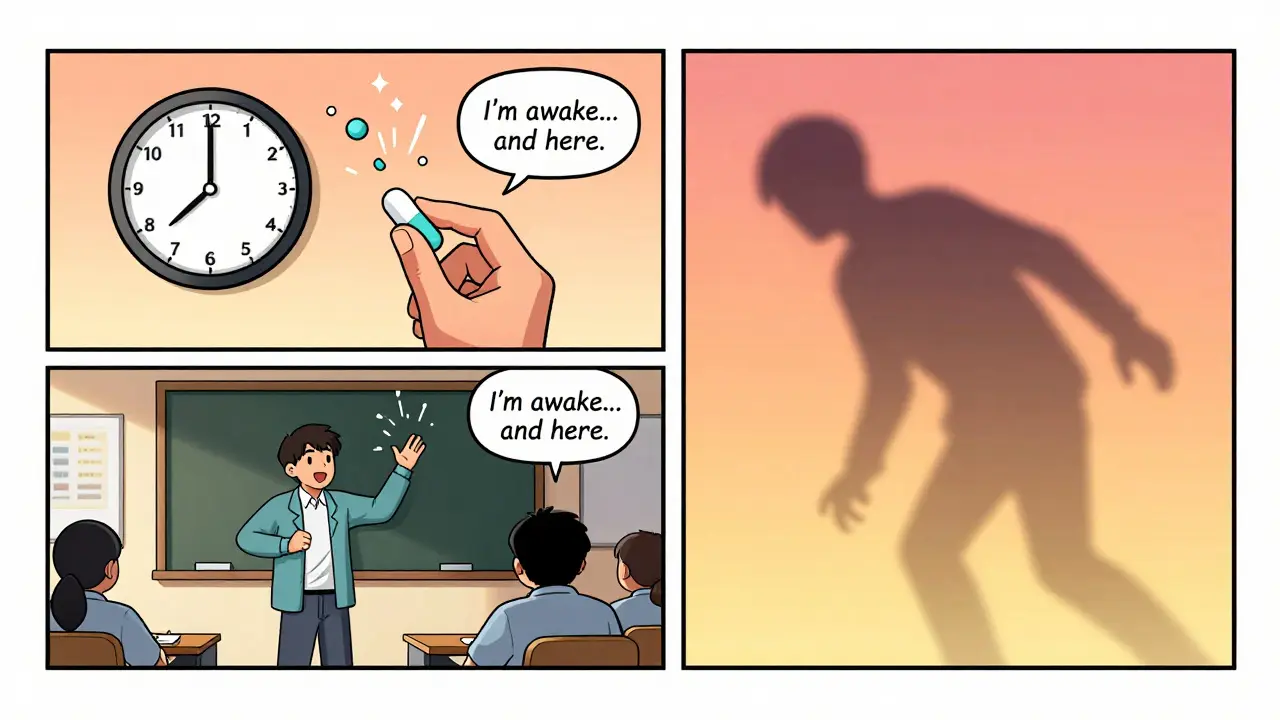
But not everyone has success. On patient forums like MyNarcolepsyTeam, 412 people reported modafinil losing its effect after 18 months. Others say stimulants make them feel emotionally flat. “I’m awake,” one Reddit user wrote, “but I don’t feel like myself.” Rebound fatigue - crashing hard in the evening - is common with all stimulants.
The FDA recorded 142 cases of stimulant-induced psychosis between 2018 and 2022. Almost all were linked to high-dose amphetamines. Most cases reversed after stopping the drug. It’s rare - 0.03% - but it’s real.
What Comes Next?
Current drugs treat symptoms. They don’t fix the root cause - the destroyed hypocretin neurons. Researchers are chasing disease-modifying treatments. One promising drug, TAK-994, acted like a replacement for hypocretin and improved sleepiness dramatically. But development was paused in 2023 due to liver concerns in a few patients.
Another hope: immunotherapy. Since Type 1 narcolepsy is likely autoimmune, scientists are testing ways to stop the immune system from attacking hypocretin cells. Early trials are underway in Europe. If successful, it could mean one day, narcolepsy isn’t a lifelong condition - it’s a treatable illness.
For now, though, treatment is about managing. Finding the right stimulant. Monitoring your heart. Tracking your sleepiness. Talking to your employer about accommodations under the ADA. Most people with narcolepsy can live full, productive lives - if they get diagnosed, get the right treatment, and don’t give up.
What to Do If You Think You Have It
If you’ve been feeling constantly sleepy for months - even after sleeping 8+ hours - talk to a sleep specialist. Don’t wait. The average delay between symptom onset and diagnosis is 10 years. That’s a decade of missed opportunities, lost jobs, and strained relationships.
Start by tracking your sleepiness with the Epworth Sleepiness Scale. It’s free online. Score 10 or higher? That’s a red flag. Ask your doctor for a referral to a sleep clinic. Insist on the MSLT. Bring your sleep diary. Be specific: “I fall asleep in meetings,” “I drop things when I laugh,” “I wake up paralyzed at night.”
And if you’re already on medication? Don’t settle. If modafinil isn’t working after 2 weeks, ask about armodafinil. If you’re on Adderall and feeling anxious or numb, talk about switching. There are options. You just need to advocate for yourself.
Is narcolepsy the same as just being tired?
No. Normal tiredness goes away with sleep. Narcolepsy is a neurological disorder where your brain can’t control wakefulness. People with narcolepsy feel sudden, irresistible sleep attacks - even after a full night’s rest. It’s not about sleep quantity. It’s about brain chemistry.
Can stimulants cure narcolepsy?
No. Stimulants like modafinil and armodafinil help you stay awake by boosting brain chemicals that promote alertness, but they don’t fix the underlying loss of hypocretin. Narcolepsy is a lifelong condition. Treatment manages symptoms - it doesn’t cure the disease.
Why is modafinil preferred over Adderall for narcolepsy?
Modafinil has a much better safety profile. It doesn’t raise heart rate or blood pressure as much, carries little to no risk of addiction, and causes fewer side effects like anxiety or appetite loss. While Adderall works better for severe cases, modafinil is safer for long-term use - which is why doctors usually start with it.
Do I need to take stimulants forever?
For most people, yes. Since narcolepsy stems from permanent damage to hypocretin-producing brain cells, stimulants are needed daily to maintain wakefulness. Some patients find they can reduce doses over time, but stopping completely usually leads to a return of symptoms. Research into disease-modifying treatments is ongoing, but none are available yet.
Can I drive with narcolepsy?
Yes - but only if your sleepiness is well-controlled. Many people with narcolepsy drive safely with medication and scheduled naps. However, you must avoid driving when sleepy, and some states require doctors to report diagnoses. Always follow your doctor’s advice and never drive during a sleep attack.
What should I do if my insurance denies my narcolepsy medication?
Insurance denials are common - 78% of patients report them. First, ask your doctor to write a letter of medical necessity. Include your Epworth score, diagnosis, and how the drug improves your daily function. If denied, file an appeal. Many patients succeed on the second try. Patient advocacy groups like the Narcolepsy Network offer templates and support for appeals.
Final Thoughts
Narcolepsy doesn’t define you. It’s a medical condition - not a weakness. With the right diagnosis and treatment, people live full lives: as teachers, engineers, parents, athletes. The key is finding the right balance - the right drug, the right dose, the right support. Don’t let stigma silence you. If you’re struggling with daytime sleepiness, speak up. There’s help. There’s hope. And you’re not alone.




Edith Brederode
Thank you for sharing this. I’ve had narcolepsy for 12 years, and this is the first time I’ve seen someone describe cataplexy so accurately. 😭 I used to hide it because I thought people thought I was drunk. Now I just say, ‘My brain’s glitching again.’
kumar kc
Stimulants are not the answer. Sleep is a spiritual state, not a chemical imbalance.
Renee Stringer
This is dangerously oversimplified. You’re promoting pharmaceutical dependency as a solution without addressing the root autoimmune triggers or lifestyle interventions. This is medical reductionism at its worst.
Jacob Cathro
modafinil?? bro i took that once and felt like a robot who just finished a 12hr shift at a call center. also why no mention of pitocin? i heard it helps??
Thomas Varner
Wow. Just… wow. I didn’t realize how much I didn’t know. I’ve had a cousin who’d zone out mid-sentence, and I always thought she was just distracted. Now I get it. This is heartbreaking, and also… kind of fascinating?
Crystal August
Why are we still treating symptoms instead of curing the disease? Big Pharma loves this. Wakefulness pills = recurring revenue. Where’s the research into regenerating hypocretin neurons? Oh right - because it’s not profitable.
Shane McGriff
I appreciate the clarity here, but I want to add something real: the emotional toll is worse than the sleepiness. I’ve lost jobs, friendships, relationships - all because people assume I’m lazy or uninterested. The meds help me function, but they don’t fix the loneliness. If you know someone with this, don’t just say ‘get more sleep.’ Say, ‘I’m here.’
Art Gar
While the clinical data presented is technically accurate, it ignores the broader epistemological framework of sleep regulation as a neurochemical equilibrium rather than a pharmacological intervention problem. The reliance on dopaminergic modulation represents a paradigmatic failure of reductionist medicine.
Emily Leigh
So… we’re just gonna keep pumping people full of amphetamines like it’s 1950? And call it progress? 🙄
Carolyn Rose Meszaros
Thank you for writing this. I cried reading it. My sister was misdiagnosed for 8 years. She’s on modafinil now and finally feels like herself again. 🥹❤️
Greg Robertson
That’s a really thoughtful point about the emotional side - I’ve never thought about how isolating it must be. Thanks for sharing that.
Courtney Carra
Is it possible that narcolepsy isn’t a disease at all… but a different way of being? Like, maybe our culture just pathologizes altered states of consciousness. What if sleep isn’t the enemy… but the truth we’re avoiding?
Nadia Watson
Thank you for this comprehensive, carefully researched overview. While the pharmacological interventions described are standard of care, I would urge readers to also consider integrative approaches - including sleep hygiene optimization, circadian rhythm entrainment, and emerging immunomodulatory trials. The medical community is slowly moving beyond symptom suppression toward root-cause resolution. Patience, and persistence, are essential.