
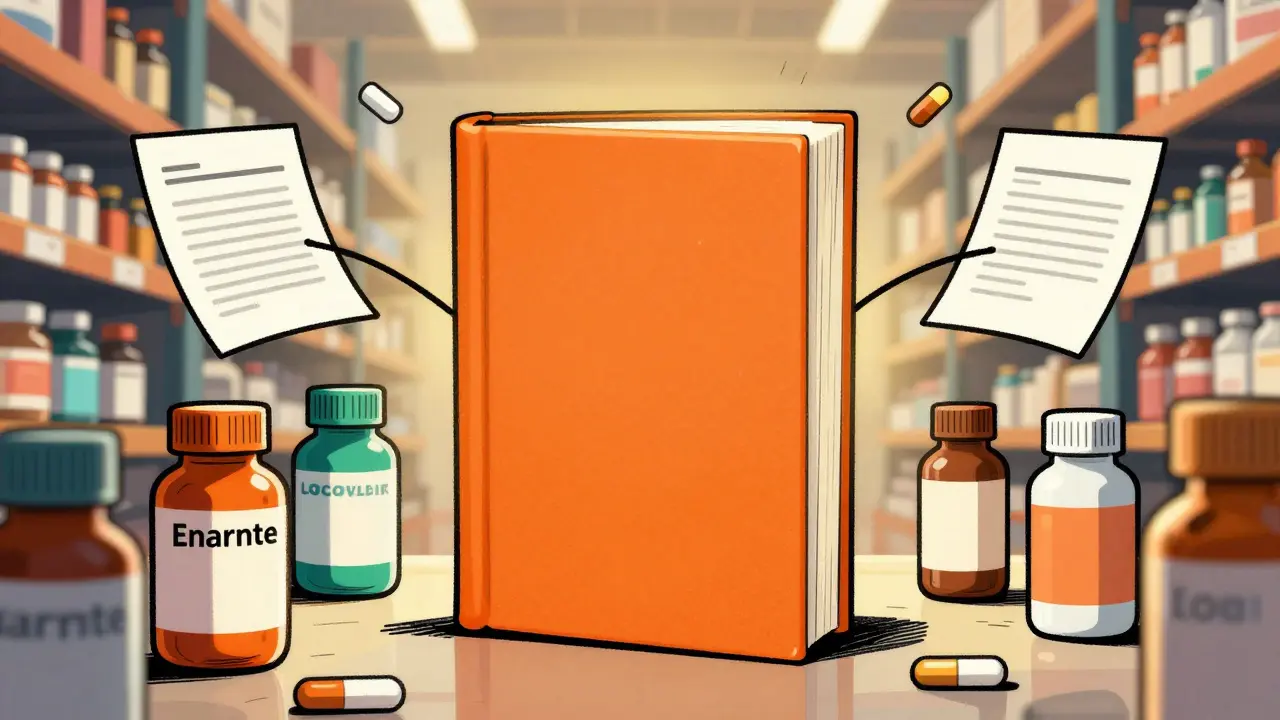
Prescription medication costs can feel like a mystery, especially when you see vastly different prices for medicines that claim to work the same way. Behind those price differences lies a critical resource that most people never hear about, yet it drives the entire American pharmaceutical market. It is the Orange Book database is the official publication by the U.S. Food and Drug Administration that links approved drug products with their associated patents and regulatory exclusivity periods. Also known as Approved Drug Products With Therapeutic Equivalence Evaluations, it determines when generic versions of brand-name drugs can enter the marketplace. Think of it as the rulebook for medicine competition, ensuring we get access to affordable treatments while keeping innovation alive.
If you have ever wondered why a cheap generic pill replaces an expensive name-brand prescription, this registry holds the answer. Created in 1979 and expanded by the Hatch-Waxman Act in 1984, it connects the dots between safety approval and patent law. We aren't just talking about a simple list; this tool dictates billions of dollars in savings for the U.S. healthcare system every year.
More than a simple list: Understanding the core purpose
Many people assume the Orange Book is just a catalog of drugs approved by the government. While it does list safe and effective medicines, its real power comes from the legal data attached to each product. Every small-molecule drug gets a profile here once it receives full FDA approval. This profile acts as a public record of the drug's life cycle.
The system serves two massive groups with opposite goals. Brand-name manufacturers want to protect their investments, so they list their patents to stop others from copying. Generic manufacturers look for gaps in those protections to create cheaper alternatives. The result? A balanced market where patients benefit from lower prices, usually within months of a patent expiring rather than decades later.
What exactly is inside the registry?
When you pull up a specific drug entry, you will find four key pieces of information that drive decision-making across the industry. These elements tell a story about who owns the technology, how long protection lasts, and whether a copy is safe to substitute.
| Data Type | What It Tells You |
|---|---|
| Drug Listings | Name, dosage form, route, strength, and application number (NDA or ANDA) |
| Patent Listings | Patient numbers, expiration dates, and exactly which uses are protected |
| Exclusivity Periods | Times when no generic can be filed even without a patent (e.g., pediatric bonus) |
| Therapeutic Equivalence | Ratings showing if a generic is safe to replace the brand name without doctor intervention |
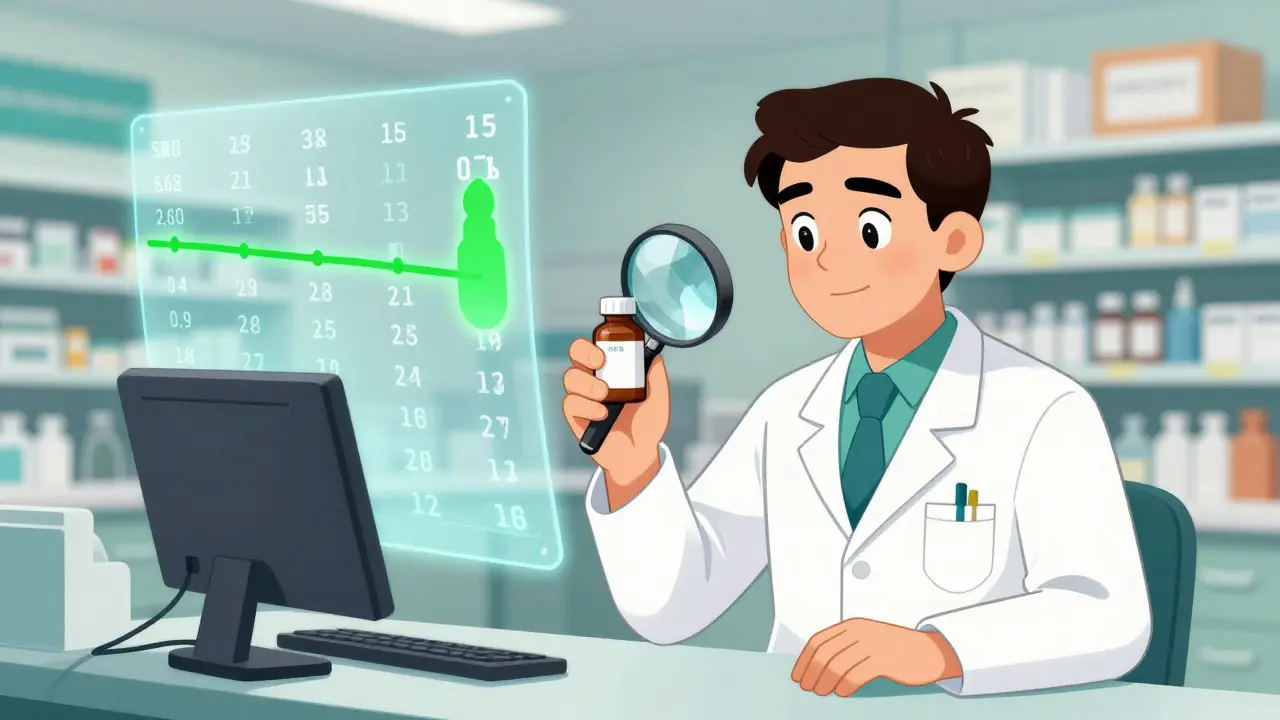
For instance, the therapeutic equivalence rating is crucial for pharmacists. If a drug has an "AB" rating, it means the generic performs exactly the same as the original in your body. This allows pharmacies to swap the brand drug for the generic automatically. Without this rating, substitution becomes risky and requires direct physician consultation.
Who actually uses this tool daily?
You might wonder who bothers to dig through patent codes and expiry dates. Surprisingly, the range of users goes far beyond lawyers. Here is a breakdown of how different professionals rely on this database to do their jobs.
- Hospital Pharmacists: They check therapeutic ratings to ensure patient safety during substitution. If a doctor writes a brand-only script, the pharmacist checks the book to see if a generic equivalent exists safely.
- Generic Legal Teams: These teams monitor the database daily for expiring patents. Finding a newly expired patent is the green light to start manufacturing a new generic version.
- Researchers: Academics use digitized versions to study how the industry evolves over time, analyzing how patent terms impact drug availability.
- Patients: More consumers are using the public interface to understand why certain drugs are expensive or when a cheaper option might become available.
In fact, recent data shows over 1.2 million unique visitors checking the online portal monthly. That is a significant shift from the early 2000s when this was strictly a professional resource hidden behind paywalls or thick paper supplements.
Navigating the Electronic Orange Book (EOB)
Gone are the days of waiting for monthly mail-in supplements. The transition to an electronic format began in 2005 and has evolved into the modern Electronic Orange Book (EOB) we use today. You can access this directly via the FDA's access data portal. As of 2024, the FDA rolled out a public API that processes millions of queries daily, making it easier for software developers to integrate this data into health apps.
To find a drug, you generally search by name (brand or generic), application number, or active ingredient. Once you select a product, you see the "Patent Expiration" column clearly highlighted. This tells you exactly when the market opens up. However, searching isn't always intuitive. Many users struggle with "patent use codes," which categorize patents by type (e.g., composition vs. method of use). The FDA provides guides on this, but interpreting them often requires specialized training.

Controversies and limitations you should know
While the Orange Book is vital, it isn't perfect. Critics point out some ways the system is exploited to keep prices high. One major issue involves "evergreening," where companies file minor patents on things like packaging or new delivery methods to extend protection beyond the original compound patent.
This practice creates a "patent thicket," confusing generic competitors and delaying affordable options. In 2022, Congress even introduced new transparency requirements to fix this loophole. Another limitation is scope. The Orange Book covers "small-molecule" drugs (chemical compounds) but ignores complex biologics. Those are tracked in a separate system called the Purple Book, which currently lacks the robust patent details found in the Orange Book. This gap leaves biological therapies with less predictable generic (biosimilar) competition timelines.
| Feature | Orange Book | Purple Book |
|---|---|---|
| Product Type | Small-molecule drugs (Chemicals) | Biologic products |
| Patent Detail | Detailed listing with use codes | Limited patent information |
| Legal Framework | Hatch-Waxman Act | Biosimilars Innovation Act |
Looking ahead: Modernization efforts for 2026
We are seeing rapid changes in how this information is delivered and regulated. By late 2024, the FDA launched a new API integration layer designed to speed up data sharing with third-party services. This is crucial because manual searches take too long when thousands of drugs launch annually.
New regulations passed in recent years demand more specificity in patent listing. Companies can no longer broadly claim protection over vague concepts. Instead, they must link patents to specific drug indications. This change aims to prevent the settlement deals that silently agreed to delay generic entry. With the 2026 calendar year approaching, several major blockbusters face patent cliffs, relying heavily on the accuracy of these books to save money nationwide.
The goal remains consistent after forty years: balance. The system needs to reward inventors enough to fund research but release medications fast enough for patients to afford care. Whether tracking a common heartburn pill or a life-saving anticoagulant, this database sits at the very center of that equation.
Why is it called the Orange Book?
It refers to the physical color of the hardcover volume published prior to 2005. Although it is now digital, the name stuck as the colloquial term in the industry.
Can regular people view the Orange Book?
Yes, it is completely free and open to the public on the FDA website. There are no login requirements for basic viewing or searching.
What is the difference between Orange and Purple Books?
The Orange Book tracks chemical drugs, while the Purple Book tracks biological products. The Purple Book generally offers less detailed patent information compared to the extensive records in the Orange Book.
Does the Orange Book guarantee a generic drug will be made?
No, it indicates when a patent expires, allowing a generic manufacturer to apply. Market demand still drives whether companies choose to develop the generic version.
How often is the database updated?
The electronic version is updated daily to reflect new approvals and patent listings. Monthly cumulative supplements provide summaries of changes.

Victor Ortiz
The system sounds nice in theory but in practice pharmaceutical companies game the patent expiration dates constantly.
You see the data here but nobody talks about the settlement deals that happen off book.
It's frustrating to watch the same tricks repeated decade after decade.
Kendell Callaway Mooney
I find it useful for pharmacists who need to verify substitution safety regularly.
Looking up the therapeutic equivalence code helps patients understand their options better too.
Just remember to check the application number against the brand name version.
It is free access now so anyone can dig into the details.
Amber Armstrong
My mother struggled with her insulin costs for years before we found this information online.
We spent countless nights reading through different versions of drug listings just to save money.
She was terrified of switching brands because she felt the generics never worked the same way.
It took us a long time to realize the therapeutic equivalence rating meant they were legally the same thing.
Once she understood the rules of the Orange Book she finally agreed to try the cheaper option prescribed by her doctor.
We saw her monthly bill drop significantly after that change was made at the pharmacy counter.
It was such a relief to know there was government data backing up the switch instead of guessing blindly.
This resource really does help people navigate the confusing maze of modern healthcare pricing structures.
We wish more doctors explained this connection between patents and prices to their patients directly.
I hope this database gets easier for average consumers to read without needing a law degree first.
Knowledge about expiry dates is power when you are fighting for affordable prescriptions at home.
We shared this info with our support group and several others started saving hundreds of dollars immediately.
It feels good to use official tools designed to keep the market honest and competitive for everyone.
Thank you for sharing this breakdown of how the process actually functions behind the scenes today.
I will definitely bookmark this link for whenever my own medication needs get complicated again.
Charles Rogers
You miss the mark completely on evergreening tactics being the main issue.
Patents expire when they are supposed to expire under current federal statutes.
Come back when you understand basic intellectual property law.
Christopher Curcio
The ANDA submission process relies heavily on these reference listings for bioequivalence testing standards.
If the FDA accepts the abbreviated new drug application then the therapeutic rating gets assigned automatically.
Generic manufacturers scan the patent cliff data daily for launch windows to file their own NDAs accordingly.
Regulatory exclusivity periods often block entry even after the primary patent term expires completely.
It is a complex matrix of chemical composition protections versus method of use claims that lawyers parse carefully.
Angel Ahumada
the orange hue signifies a warning color in nature evolutionarily speaking
we treat our medicine like poison when really it is survival itself
i wonder if the digital format has lost some of that tactile weight of truth
data without context is just noise echoing in the void of public records
perhaps the real change lies in how we perceive ownership over biological compounds
dPhanen DhrubRaaj
the system works enough for now i think its okay that people look at it sometimes
Cameron Redic
Big Pharma always finds a loophole eventually.
Adryan Brown
It is easy to feel defeated by the complexity of these legal frameworks but progress is happening slowly.
Transparency measures introduced recently did help reduce some of the shadow patent filings seen in previous years.
Consumers can advocate for faster generic entry by demanding better data access through state representatives.
Patient groups are becoming more sophisticated in tracking these listing updates now than they were ten years ago.
We should recognize the effort required to maintain such a massive database while pushing for further reform too.
Balance between innovation incentives and public health access remains the ultimate goal of the entire regulatory body.
Staying informed is the best weapon we have against unfair pricing strategies utilized by monopolies.
Many of us are learning to read these codes ourselves which empowers individual purchasing decisions greatly.
There is strength in collective knowledge regarding how these market dynamics influence our daily lives.
We can all contribute to the solution by supporting transparency initiatives in the upcoming legislative sessions.
Hoping to see even more automated alerts for expirations soon to help smaller competitors enter the field.
Understanding the history helps us appreciate why things work this way even when they seem flawed currently.
Every piece of open data is a step toward a more equitable healthcare environment for everyone involved.
Let us continue to share this vital information so more families benefit from lower prescription costs soon.
RONALD FOWLER
This is really helpful for anyone trying to budget their medication expenses better.
I appreciate the clear breakdown of the different book types and what they track specifically.
Its great that the FDA keeps this resource open for public viewing without login barriers.
More people should know about these tools to manage their health costs wisely.
Jonathan Alexander
It is terrifying to realize how much control holds the fate of our treatment options.
One wrong listing could mean life or death for someone desperate for relief.
We depend entirely on these bureaucratic mechanisms to function correctly for our wellbeing.
Vikash Ranjan
i disagree with the notion that transparency fixes everything alone.
companies adapt faster than regulations can be written and enforced globally.
just checking the book does not stop them from delaying launches artificially
Biraju Shah
We need stricter penalties for abusive patent listings rather than just relying on voluntary compliance from the industry.
Lawmakers must prioritize fixing the loopholes that allow endless delays on generic availability.
This tool is powerful but only if the underlying laws prevent bad actors from abusing the system.