
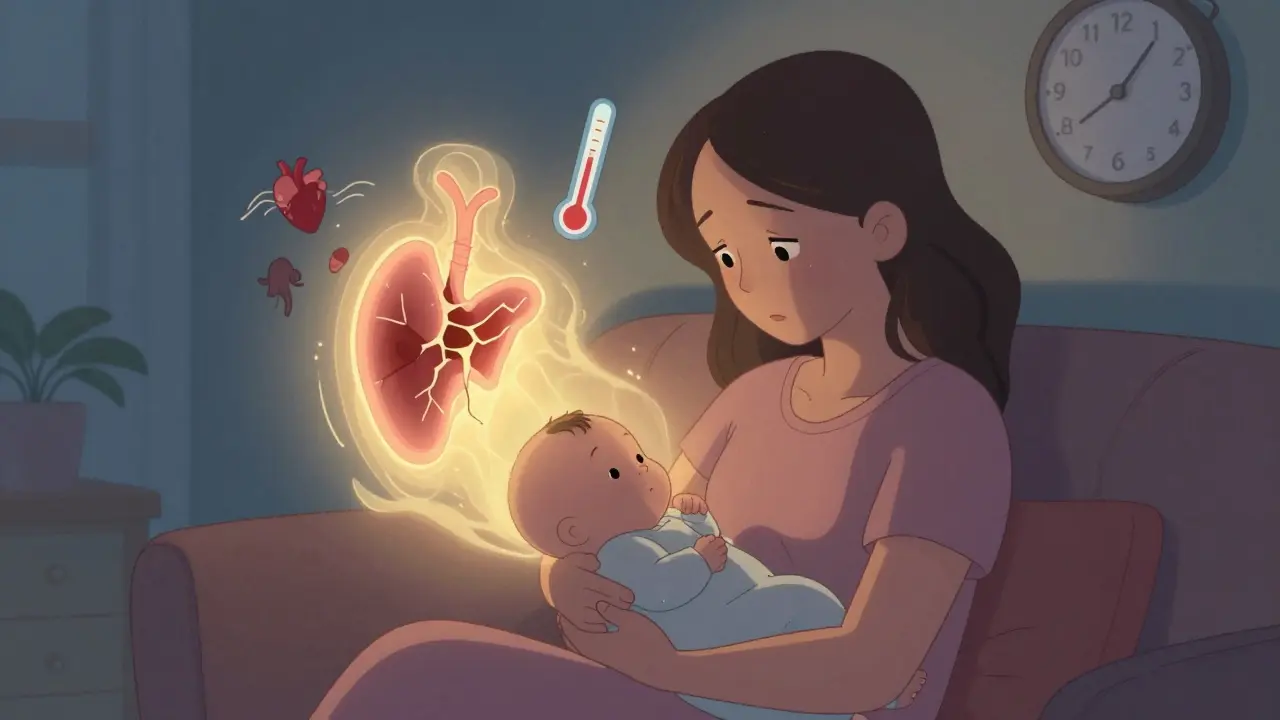
After giving birth, many women feel exhausted, emotional, and overwhelmed. It’s easy to blame it all on sleepless nights and newborn care. But what if your body is fighting something more specific - something that doesn’t go away with rest? Postpartum thyroiditis is a hidden condition that affects 5 to 10% of new mothers, and its symptoms often get mistaken for normal postpartum stress. It’s not depression. It’s not just being tired. It’s your immune system attacking your thyroid - and it can happen without warning.
What Exactly Is Postpartum Thyroiditis?
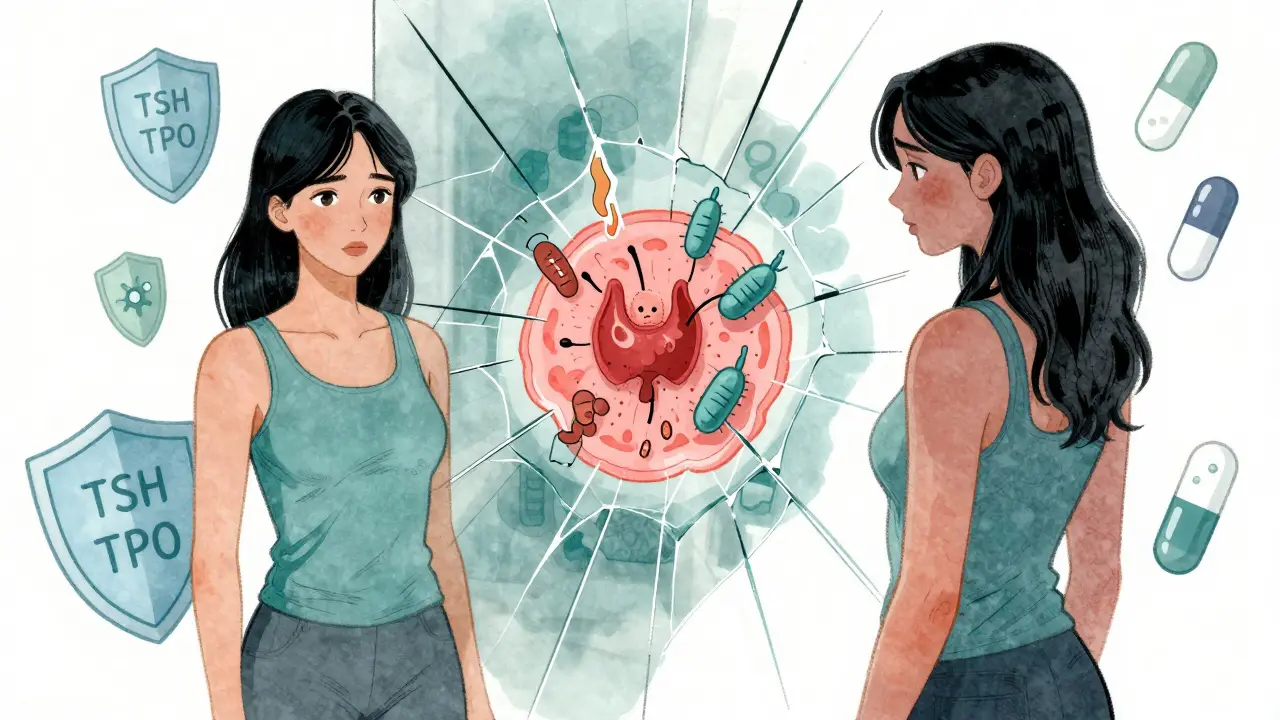
Postpartum thyroiditis is an autoimmune reaction that strikes the thyroid gland within the first year after childbirth, miscarriage, or abortion. Your immune system, which was suppressed during pregnancy to protect the baby, rebounds afterward. In some women, it mistakenly targets the thyroid, causing inflammation. This leads to a two-phase thyroid dysfunction: first, too much hormone is released into the bloodstream (hyperthyroidism), then the gland runs out of fuel and produces too little (hypothyroidism).
Unlike Graves’ disease - the most common cause of hyperthyroidism - postpartum thyroiditis doesn’t cause bulging eyes or a visibly enlarged thyroid. There’s no goiter. No tremors so severe they’re obvious. Often, the symptoms are so mild they’re dismissed. But the damage is real. The thyroid is being destroyed from the inside by antibodies, especially thyroid peroxidase antibodies (TPOAb), which are present in 80-90% of cases.
The Two Phases: Hyperthyroidism Then Hypothyroidism
Most women experience two distinct phases, though not everyone goes through both.
The hyperthyroid phase usually starts between 1 and 4 months after delivery. During this time, damaged thyroid cells leak stored hormones into the blood. You might feel:
- Heart racing (over 100 beats per minute)
- Unexplained weight loss - even if you’re eating more
- Heat intolerance, sweating, or feeling overly warm
- Shaky hands or tremors
- Insomnia, even when you’re exhausted
Surprisingly, about half of women have no noticeable symptoms during this phase. Their bodies adjust, or the symptoms are blamed on being a new mom. But if you’re having palpitations or losing weight without trying, it’s not normal.
Then comes the hypothyroid phase, typically between 4 and 8 months postpartum. This is when the thyroid is drained. It can’t make enough hormones anymore. Symptoms here are more common and more debilitating:
- Overwhelming fatigue - not just tired, but bone-deep exhaustion
- Feeling cold all the time, even in a warm house
- Constipation that won’t improve with fiber or water
- Dry skin and hair loss - more than the normal shedding after pregnancy
- Brain fog - trouble focusing, forgetting names, feeling mentally slow
- Weight gain of 5-10 pounds without changes in diet or activity
One in five women skip the hyperthyroid phase entirely and go straight into hypothyroidism. That’s why assuming you’re fine because you didn’t feel “hyper” is dangerous.
Why It’s So Often Missed
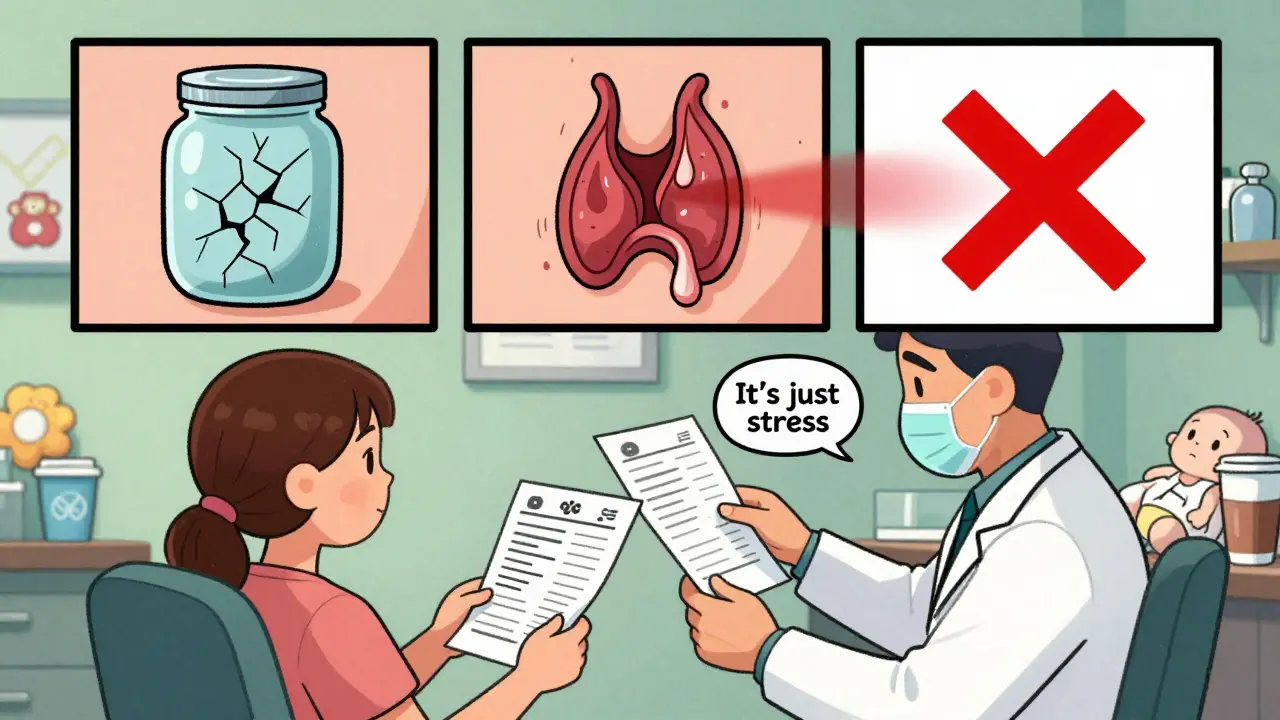
Doctors don’t routinely test thyroid levels after birth. In fact, the American College of Obstetricians and Gynecologists (ACOG) doesn’t recommend universal screening. Only 42% of OB-GYNs regularly check thyroid function in women with persistent symptoms beyond 12 weeks.
Instead, symptoms get labeled as postpartum depression. And yes, there’s overlap - fatigue, mood swings, trouble concentrating. But here’s the difference: thyroid dysfunction comes with clear physical signs. Your heart races. Your skin dries out. You can’t tolerate cold. You lose or gain weight without trying. Depression doesn’t cause those things.
On Reddit’s r/Thyroid community, 78% of women who later got diagnosed with postpartum thyroiditis said they were first told they were just “stressed” or “depressed.” One woman waited 11 months before a doctor finally ordered blood work. Another had to visit three different doctors before someone listened.
The average time to diagnosis? Over five months. That’s five months of feeling like you’re falling apart - and being told it’s all in your head.
Who’s at Risk?
Not every woman gets postpartum thyroiditis. But some are far more likely to.
- Women with type 1 diabetes - up to 30% develop it
- Those with a history of thyroid problems before pregnancy - recurrence rates hit 40%
- Women with high TPO antibody levels during pregnancy - 70% chance of developing the condition
- Those with a family history of autoimmune diseases (like Hashimoto’s or Graves’)
If you have any of these risk factors, ask your doctor about testing your TPO antibodies at 10 weeks postpartum. Studies show this can predict 70% of future cases before symptoms even start.
How It’s Diagnosed
There’s no single test. Diagnosis relies on blood work and timing.
During the hyperthyroid phase, you’ll see:
- Low TSH (below 0.4 mIU/L)
- High free T4 (thyroid hormone)
During the hypothyroid phase:
- High TSH (above 4.5 mIU/L)
- Low free T4
TPO antibody testing confirms it’s autoimmune. If your antibodies are positive and your thyroid function matches the timeline, it’s postpartum thyroiditis.
Important: A radioactive iodine uptake test can distinguish this from Graves’ disease. In postpartum thyroiditis, uptake is very low - under 2%. In Graves’, it’s over 60%. But most doctors skip this test unless there’s uncertainty.
Treatment: What Works and What Doesn’t
There’s no cure - but there’s management. And good news: 70-80% of women return to normal thyroid function within 12 to 18 months.
During the hyperthyroid phase: Most women don’t need medication. Beta-blockers (like propranolol) may be used if heart rate is dangerously high or tremors are severe. But antithyroid drugs (like methimazole) are avoided - they don’t help because the thyroid isn’t overproducing; it’s leaking.
During the hypothyroid phase: If symptoms are mild, your doctor might wait and retest in 3-6 months. If you’re struggling - exhausted, depressed, gaining weight - levothyroxine (a synthetic thyroid hormone) is prescribed. It’s safe, even while breastfeeding. Most women take it for 6-12 months, then stop. If thyroid function doesn’t return to normal after a year, it’s likely permanent.
That’s the hard part: 20-30% of women end up with lifelong hypothyroidism. If you’ve had postpartum thyroiditis, you’re at higher risk for developing Hashimoto’s later. Regular TSH checks every year are recommended.
What You Can Do Now
If you’re a new mom and something feels off - not just tired, but wrong - don’t wait. Ask for a TSH and free T4 test. If your doctor says no, ask for TPO antibody testing, especially if you have risk factors.
Track your symptoms. Write down:
- When you feel most fatigued
- Changes in weight, temperature sensitivity, heart rate
- Hair loss, skin changes, bowel habits
Bring this list to your appointment. Most doctors won’t think of thyroiditis unless you point it out.
And if you’re already on antidepressants and your mood hasn’t improved - consider thyroid testing. Up to 40% of women misdiagnosed with postpartum depression actually have thyroid dysfunction.
Long-Term Outlook
Most women recover fully. But postpartum thyroiditis is a warning sign. It tells you your immune system is on edge. If you’ve had it once, you’re more likely to develop other autoimmune conditions - like Hashimoto’s, rheumatoid arthritis, or celiac disease - later in life.
Experts predict that within five years, universal TSH screening at 6 and 12 weeks postpartum will become standard. Why? Because catching it early saves money, reduces suffering, and prevents permanent damage. One study found $2,300 in savings per correctly diagnosed case - from avoiding unnecessary antidepressants, hospital visits, and lost productivity.
For now, you have to be your own advocate. Your body isn’t broken. It’s just rebalancing. And sometimes, that balance needs a little help.
Can postpartum thyroiditis affect breastfeeding?
Yes, but not in the way most people think. Hypothyroidism can reduce milk supply in about 38% of women, according to patient data from Baylor Scott & White Health. The good news? Levothyroxine is safe during breastfeeding and actually helps restore normal milk production. Hyperthyroidism doesn’t typically affect supply, but untreated symptoms can make nursing more difficult due to fatigue and anxiety.
Is postpartum thyroiditis the same as Hashimoto’s?
Histologically, yes - the immune attack looks identical under a microscope. But timing is everything. Postpartum thyroiditis happens after pregnancy and usually resolves. Hashimoto’s is chronic and permanent. Many women who have postpartum thyroiditis later develop Hashimoto’s, especially if their TPO antibodies stay high after recovery.
Can I prevent postpartum thyroiditis?
Not directly. There’s no known way to stop the immune system from reacting after birth. But if you have risk factors - like type 1 diabetes or prior thyroid issues - getting tested early (at 8-10 weeks postpartum) can catch it before symptoms worsen. Early detection means faster treatment and less long-term damage.
Do I need to get tested again if I had it once?
Yes. If you’ve had postpartum thyroiditis, your risk of recurrence in future pregnancies is 70%. You’re also at higher risk for permanent hypothyroidism. After each pregnancy, get your TSH and TPO antibodies checked at 6-12 weeks - don’t wait for symptoms. Many women assume they’re immune because they recovered before - they’re not.
Will my baby be affected if I have postpartum thyroiditis?
No. Postpartum thyroiditis is not contagious or genetic in the way that would directly affect your baby. The antibodies don’t cross into breast milk in harmful amounts. Levothyroxine is safe for breastfeeding. However, if your thyroid condition is left untreated, your fatigue and stress levels can indirectly impact bonding and care routines - which is why getting treated matters for your whole family.
What Comes Next?
If you’ve been diagnosed, you’re not alone. The path forward is clear: monitor your symptoms, follow up with your doctor, and don’t ignore lingering fatigue. Even if your thyroid function returns to normal, get a TSH check every year. Many women don’t realize they’ve developed permanent hypothyroidism until years later - when symptoms sneak up slowly.
And if you haven’t been tested but feel like something’s off - ask. Your body is trying to tell you something. Postpartum thyroiditis isn’t rare. It’s just misunderstood. The sooner you speak up, the sooner you’ll feel like yourself again.


Cheryl Griffith
I wish someone had told me this when I was postpartum. I thought I was just broken-couldn’t get out of bed, hair falling out in clumps, freezing even with three blankets. My doctor called it ‘baby blues’ for six months. Turns out my TSH was 18. Levothyroxine changed my life. Not just physically-mentally, too. I didn’t know I could feel like myself again.
Ryan Hutchison
Ugh, another one of these ‘your body is broken’ articles. Look, the US healthcare system is a joke, but blaming thyroiditis for everything is just lazy. I’ve seen moms who didn’t even get tested and still bounced back fine. Stop pathologizing normal exhaustion. Maybe you just need more sleep and less social media doomscrolling.
Samyak Shertok
Oh wow, so now our immune systems are the villains? Fascinating. Let me grab my Nietzsche and a cup of chamomile tea while I contemplate this existential crisis of the thyroid. We’re not just mothers-we’re walking battlegrounds of autoimmune warfare. How poetic. How tragic. How… *very* 2024. Can we please stop turning every hormonal shift into a Netflix documentary?
Nicholas Gabriel
As someone who’s been through this twice-once with each kid-I can’t stress enough: don’t wait for symptoms to be ‘bad enough.’ If you’re even slightly off, get the TPO antibody test at 8 weeks. It’s cheap, it’s non-invasive, and it’s the only way to catch it early. I didn’t get tested until 10 months postpartum with my first kid-by then, my thyroid was basically a raisin. With my second, I pushed for it at 6 weeks. I was on meds by week 8. No brain fog, no panic attacks, no ‘I’m just tired’ nonsense. You owe it to yourself to be proactive. And yes, it’s safe while breastfeeding. I pumped through all of it.
Also-track your basal body temperature. If you’re consistently below 97.8°F, that’s a red flag. No one tells you that.
Joie Cregin
My sister had this after her third. She was crying in the grocery store because she couldn’t remember where the eggs were. She thought she was losing her mind. Then she got her results: TSH 22. She cried again-but this time because she finally had an answer. I wish every OB-GYN had a copy of this post taped to their wall. Not everyone has the energy to advocate for themselves. We need better systems, not just stronger voices.
Stephen Tulloch
Bro, I’m Canadian and I’ve got to say… this is why I hate American medicine. You guys turn everything into a crisis. In Toronto, they just say ‘take a nap’ and hand you a muffin. I had a friend who went 14 months without testing and she’s fine. Also, levothyroxine? That’s just hormone replacement for people who can’t handle reality. Maybe chill out, eat more carbs, and stop Googling your symptoms at 3 a.m. 🤷♂️
Melodie Lesesne
Thank you for writing this. I was diagnosed with postpartum thyroiditis after my daughter was 9 months old. I felt so guilty for being ‘not a good mom’ because I couldn’t play on the floor with her without needing a nap. Turns out, I had no energy because my body was on fire and then completely drained. Levothyroxine didn’t make me ‘normal’-it made me *me* again. I’m still breastfeeding, still tired sometimes, but now I know it’s not my fault. And that’s everything.
Corey Sawchuk
My mom had this after me. Didn’t know until she was 40 and got a routine checkup. She said she’d been feeling ‘off’ since I was born. She’s been on meds since. Just saying-this isn’t just a postpartum thing. It can linger. Get checked if you’re at risk. Even if you feel fine now.