Child Dosing Mistakes: Common Errors and How to Avoid Them
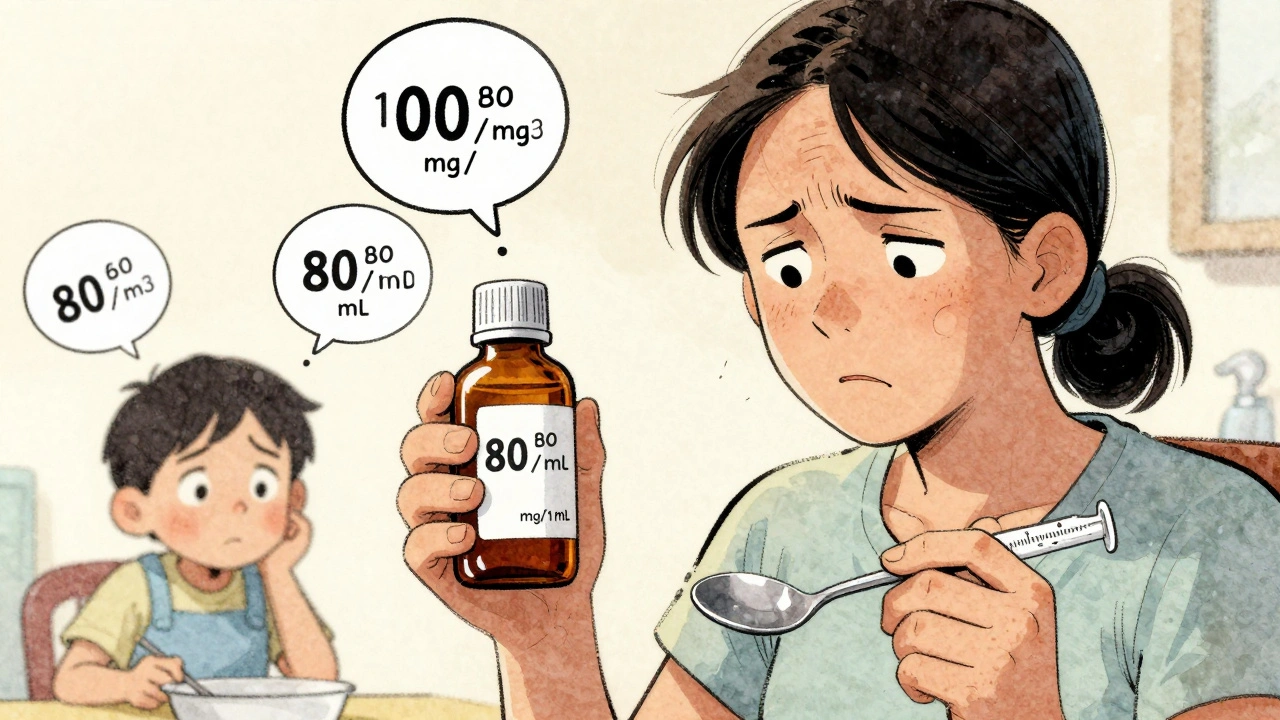
When it comes to giving medicine to kids, child dosing mistakes, incorrect amounts of medication given to children, often due to confusion over units, devices, or labels. Also known as pediatric medication errors, these mistakes are one of the top reasons kids end up in the emergency room. It’s not just about giving too much—it’s about giving the wrong thing, at the wrong time, with the wrong tool. A teaspoon isn’t a tablespoon. A milligram isn’t a milliliter. And a child’s weight isn’t just a number—it’s the key to getting the dose right.
Many parents use kitchen spoons because they’re handy, but those vary wildly in size. One study found that over 40% of caregivers misread dosing instructions on liquid medicine labels. pediatric medication errors, mistakes in giving medicine to children that lead to harm or hospitalization. Also known as dosing errors, they often happen when parents switch between brand and generic versions without realizing the concentrations differ. Some kids get the same medicine as adults, just in smaller pills—except those pills aren’t meant to be split. Others get syrup meant for older kids, but given to infants. Even small mistakes can cause serious harm: too much acetaminophen can damage the liver; too much ibuprofen can wreck the kidneys. And when you mix meds—like giving a cold syrup that already has antihistamines on top of Benadryl—you’re doubling down on risk.
medication safety for kids, the practices and systems designed to prevent harm when children are given drugs. Also known as children's drug safety, it’s not just about the pill—it’s about the whole system. Doctors, pharmacists, and parents all have roles. Pharmacists need to label clearly. Doctors need to write doses in milligrams per kilogram, not just "give 5 mL." Parents need to double-check the syringe, write down the time, and keep meds out of reach. It’s not about being perfect—it’s about building habits that catch mistakes before they happen.
Some kids with chronic conditions—like asthma, epilepsy, or ADHD—are especially vulnerable. Switching from brand to generic isn’t always safe for them. One wrong change in formulation can throw off control. And when grandparents, babysitters, or nannies are involved, confusion multiplies. That’s why keeping a simple, updated list of every medicine, dose, and time is one of the most powerful tools you have.
Below, you’ll find real stories and clear guides on what goes wrong with kids’ meds—and how to fix it. From inhaler mistakes that make asthma worse, to mixing antibiotics with probiotics the wrong way, to why some generics aren’t safe for children, these posts cover the gaps most guides miss. No fluff. No theory. Just what you need to keep your child safe.