
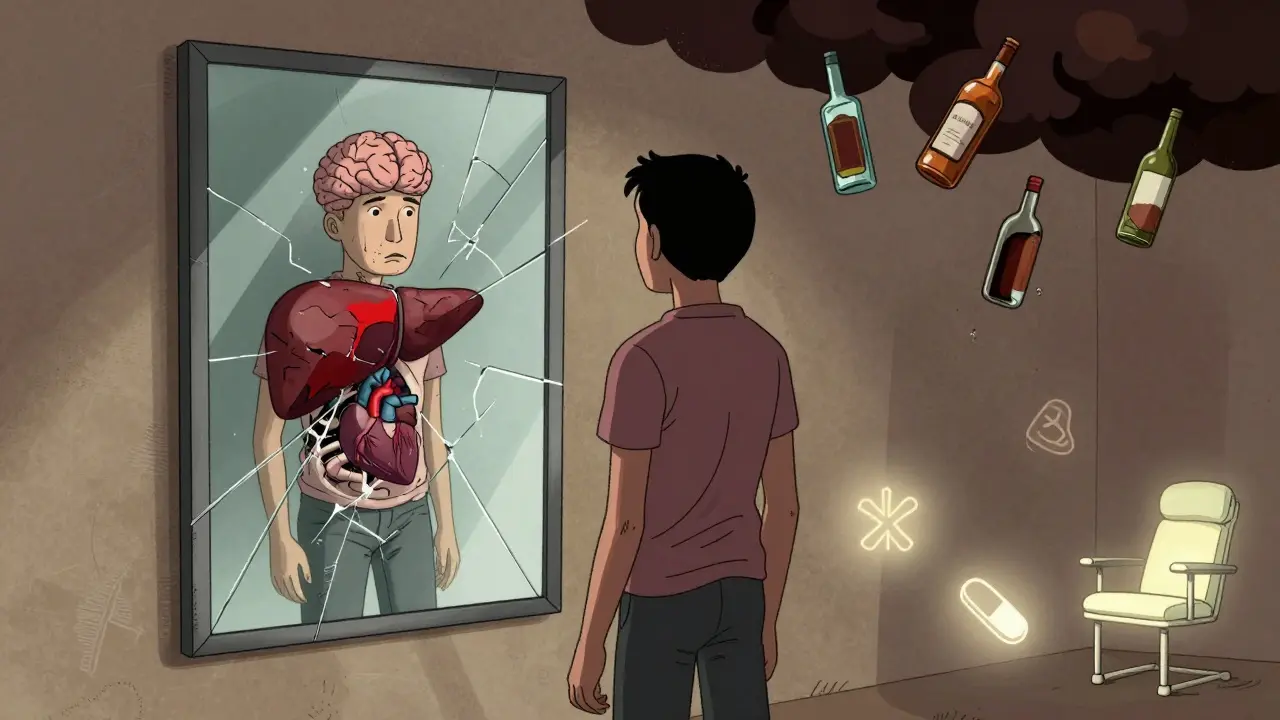
Chronic Alcohol Use Disorder isn’t just about drinking too much. It’s a medical condition where your brain and body become wired to need alcohol-even when it’s destroying your health, relationships, and future. This isn’t a lack of willpower. It’s a brain disease. And the good news? It’s treatable.
What Chronic Alcohol Use Disorder Really Means
Alcohol Use Disorder (AUD) is the clinical term for what many still call alcoholism. The DSM-5, the official guide doctors use to diagnose mental health conditions, classifies AUD as mild, moderate, or severe based on how many of 11 symptoms you have. These include craving alcohol, failing to cut down despite wanting to, spending a lot of time drinking or recovering from it, and continuing to drink even when it causes problems at work, home, or in your health.
It doesn’t matter if you’re a weekend binger or a daily drinker. If you can’t stop, even when you know you should, you’re dealing with AUD. The condition builds slowly. At first, you might think you’re in control. But over time, your brain rewires itself. Alcohol starts to feel like a necessity, not a choice.
The Body Breakdown: How Alcohol Damages You Over Time
Every drink you consume doesn’t just hit your liver-it affects your entire body. The damage builds silently, often without symptoms until it’s serious.
Your liver takes the hardest hit. About 90% of heavy drinkers develop fatty liver-the first stage. If drinking continues, inflammation kicks in (alcoholic hepatitis), and eventually, scar tissue replaces healthy liver cells (cirrhosis). The scary part? Once cirrhosis sets in, the damage is often permanent. But if you stop drinking early enough, your liver can heal. Some people reverse early-stage damage completely.
Then there’s your brain. Chronic alcohol use shrinks brain tissue and messes with neurotransmitters. This leads to memory loss, poor judgment, and even dementia-like symptoms. Thiamine (vitamin B1) deficiency is common in people with AUD-up to 80% of them. That can trigger Wernicke’s encephalopathy: confusion, unsteady walking, and abnormal eye movements. Left untreated, it can lead to Korsakoff syndrome, a lifelong memory disorder.
Your heart isn’t safe either. Heavy drinking raises your blood pressure, causes irregular heartbeats (atrial fibrillation), and increases your stroke risk by 34%. It also raises your chances of heart attack. Alcohol is a direct toxin to heart muscle cells. Over time, it weakens them, leading to cardiomyopathy-a condition where the heart can’t pump blood properly.
Your immune system? It’s weakened. People with AUD are 2.7 times more likely to get pneumonia. They also heal slower from injuries and infections. Even minor cuts or colds can turn dangerous.
And then there’s cancer. Alcohol is a known carcinogen. Heavy drinkers have a 5 times higher risk of mouth and throat cancer. Breast cancer risk goes up 12% for every daily drink. Liver, bowel, and esophageal cancers also rise with long-term use. The more you drink, the higher the risk-and there’s no safe threshold.
Psychological and Social Fallout
Alcohol doesn’t just hurt your body-it breaks your life. Depression and anxiety aren’t just common among people with AUD-they often go hand in hand. Many start drinking to cope, but alcohol makes both conditions worse. It’s a cycle that’s hard to escape.
Relationships crumble. Jobs are lost. Finances collapse. People with AUD are more likely to face homelessness, legal trouble, or domestic violence. Children of parents with AUD are more likely to develop mental health issues or substance use disorders themselves.
And the societal cost? In the U.S. alone, excessive drinking cost $249 billion in 2010. Nearly 80% of that came from binge drinking. That’s emergency room visits, lost productivity, car crashes, and criminal justice expenses. Alcohol was linked to 29% of all traffic deaths in 2016. Every day, it kills over 8,000 people worldwide.
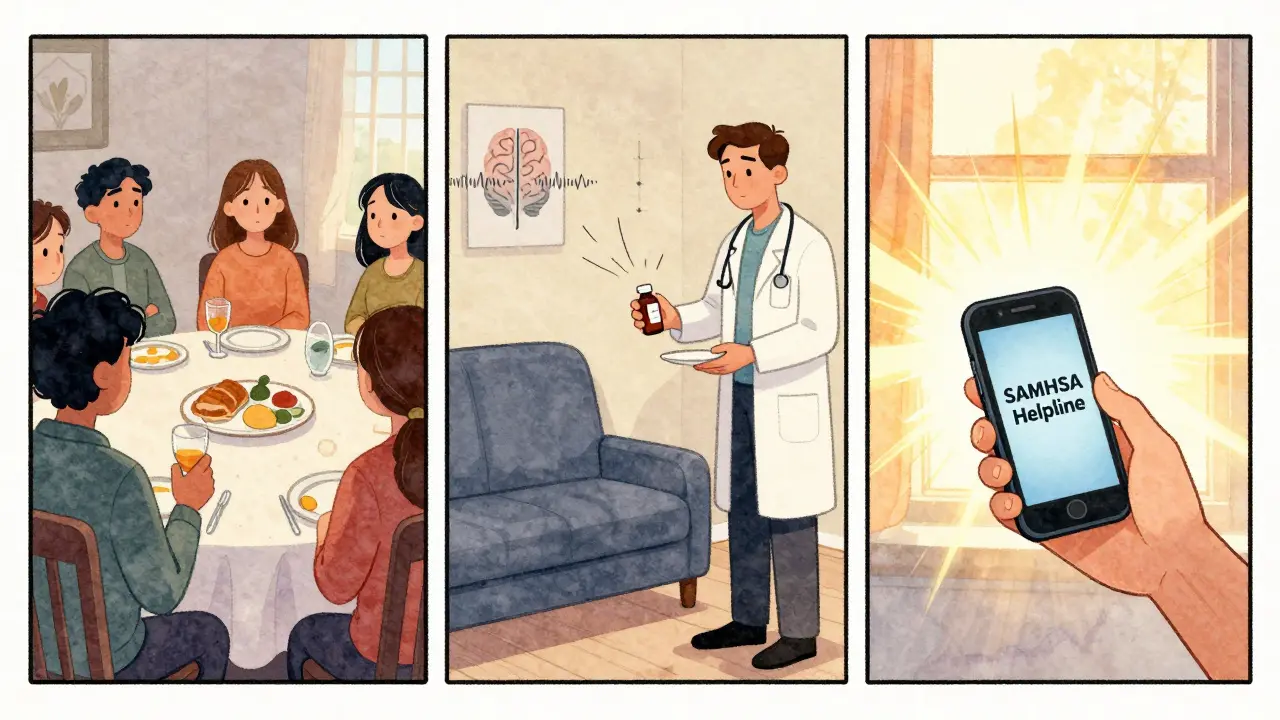
How AUD Is Treated: Beyond Just Quitting
Treatment isn’t one-size-fits-all. There’s no magic pill. But there are proven paths forward.
First, if you’re physically dependent, detox is necessary. Quitting cold turkey can be deadly. Withdrawal symptoms include seizures, hallucinations, and delirium tremens-a life-threatening condition. Medical supervision during detox keeps you safe and manages symptoms with medications like benzodiazepines.
After detox, three FDA-approved medications help prevent relapse:
- Naltrexone blocks the pleasurable effects of alcohol, reducing cravings.
- Acamprosate helps stabilize brain chemistry after stopping drinking.
- Disulfiram makes you sick if you drink-creating a strong deterrent.
Medications work best when paired with therapy. Cognitive Behavioral Therapy (CBT) teaches you to recognize triggers and change thought patterns. Studies show CBT reduces heavy drinking days by 60%. Motivational Enhancement Therapy helps people who are unsure if they want to quit-building their own reasons to change.
Support groups like Alcoholics Anonymous (AA) have helped millions since 1935. While their 12-step model isn’t for everyone, the community and accountability matter. One study found 27% of AA members stayed abstinent after a year. That’s higher than many people expect.
Newer treatments are showing promise. Transcranial Magnetic Stimulation (TMS), a non-invasive brain stimulation technique, led to 50% abstinence rates in a 2022 study. Digital tools like the reSET app, approved by the FDA, helped 40.7% of users stay sober-nearly double the rate of those just using standard care.
And here’s the most important fact: combining medication with therapy increases abstinence rates by 24% compared to either alone. Treatment works best when it’s comprehensive.
Why So Few People Get Help
Despite all the science, only 19.2% of the 14.5 million Americans with AUD get treatment. Why?
Stigma is a huge barrier. Many still see AUD as a moral failure, not a medical condition. Insurance coverage is patchy. Therapy is expensive. Medications aren’t always covered. In rural areas, specialists are scarce.
But change is happening. More doctors are being trained to screen for AUD. Telehealth makes therapy accessible from home. Public health campaigns are shifting the narrative-from shame to science.
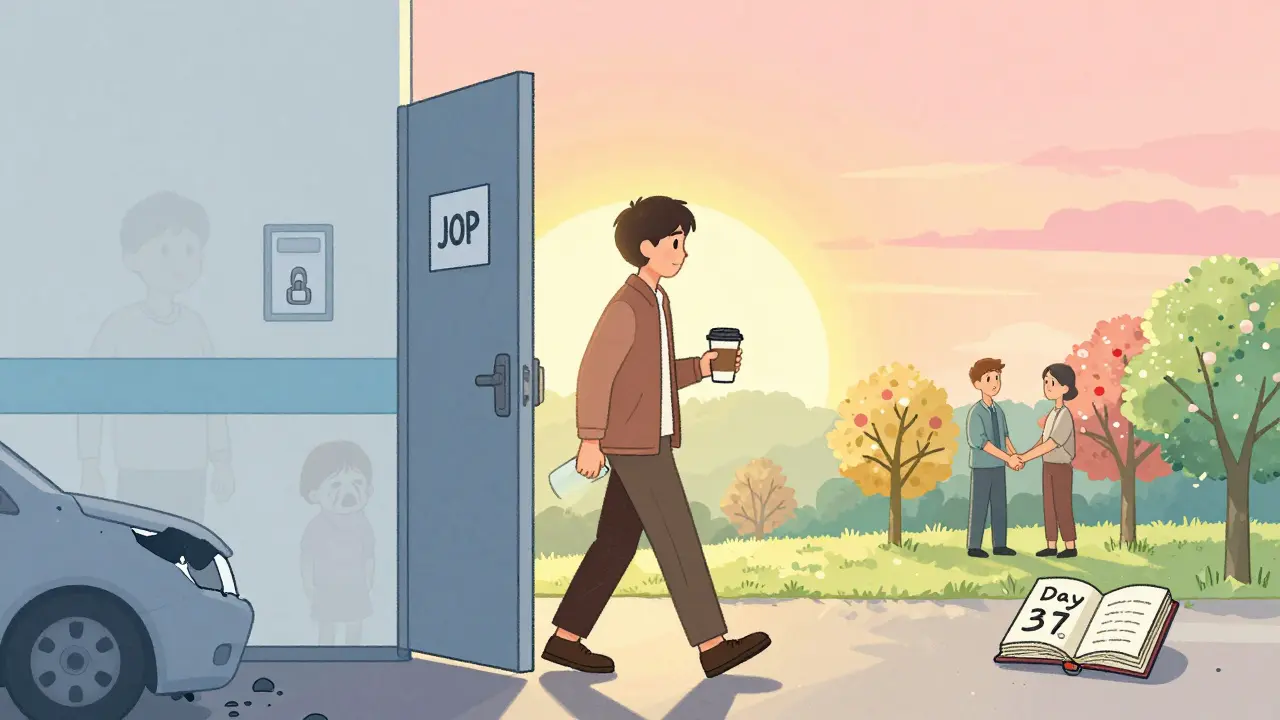
Recovery Is Possible-Even After Years of Drinking
You don’t have to hit rock bottom to get help. You don’t have to be a ‘classic alcoholic’ to deserve treatment. If alcohol is causing you harm-even if you still think you can control it-you’re already in the right place.
Recovery isn’t about perfection. It’s about progress. One day at a time. Some people quit cold turkey. Others taper slowly. Some use meds for months. Others for years. There’s no right way-only your way.
And recovery isn’t just about stopping drinking. It’s about rebuilding. Repairing relationships. Finding purpose. Rediscovering joy without alcohol.
People who stop drinking for a year see their liver function improve. Their blood pressure drops. Their sleep gets better. Their mood lifts. Their memory returns. Their risk of cancer begins to decline.
This isn’t hope. It’s data. It’s science. And it’s real.
Is alcohol use disorder the same as alcoholism?
Yes. Alcoholism is the older, informal term. Alcohol Use Disorder (AUD) is the current medical diagnosis used by doctors. It covers everything from mild to severe dependence and includes both physical and psychological components.
Can you recover from liver damage caused by alcohol?
It depends on how far the damage has gone. Fatty liver and early inflammation can reverse completely if you stop drinking. Once cirrhosis (scarring) develops, the damage is often permanent. But stopping alcohol can still prevent further harm and improve your overall health and lifespan.
Are there medications that help stop drinking?
Yes. Three FDA-approved medications are used: naltrexone (reduces cravings), acamprosate (helps brain chemistry balance), and disulfiram (makes drinking unpleasant). These aren’t magic, but when combined with therapy, they significantly improve success rates.
How long does alcohol withdrawal last?
Symptoms usually start 6-12 hours after your last drink. Peak symptoms occur around 24-72 hours. Most physical symptoms fade within a week. But some, like anxiety, insomnia, and cravings, can last weeks or months. Medical supervision during detox is critical for safety.
Can you drink moderately after being diagnosed with AUD?
For most people with moderate to severe AUD, abstinence is the safest and most effective path. Some with mild AUD may be able to cut back under medical guidance-but this is risky and not recommended without professional support. Relapse is common when trying to drink moderately.
What’s the most effective treatment for AUD?
The most effective approach combines medication with behavioral therapy. Studies show that using naltrexone or acamprosate along with CBT or MET increases long-term abstinence by 24% compared to using either alone. Support groups add accountability and community, which also improve outcomes.
Is AUD genetic?
Yes. Genetics account for about half the risk of developing AUD. If you have close relatives with alcohol use disorder, your risk is higher. But genetics aren’t destiny. Environment, trauma, mental health, and access to support play huge roles too.
Can digital apps really help with alcohol recovery?
Yes. FDA-approved apps like reSET have shown 40.7% abstinence rates in clinical trials-nearly double the rate of standard care. These apps provide CBT tools, tracking, reminders, and crisis support. They’re not a replacement for therapy, but they’re a powerful tool, especially when access to in-person care is limited.
What to Do Next
If you’re reading this and thinking, ‘This sounds like me,’ don’t wait. You don’t need to hit rock bottom. You don’t need to be ‘ready.’ You just need to reach out.
Start with your doctor. Ask about AUD screening. Ask about medications. Ask about therapy options. If you’re not sure where to start, call a helpline like SAMHSA’s National Helpline (1-800-662-HELP). It’s free, confidential, and available 24/7.
Recovery isn’t about being perfect. It’s about being persistent. One day sober. Then another. And another. The body heals. The mind clears. Life gets better. And it all starts with one step-asking for help.



Nancy Kou
This post is exactly what people need to hear. Alcohol use disorder isn't a character flaw-it's a brain disease, and recognizing that is the first step toward healing. I've seen loved ones suffer in silence because they thought they were weak. They weren't. They were sick. And recovery is possible, even after decades. One day at a time.
Hussien SLeiman
Let’s be real-most people who say they have AUD are just bad at setting boundaries. You don’t need a medical label to stop drinking. I’ve known guys who drank six beers a night and still ran marathons. The science here is overblown. They’re just trying to pathologize normal behavior to sell more pills and therapy sessions. If you can’t control your drinking, maybe you just need more discipline, not a prescription.
And don’t get me started on AA. That’s a cult with a 90% failure rate. The real solution? Quit cold turkey. No meds. No groups. Just willpower. It’s not rocket science.
Edington Renwick
Okay, but have you considered that maybe the real problem isn’t alcohol-it’s the modern world? We’re all drowning in anxiety, loneliness, and meaningless work. People drink because they’re trying to survive emotionally. Labeling it a ‘brain disease’ just makes people feel more broken instead of understood. Maybe we should fix society instead of medicating the symptoms.
Also, the stats on cancer? They’re cherry-picked. Correlation isn’t causation. I’ve known lifelong drinkers who lived to 90. And I’ve known teetotalers who got cancer at 45. It’s not that simple.
Sarah McQuillan
Ugh. Another liberal brainwashing piece. Alcohol is a choice. If you’re from a country that actually values personal responsibility, you’d know that. The U.S. turns everything into a disease to avoid accountability. My grandfather drank whiskey every night until he was 88. Never needed therapy. Never went to AA. Just lived his life. Maybe if people stopped coddling themselves, they’d stop needing ‘treatment’.
And TMS? That’s a gimmick. Next they’ll be selling brain zaps for bad habits. Wake up. This is just Big Pharma pushing another product. The real cost? $249 billion? That’s because we treat alcohol like a medical emergency instead of a moral one.
Aboobakar Muhammedali
i read this whole thing and i just felt seen. i’ve been sober 18 months now and the way my body healed… it’s like a ghost left my skin. my liver enzymes went back to normal. my hands stopped shaking. i could remember names again. it wasn’t easy but it was worth it. i didn’t need to hit rock bottom. i just needed someone to say it was okay to ask for help. you’re not alone. i promise.
Laura Hamill
Wait… so you’re telling me the government is secretly using alcohol to control us? I’ve been wondering why they push this ‘AUD’ thing so hard. It’s not about health-it’s about population control. They want us weak, dependent, and distracted. The FDA-approved apps? They’re tracking us. The meds? They’re mind-altering chemicals. And AA? That’s a front for the CIA. I saw a documentary. They use the 12 steps to break your will. You think this is science? It’s mind programming.
Alana Koerts
Overstated. All of it. The liver thing? Yeah, some people get damage. But most drinkers don’t. The cancer stats? Inflated. The meds? Placebo with side effects. And TMS? A $10k gimmick for people who can’t handle their lives. This reads like a pharmaceutical ad disguised as public health. Real talk: if you want to quit, quit. No science needed. Stop turning personal failure into a medical industry.
Frank Drewery
I just want to say thank you for writing this. I’ve been sober for 3 years now. I didn’t believe recovery was possible until I saw someone like me-someone who didn’t fit the ‘alcoholic’ stereotype-get help. The brain rewires. The body heals. And yes, it’s slow. But every day without alcohol is a gift. You’re not broken. You’re healing.
Danielle Stewart
For anyone reading this and feeling scared-you don’t have to do this alone. Reach out. Call a helpline. Talk to your doctor. Therapy isn’t weakness-it’s strategy. Medication isn’t cheating-it’s support. Recovery isn’t about being perfect. It’s about showing up, even when it’s hard. One day. One hour. One breath at a time. You’re already doing better than you think.
mary lizardo
While the sentiment is commendable, the article suffers from significant terminological imprecision and a lack of scholarly rigor. The conflation of ‘alcoholism’ with ‘Alcohol Use Disorder’ is not merely semantic-it is epistemologically misleading. Furthermore, the assertion that ‘recovery is possible’ without quantifying success metrics across subpopulations constitutes an unwarranted generalization. The cited studies, while peer-reviewed, are subject to selection bias and lack longitudinal validation. One must approach such claims with methodological skepticism.
jessica .
so they say alcohol causes cancer but then they dont tell you the real reason… its the sugar in the drinks! and the preservatives! and the fake coloring! big alcohol companies add chemicals to make you addicted! they dont want you to quit because then they lose money! and the FDA is in on it! they approve the meds so they can sell more! its all a scam!
Meenakshi Jaiswal
I work in addiction recovery in Delhi. Every week, someone walks in thinking they’re alone. They’re not. The science in this post? It’s real. The meds work. The therapy works. The apps help. But what matters most? Someone saying, ‘I’ve been there.’ You don’t need to fix everything at once. Just show up. That’s enough.
Frank Drewery
Thanks for saying that. I remember when I first went to a meeting and thought everyone there was broken. Turns out, they were just human. And so am I. That’s all it took.