
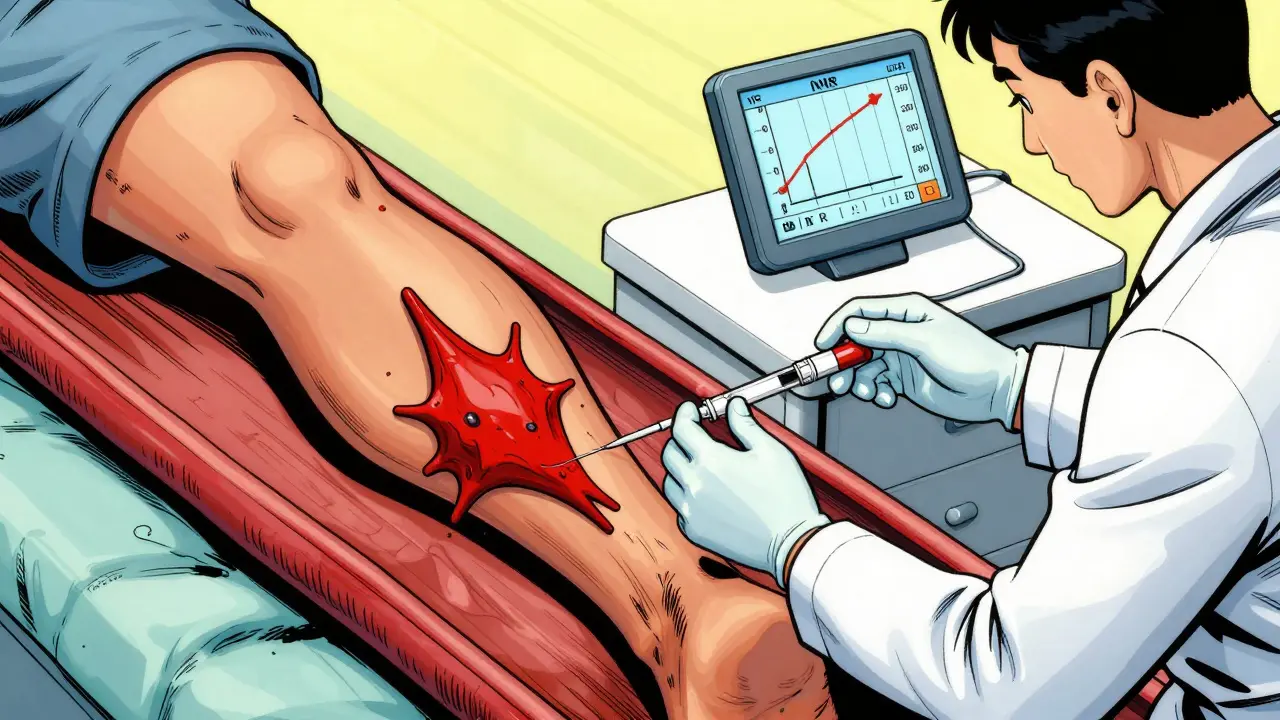
Every year, over 900,000 Americans develop dangerous blood clots. Without proper treatment, these clots can lead to strokes, heart attacks, or even death. Understanding how anticoagulants work and the importance of monitoring is crucial for staying safe while managing clotting disorders.
What Are Clotting Disorders and Why Anticoagulation Therapy is Needed?
Clotting disorders happen when your blood forms dangerous clots too easily. These clots can block blood flow to vital organs. For example, a clot in a leg vein (deep vein thrombosis) might break loose and travel to the lungs (pulmonary embolism), causing life-threatening complications. Doctors use anticoagulation therapy to prevent these clots. This therapy doesn’t actually thin your blood-it slows down the clotting process by interfering with specific steps in the coagulation cascade. According to the American Society of Hematology, anticoagulation therapy is used for three main reasons: treating existing clots, preventing new clots in people with atrial fibrillation, and protecting patients with mechanical heart valves.
Understanding INR: The Key to Warfarin Safety
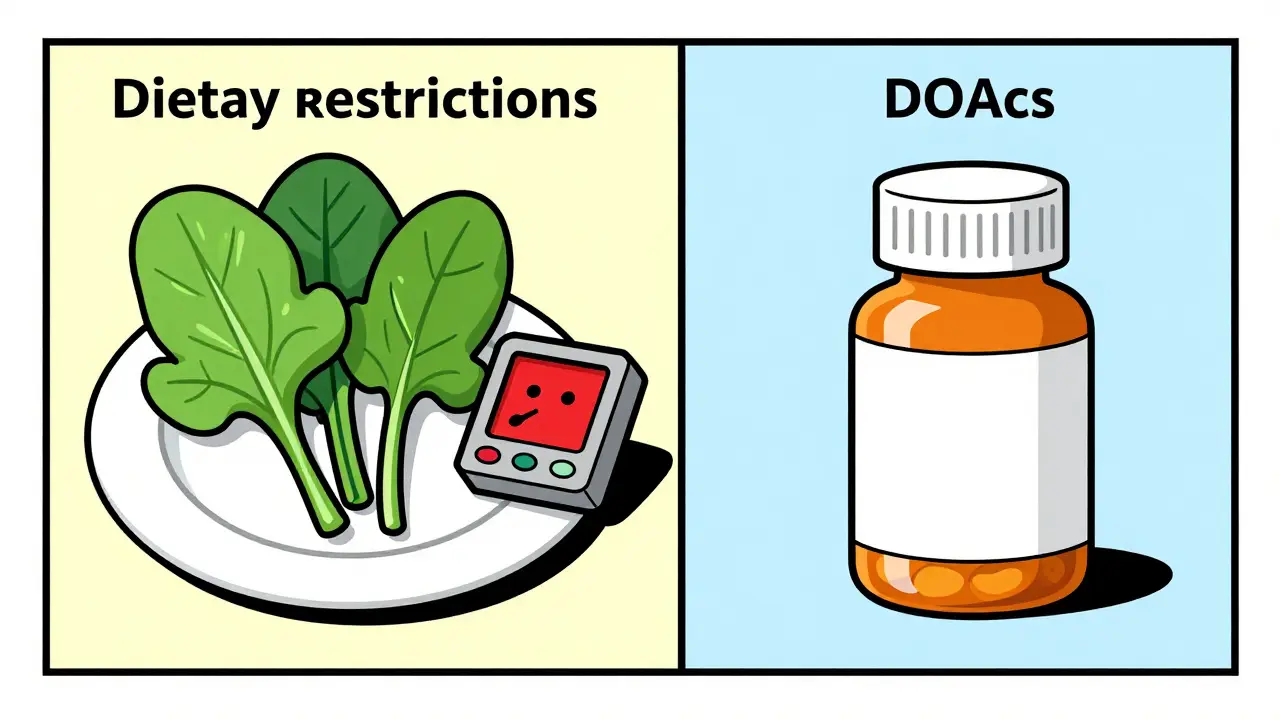
INR International Normalized Ratio, a standardized measure of blood clotting time used to monitor warfarin therapy is a critical tool for patients taking warfarin. The World Health Organization established INR in 1982 to ensure consistent results across labs worldwide. For most conditions like atrial fibrillation or deep vein thrombosis, doctors aim for an INR between 2.0 and 3.0. If your INR is too low, clots may form; too high, and you risk bleeding. Warfarin users need regular blood tests-weekly at first, then every 2-4 weeks once stable. Warfarin A vitamin K antagonist anticoagulant developed in the 1940s that requires regular INR monitoring for safe use works by blocking vitamin K, which your body needs to make clotting factors. This means you must watch your diet-foods high in vitamin K (like spinach or kale) can interfere with warfarin’s effects. About 70% of patients on warfarin spend enough time in the therapeutic range to be considered well-managed, but it requires constant attention.
Direct Oral Anticoagulants (DOACs): The Modern Alternative
Direct Oral Anticoagulants (DOACs) A class of blood thinners including apixaban, rivaroxaban, dabigatran, and edoxaban that work by directly inhibiting specific clotting factors offer a simpler alternative to warfarin. These drugs target specific clotting factors directly. For example, apixaban, rivaroxaban, and edoxaban block factor Xa, while dabigatran inhibits thrombin. Unlike warfarin, DOACs don’t require routine blood tests and have fewer dietary restrictions. They also act faster-within hours-so they’re often used for immediate clot prevention. The ARISTOTLE trial showed apixaban reduces major bleeding risk by 31% compared to warfarin. Real-world data from the American Academy of Family Physicians confirms DOACs are now the first choice for most patients with non-valvular atrial fibrillation, except those with mechanical heart valves or moderate-to-severe mitral stenosis. However, DOACs aren’t perfect. Rivaroxaban and dabigatran carry higher gastrointestinal bleeding risks, and they’re much more expensive than warfarin ($350-$550 monthly versus $4-$30).
Safety Considerations: Bleeding Risks and Reversal Agents
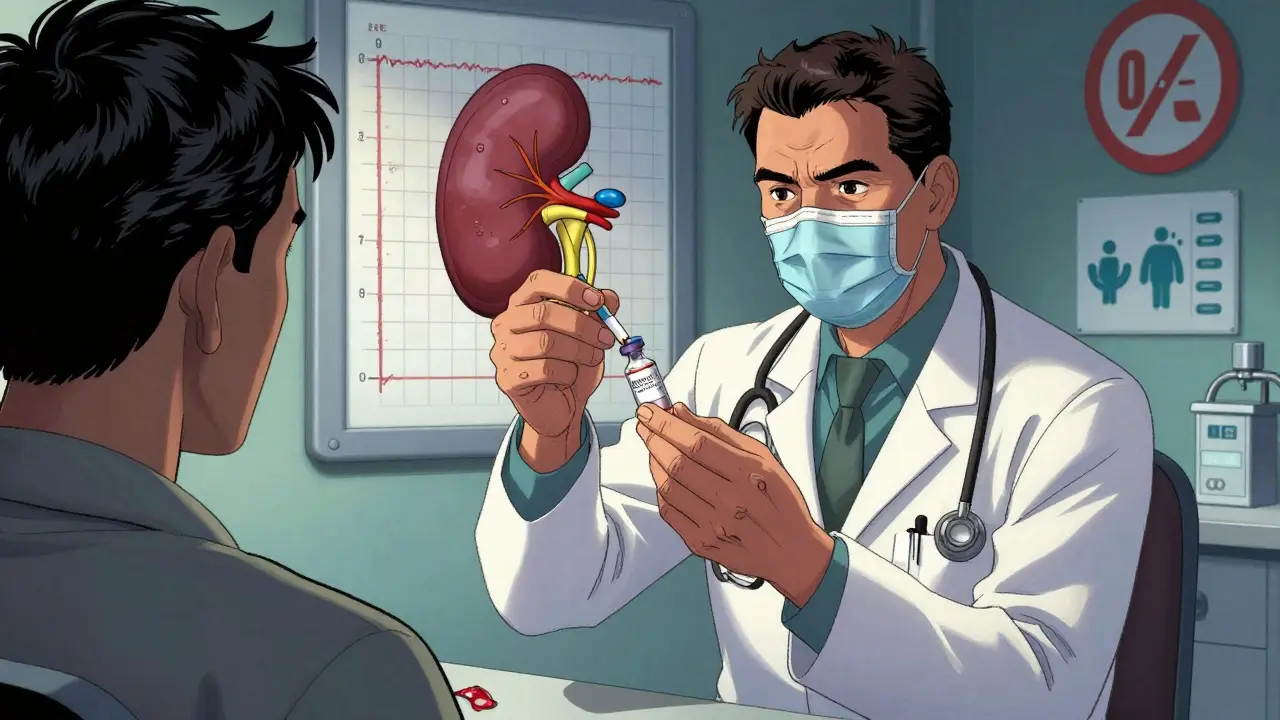
Bleeding is the biggest risk with any anticoagulant. Signs include easy bruising, nosebleeds that won’t stop, blood in urine or stool, or severe headaches. For warfarin, doctors can reverse it quickly with vitamin K or fresh frozen plasma. DOACs have specific reversal agents: idarucizumab for dabigatran (costing about $5,000 per dose) and andexanet alfa for factor Xa inhibitors (around $18,000 per dose). However, these are expensive and not always available. According to NEJM 2014 data, an INR above 4.0 increases major bleeding risk 2.5-fold. For DOACs, kidney function matters-creatinine clearance must be checked before starting and periodically during treatment. Patients with severe kidney impairment (CrCl <15-30 mL/min) often can’t use DOACs safely. In 2023, the FDA approved milvexian, a new factor XIa inhibitor showing 22% lower bleeding risk than apixaban in trials. This could be a game-changer for future treatments.
Warfarin vs DOACs: Key Differences at a Glance
| Feature | Warfarin | DOACs |
|---|---|---|
| Monitoring | Weekly INR checks until stable, then every 2-4 weeks | No routine blood tests required |
| Cost | $4-$30 per month | $350-$550 per month |
| Bleeding risk | Higher major bleeding risk (especially intracranial) | Varies by agent: apixaban has 31% less major bleeding than warfarin |
| Dietary restrictions | Requires consistent vitamin K intake | No dietary restrictions |
| Reversal agents | Vitamin K and fresh frozen plasma (widely available) | Idarucizumab (dabigatran) or andexanet alfa (factor Xa inhibitors), costly and less accessible |
| Best for | Mechanical heart valves, moderate-to-severe mitral stenosis | Non-valvular atrial fibrillation, most venous thromboembolism cases |
Practical Tips for Patients on Anticoagulants
Managing anticoagulants isn’t just about taking pills-it’s about daily habits. Always take your medication at the same time each day. If you miss a dose, don’t double up-check with your doctor. Tell every healthcare provider you see about your anticoagulant, especially before surgeries or dental work. Use a soft toothbrush and electric razor to avoid cuts. If you notice unusual bleeding (like bleeding gums or prolonged nosebleeds), contact your doctor immediately. For warfarin users, keep a food diary to track vitamin K intake. DOAC users should avoid certain medications like NSAIDs (ibuprofen, naproxen) that increase bleeding risk. Regular kidney function checks are essential for DOACs, especially as you age. In a 2023 Cleveland Clinic survey, 92% of DOAC users reported high satisfaction due to convenience, but 28% of Medicare beneficiaries stopped taking DOACs within a year due to out-of-pocket costs exceeding $500 monthly. Always discuss cost concerns with your doctor-there may be affordable alternatives or assistance programs.
Frequently Asked Questions
What is INR and why does it matter?
INR stands for International Normalized Ratio. It’s a standardized blood test that measures how long it takes your blood to clot. For patients on warfarin, doctors use INR to ensure the dose is in the safe therapeutic range (usually 2.0-3.0). If INR is too low, clots can form; too high, bleeding risks increase. The World Health Organization established INR in 1982 to make test results consistent across labs worldwide.
Are DOACs safer than warfarin?
For most patients without mechanical heart valves or severe mitral stenosis, DOACs are generally safer than warfarin. Apixaban reduces major bleeding risk by 31% compared to warfarin, per the ARISTOTLE trial. However, DOACs carry higher gastrointestinal bleeding risks for some agents like rivaroxaban and dabigatran. They also lack reliable monitoring tests, and reversal agents are expensive ($5,000-$18,000 per dose). Warfarin remains the only option for mechanical heart valves due to lack of DOAC data in these cases.
What should I do if I miss a dose of my anticoagulant?
Never double up on doses. For warfarin, skip the missed dose and take your next dose as scheduled. For DOACs, take the missed dose if you remember within 12 hours (for twice-daily drugs like apixaban) or within 6 hours (for once-daily drugs like rivaroxaban). If it’s been longer, skip the dose and continue your regular schedule. Always check with your doctor for specific instructions, as missing doses can increase clotting or bleeding risks.
Can I drink alcohol while on anticoagulants?
Moderate alcohol consumption is usually safe, but excessive drinking is risky. Alcohol can increase bleeding risk, especially with warfarin, by affecting how your liver processes the drug. For DOACs, heavy alcohol use may worsen stomach irritation and bleeding. Most doctors recommend no more than one drink per day for women and two for men. Always discuss your alcohol habits with your healthcare provider to get personalized advice.
How long do I need to take anticoagulants?
Treatment duration depends on why you need it. For a first-time blood clot with a clear trigger (like surgery), you usually take anticoagulants for 3-6 months. For unprovoked clots (no clear cause), indefinite therapy may be needed. For atrial fibrillation, most patients take anticoagulants long-term to prevent stroke. Your doctor will assess your bleeding risk (using scores like HAS-BLED) and recurrence risk to decide the best duration. Never stop taking anticoagulants without consulting your doctor-stopping suddenly can cause life-threatening clots.

Dr. Sara Harowitz
Warfarin is the gold standard! DOACs? Pah! Americans should stick to proven treatments instead of chasing expensive fads.
The FDA is too lenient with these new drugs-no wonder there are bleeding risks! Always check your INR-this is why we have regulations!
If you're not monitoring properly, you're endangering yourself and others. It's not rocket science-just follow the guidelines.
These DOACs are overhyped and overpriced. The real issue is that people don't want to take responsibility for their health.
They want quick fixes, not real care. The US healthcare system is built on trust, not on expensive, unproven alternatives.
Warfarin has been used for decades with proven results. DOACs? They're just a way for pharma to make money.
If you can't handle regular blood tests, maybe you shouldn't be on anticoagulants. This is why we need stricter oversight.
Don't let the pharmaceutical companies fool you. Trust the science, not the marketing.
Georgeana Chantie
DOACs are actually safer than warfarin-everyone knows that! But wait, no, I'm just being contrarian. Actually, warfarin is better because... 😂
The FDA should ban these DOACs! They're too risky. But then again, maybe they're great. Who knows? 🤷♀️
Americans should stick to warfarin. It's American-made and reliable. DOACs? Foreign junk. Trust me, I know best. 😤
Pamela Power
DOACs are nothing but expensive placebos for the uneducated masses.
Real doctors know warfarin is the only way. If you can't handle INR monitoring, you shouldn't be on anticoagulants. Pathetic.
These drugs are a scam perpetuated by pharmaceutical companies. They're designed to fleece patients while providing minimal benefit.
Warfarin has been used for decades with proven efficacy. DOACs? They're just a marketing ploy.
Anyone who uses them is foolish. The FDA should ban these dangerous alternatives.
Trust me, I'm a doctor. I know better than you. These drugs are a disgrace to modern medicine.
The evidence is clear: warfarin is superior in every way. DOACs are only for those who can't follow basic medical advice.
It's time to call out this charade. The medical community is being misled by corporate interests.
Patients deserve better than this.
Cole Streeper
DOACs are a plot by Big Pharma to control our blood. They're testing us with these drugs! Warfarin is the only safe option.
The FDA is in cahoots with them. Wake up, people! The government is in on it.
They want us dependent on these expensive drugs. It's all a scheme to make money off sick people.
Trust me, I know what's going on. They're hiding the truth. The real danger is in the blood clotting-these drugs are making it worse!
The pharmaceutical industry is corrupt. They're poisoning us for profit. Wake up before it's too late!
The truth is out there. Do your research. Don't be fooled by the mainstream media. They're all in on it.
The conspiracy is real. We must fight back. Support warfarin. It's the only safe choice.
Dina Santorelli
I've had bad experiences with DOACs. Bleeding everywhere. Warfarin is better. But no one listens. Just another failed drug. 😔
They say DOACs are safer, but my experience says otherwise. I bled for weeks after starting them. The doctors just shrugged. Warfarin was a nightmare too, but at least I knew how to manage it.
Now I'm stuck in this cycle of distrust. No one understands what it's like. It's like they don't care. Just another medical failure.
I'm tired of being a guinea pig. The system is broken. No one listens to patients. Just another failed drug. 😔
Every time I try a new treatment, it's a disaster. I'm sick of being ignored. The medical community doesn't care about real people. It's all about profits. I'm done. 😔
Bella Cullen
DOACs are nice but way too pricey. Warfarin is cheaper but a pain to monitor. Meh. Just take your meds and be done with it. 🤷♀️
Honestly, it's all a hassle. Why can't we have something better? But I guess this is as good as it gets. Whatever. Just don't ask me to care too much. 😴
The whole system is broken. Doctors don't even listen. Patients suffer. It's all about money. I don't care. Just give me a pill and leave me alone. 🤷♀️
It's not like I have a choice anyway. So whatever. 😴
There's no point in fighting it. Just accept the system. It's broken beyond repair. 😔
Jennifer Aronson
The global approach to anticoagulation therapy varies significantly across different healthcare systems.
In the United States, the focus on DOACs reflects a trend towards convenience and reduced monitoring requirements.
However, in many European countries, warfarin remains the first-line treatment due to its long-standing efficacy and lower cost.
Cultural attitudes towards medication and healthcare also play a role. For instance, in some Asian countries, there's a strong preference for traditional medicine alongside anticoagulants.
It's fascinating how medical practices adapt to local contexts. The key is ensuring patient safety regardless of the chosen therapy.
Regular monitoring and patient education are universal necessities. While DOACs offer advantages for many, they aren't suitable for all cases, such as those with mechanical heart valves.
Understanding these nuances is crucial for effective treatment. Healthcare providers must stay informed about the latest evidence.
Ultimately, the goal is personalized care tailored to each patient's needs. This requires ongoing dialogue between clinicians and patients.
The future of anticoagulation therapy lies in balancing innovation with evidence-based practice.
Japan has unique guidelines for DOAC use due to their specific patient populations.
Global collaboration improves treatment outcomes worldwide.
Sam Salameh
US-made anticoagulants are the best! Warfarin is reliable and affordable. DOACs? They're foreign fancy stuff. Stick with American-made drugs for safety and quality. 🇺🇸
American healthcare leads the world. We have the best doctors and medicines. Why trust foreign drugs when we have proven American solutions?
Warfarin has been used safely for decades. It's time to support local manufacturing. American-made drugs are superior in every way.
Trust the US healthcare system. It's the gold standard. 🇺🇸 The FDA approves only the safest drugs. DOACs? They're not as rigorously tested.
Stick with what works. Support American innovation. 🇺🇸 The world looks up to US medical standards. We set the benchmark.
DOACs lack the same rigorous approval process. Americans deserve better. Always choose domestic solutions.
Our healthcare system is the envy of the world. We don't need foreign alternatives. Period.
Cullen Bausman
Warfarin is the standard treatment. DOACs unnecessary. Americans use proven treatments. No exceptions.
The FDA has approved warfarin for decades. DOACs lack long-term data. Relying on untested alternatives is reckless.
Patient safety must come first. Trust the established medical guidelines. DOACs are a distraction from effective care.
It's time to prioritize proven methods. This is non-negotiable. The US healthcare system should lead by example.
Use warfarin. It works. No debate. DOACs are not FDA-approved for all conditions.
Stick with what's proven. The science is clear. Warfarin remains the gold standard.
Foreign alternatives compromise safety. American medicine is superior. Always.
Gregory Rodriguez
Anticoagulants: the unsung heroes of modern medicine! DOACs are the rockstars of the pharmaceutical world-no more weekly blood draws, no dietary restrictions, just pure, unadulterated convenience.
Warfarin? That's like using a typewriter when you have a laptop. It's time to embrace the future! These drugs are saving lives left and right.
Let's give a standing ovation to the scientists who made this possible. Who needs old-school methods when you've got cutting-edge innovation?
DOACs are the future, and I'm all in! 💯 The medical community is finally catching up with modern science.
DOACs offer precision dosing and fewer interactions. They're designed for today's fast-paced world.
Every day, more patients benefit from their precision. The research speaks for itself: fewer bleeds, better outcomes.
It's time to celebrate these medical marvels. Doctors should be prescribing them as first-line treatment.
Patients deserve the best, and DOACs deliver. Let's leave warfarin in the history books where it belongs.
This is progress, people-embrace it! 🎉
lance black
DOACs save lives. 💪
anjar maike
DOACs are great but expensive 😊 Warfarin needs monitoring but is cheap. Different strokes for different folks 🌍
Some countries prefer DOACs for convenience. Others stick with warfarin for cost. It's all about what works best for each patient.
No one-size-fits-all solution. Healthcare should be personalized. 💯 Warfarin has been used for decades.
DOACs are newer but have benefits. Each has pros and cons. The key is proper management.
Patient education is crucial. 💬 Doctors should tailor treatments. No blanket solutions. 🌟
Global healthcare diversity is fascinating. Each region adapts to its needs. It's not about right or wrong.
It's about what fits best for the individual. Always prioritize safety and effectiveness.