
The Hatch-Waxman Act didn’t just change how drugs get approved in the U.S.-it rewrote the rules of the entire pharmaceutical market. Before 1984, generic drugs were rare. Fewer than 10 were approved each year. Today, 9 out of 10 prescriptions filled are for generics. That shift didn’t happen by accident. It was built on a single law: the Drug Price Competition and Patent Term Restoration Act of 1984, better known as the Hatch-Waxman Act.
Why the Hatch-Waxman Act Was Needed
In the early 1980s, brand-name drug companies had a big advantage: their patents lasted 17 years. But here’s the catch-those 17 years didn’t start counting until the drug was approved by the FDA. And getting FDA approval could take 5 to 10 years. That meant companies lost years of patent life just waiting for regulators to review their drug. Meanwhile, generic manufacturers couldn’t even start testing their versions until the patent expired. A 1984 Supreme Court case, Roche v. Bolar, made it worse. The court ruled that testing a patented drug before the patent expired was illegal, even if the goal was to get ready to launch as soon as the patent ended. That created a huge problem. Patients paid high prices for years longer than necessary. Drugmakers had little incentive to innovate if they lost so much of their patent life to bureaucracy. And generics? They had no legal path to market. The Hatch-Waxman Act was the compromise that fixed both sides.How the Act Balanced Innovation and Access
The law had two main parts. One helped brand-name companies. The other helped generics. And it made both possible at the same time. For innovators, Hatch-Waxman gave them back some of the patent time they lost during FDA review. If a drug took 7 years to get approved, the company could apply to extend its patent by up to 5 years-though in practice, most got about 2.6 years back. That wasn’t a free pass. The total patent life couldn’t exceed 14 years from FDA approval. It was a fair trade: longer protection in exchange for faster generic entry later. For generics, the Act created the Abbreviated New Drug Application, or ANDA. Before this, generic makers had to run full clinical trials to prove their drug was safe and effective. That cost millions and took years. Under ANDA, they only had to prove their version was bioequivalent-meaning it delivered the same amount of active ingredient into the bloodstream at the same rate as the brand drug. That cut development costs by about 75%. Even better, the law created a legal safe harbor. Generic companies could now start testing a drug while the patent was still active. No more waiting. No more lawsuits. As long as they were only testing for FDA approval, they were protected. That single change turned the industry upside down.The Paragraph IV Gamble
One of the most powerful tools in the Hatch-Waxman toolkit is the Paragraph IV certification. When a generic company files an ANDA, it must check every patent listed for the brand drug in the FDA’s Orange Book. If the generic believes a patent is invalid or won’t be infringed, it can file a Paragraph IV certification. That triggers a 45-day clock. If the brand company sues, FDA approval is automatically delayed for 30 months. That sounds like a win for the brand-but it’s not. The first generic to file a Paragraph IV certification gets 180 days of exclusive marketing rights. No other generic can enter the market during that time. That’s a huge prize. A blockbuster drug can earn billions in those six months. That’s why companies used to camp outside FDA offices in the 1990s, waiting to be first to file. The FDA changed the rules in 2003 to let multiple companies share the exclusivity if they filed on the same day. But the incentive remains. And so does the legal chaos.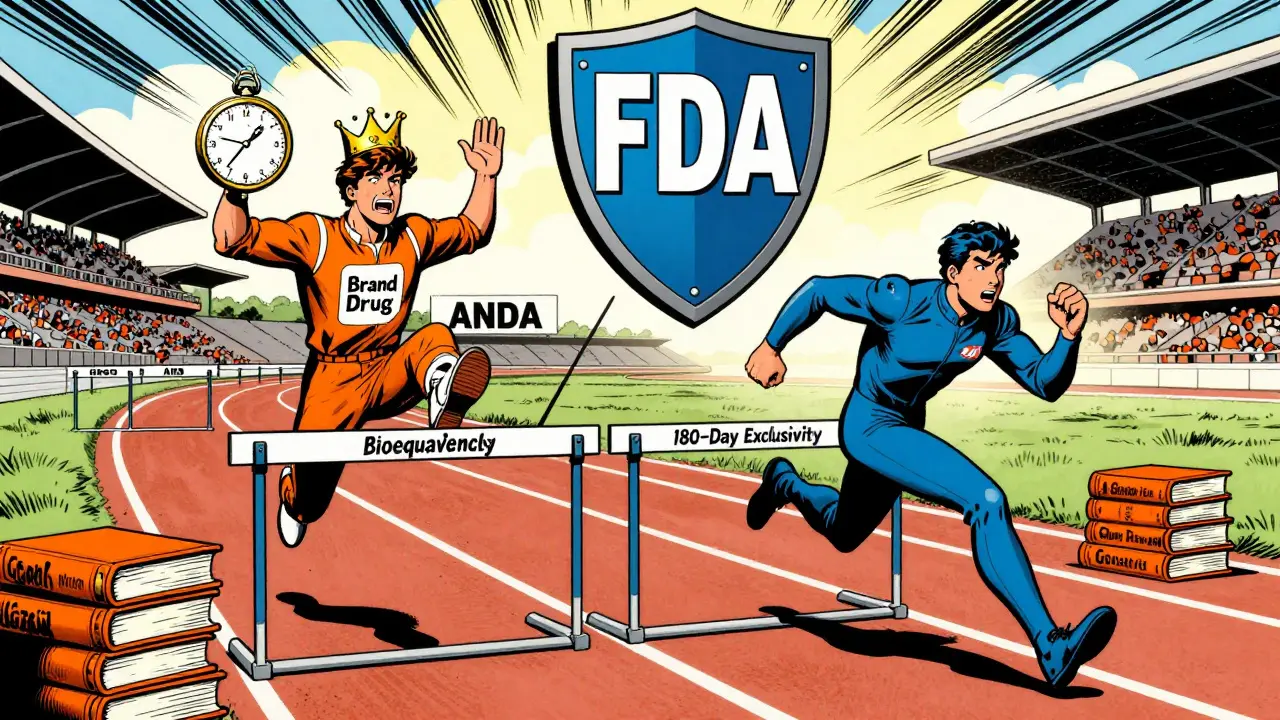
Patent Thickets and Pay-for-Delay
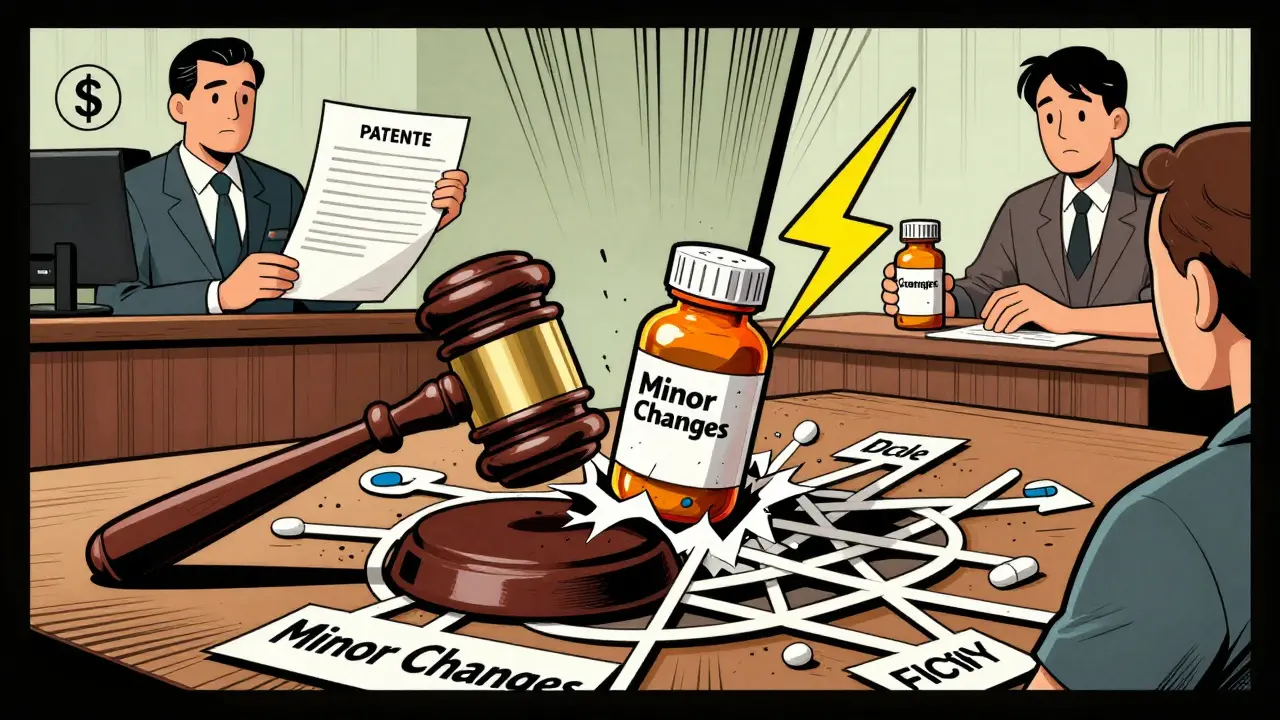
The system worked well for a while. But over time, brand-name companies learned how to game it. Instead of filing one or two patents per drug, they started filing dozens. By 2016, the average drug had 2.7 patents listed in the Orange Book. By 2023, it was 14. These aren’t always big, groundbreaking patents. Many cover minor changes-like a new pill shape, a different dosage form, or a new use for an old drug. Collectively, they form what experts call a “patent thicket.” When a generic tries to enter, the brand company sues on multiple patents. Each lawsuit adds months, sometimes years, to the delay. A 2022 study found that patent thickets delay generic entry by an average of 2.7 years. That’s longer than the original patent term extension Hatch-Waxman was supposed to provide. Then there’s “pay-for-delay.” That’s when a brand company pays a generic manufacturer to hold off on launching. Between 2005 and 2012, about 10% of all Paragraph IV challenges ended this way. The FTC called it anticompetitive. In 2023, Congress passed the Preserve Access to Affordable Generics and Biosimilars Act to ban these deals. It’s now law, but enforcement is still catching up.Real-World Impact: Prices and Access
The results are undeniable. Since 1984, generic drugs have saved the U.S. healthcare system over $1.18 trillion. In 2022 alone, they saved $313 billion. Generics make up 90% of prescriptions but only 18% of total drug spending. That’s the power of competition. When a generic hits the market, prices drop fast. Within six months, they’re typically at 15% of the brand-name price. For some drugs, like statins or blood pressure meds, the savings are even steeper. A 30-day supply of Lipitor cost $200 in 2005. After generics entered, it dropped to $10. That’s not a small difference. It’s life-changing for people on fixed incomes. But not all drugs are equal. Oncology, immunology, and neurology drugs are the most likely to be held back by patent games. The FTC found 262 cases between 2010 and 2022 where brand companies kept monopolies alive past patent expiration. These are often high-cost drugs where the financial stakes are highest.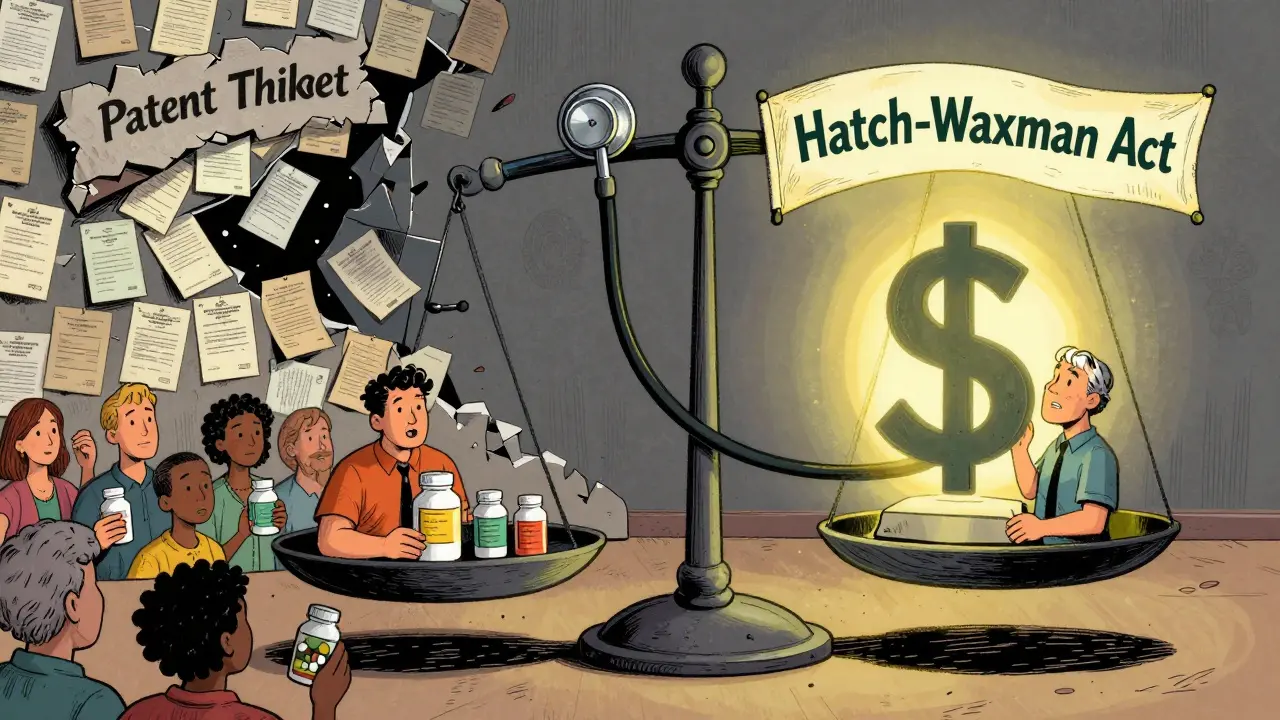
What’s Changing Now?
The FDA is trying to clean up the system. In 2022, it released draft guidance to stop improper patent listings in the Orange Book. If a patent doesn’t cover the actual drug or its approved use, it shouldn’t be listed. That’s a direct response to the patent thicket problem. The Generic Drug User Fee Amendments (GDUFA), first introduced in 2012, have also helped. Generic companies now pay fees to fund faster FDA reviews. Review times have dropped from 36 months to 10 months on average. The goal under GDUFA IV is 8 months by 2025. The CREATES Act of 2019 stopped brand companies from refusing to sell samples to generics. That was a big loophole-some companies would just say no, forcing generics to wait or go to court. Now, they have to provide samples if requested. Still, challenges remain. One generic company executive told a Reddit thread in 2022 that for blockbuster drugs, the 180-day exclusivity window is now meaningless. With 50+ patents filed, litigation can stretch for a decade. The cost of a single Paragraph IV challenge? $15 million to $30 million. That’s a barrier for smaller generic companies.Who Benefits? Who Loses?
Patients win. Taxpayers win. Insurers win. Generic manufacturers win-when they can get through the legal maze. Brand-name companies also benefit. The Act gave them more patent life than they had before 1984. The average effective market exclusivity for a new drug is now 13.2 years-up from 10.4 years before Hatch-Waxman. That’s not a failure of the law. It’s a feature. The system was designed to reward innovation. But when the innovation is just a new pill color or a slightly different dosage form, the balance breaks. That’s where reform is needed-not to kill Hatch-Waxman, but to fix its abuse.Is the Act Still Working?
Yes. But it’s tired. The original compromise was elegant. It gave brand companies time to recoup R&D costs and gave generics a clear, fast path to market. It worked for decades. Today, the system is clogged. Patent thickets. Pay-for-delay. Litigation delays. The FDA is overwhelmed. The courts are backlogged. The cost of entry is too high for small players. The core principles of Hatch-Waxman-bioequivalence, safe harbor, patent restoration-are still sound. But the loopholes need closing. The law isn’t broken. It’s being exploited. The next wave of reform won’t scrap the Act. It will tighten it. More transparency in patent listings. Stricter rules on what counts as a valid patent. Faster FDA reviews. Stronger penalties for pay-for-delay. That’s the future. The Hatch-Waxman Act didn’t just create a market for generic drugs. It created a system that saved billions and gave millions access to life-saving medicines. Now, it’s time to update it-so it can keep doing that for another 40 years.What is the Hatch-Waxman Act?
The Hatch-Waxman Act, formally known as the Drug Price Competition and Patent Term Restoration Act of 1984, is a U.S. law that created the modern system for approving generic drugs. It allows generic manufacturers to prove their drugs are bioequivalent to brand-name drugs without repeating full clinical trials, while also giving brand companies extra patent time to make up for delays in FDA approval.
How do generic drugs get approved under Hatch-Waxman?
Generic drugs are approved through the Abbreviated New Drug Application (ANDA) process. Instead of running new safety and efficacy studies, manufacturers must prove their product is bioequivalent to the brand-name drug-meaning it delivers the same amount of active ingredient at the same rate. This cuts development costs by about 75% and speeds up approval.
What is a Paragraph IV certification?
A Paragraph IV certification is when a generic drug applicant claims that a patent listed for the brand drug is invalid or won’t be infringed. This triggers a 45-day window for the brand company to sue. If they do, FDA approval is automatically delayed for 30 months. The first generic to file a Paragraph IV certification gets 180 days of exclusive marketing rights.
Why do brand-name companies file so many patents?
Brand companies file multiple patents-sometimes over a dozen-to create a “patent thicket.” These often cover minor changes like dosage forms, packaging, or new uses. The goal is to delay generic entry by forcing challengers to fight multiple lawsuits, which can take years and cost millions.
What’s the impact of Hatch-Waxman on drug prices?
Generic drugs approved under Hatch-Waxman are typically priced at 15% of the brand-name drug’s cost within six months of entry. Since 1984, the law has saved the U.S. healthcare system over $1.18 trillion. In 2022 alone, generics saved $313 billion.
Is the Hatch-Waxman Act still relevant today?
Yes. The core structure-bioequivalence standards, patent term restoration, and the ANDA pathway-remains essential. But abuse of patent listings, pay-for-delay deals, and litigation delays have weakened its effectiveness. Recent reforms like the CREATES Act and the 2023 Preserve Access Act aim to fix these issues without scrapping the system.


Gina Beard
It’s funny how we call it a compromise when one side got 40 years of monopoly and the other got a legal obstacle course shaped like a maze made of lawyers.
But hey, at least we get $10 statins now. I’ll take it.
Shelby Marcel
wait so generic companies can test before patent ends?? i thought that was illegal?? like wtf is this magic loophole??
also why do they need to pay the fda?? i thought the fda was supposed to be public service??
blackbelt security
This is one of those rare laws that actually worked. No hype. No fluff. Just a quiet, elegant fix that saved millions from going broke just to take their blood pressure meds.
Don’t overcomplicate it. The system’s got cracks, sure-but the foundation’s still solid.
Patrick Gornik
Let’s be brutally honest: Hatch-Waxman didn’t create competition-it created a high-stakes poker game where the house always holds the joker.
The patent thicket? That’s not innovation. That’s corporate kleptocracy dressed in regulatory garb.
And pay-for-delay? That’s not capitalism-it’s collusion with a corporate seal of approval.
The FDA’s ‘draft guidance’? A Band-Aid on a hemorrhage.
The 180-day exclusivity window? A glittering trap for the ambitious and the bankrupt.
They didn’t fix the system-they weaponized it.
And now we’re supposed to cheer because Lipitor’s $10? That’s not a win-it’s damage control.
True innovation would’ve been breaking patents, not extending them.
But no, we’d rather let Big Pharma write the rules, then pat ourselves on the back for letting generics win the crumbs.
It’s not a compromise. It’s a surrender wrapped in legalese and labeled ‘progress.’
And the saddest part? We keep voting for the same people who let this happen.
So yes, the Act still works.
For them.
Tommy Sandri
As a policy analyst with a focus on pharmaceutical regulation, I find the structural integrity of the Hatch-Waxman framework remarkably resilient despite evolving market dynamics.
While the emergence of patent thickets and litigation strategies presents significant challenges, the foundational mechanisms-bioequivalence standards, Paragraph IV certifications, and the safe harbor provision-remain empirically effective in facilitating market entry.
Reform efforts should prioritize transparency in Orange Book listings and procedural efficiency in FDA review cycles rather than dismantling the architecture.
Historical data indicates that without this legislation, generic penetration would likely remain below 30% today.
Luke Davidson
Man, I used to pay $200 for my cholesterol meds before generics hit.
Now I get the same damn pills for $8 at Walmart.
My grandma takes three of them every day and she’s still kicking at 84.
That’s not just savings-that’s dignity.
Yeah, the system’s got glitches, but this law kept my family from choosing between insulin and groceries.
Don’t let the lawyers scare you off.
We need more of this, not less.
Shanta Blank
Oh wow. So the pharmaceutical industry didn’t just exploit the law-they turned it into a full-blown crime syndicate with a patent portfolio.
Patent thickets? That’s not innovation. That’s a legal dumpster fire.
Pay-for-delay? That’s not business. That’s bribery with a corporate card.
And the FDA? Sitting there like a confused librarian trying to shelve books that keep changing titles.
Someone needs to burn the Orange Book.
And then sue the people who wrote it.
Kevin Waters
One thing people forget: the ANDA process didn’t just lower costs-it lowered the barrier to entry for small biotechs.
Before this, only giants could afford to challenge patents.
Now, a startup with $5M and a smart lawyer can go toe-to-toe with Pfizer.
Yeah, it’s messy. But it’s the only system that ever let a small company in the door.
Fix the loopholes, don’t throw the baby out with the bathwater.
Jamie Hooper
so like… if you file a paragraph iv and get sued, you get 30 months delay… but if you’re first, you get 180 days of monopoly?
that’s like paying someone to not steal your bike, then letting them sell it for half price for six months.
also why do we still let them list patents for ‘pink pill’ versions??
imagine if apple could patent the color of their charging cable and stop other chargers.
we’d all be using purple cables.
Elizabeth Cannon
My dad’s on a generic blood thinner that costs $4 a month.
He used to skip doses because the brand was $400.
He didn’t know he was risking a stroke.
So yeah, Hatch-Waxman isn’t perfect.
But it’s the reason he’s still here to complain about my cooking.
Don’t fix what’s saving lives.
Fix what’s blocking the path to those lives.
Marlon Mentolaroc
Let’s be real-the 180-day exclusivity window is a joke now.
Some companies have 50+ patents on one drug.
They sue you on 47 of them.
You spend $20M.
By the time you win, the drug’s off patent anyway.
So who really wins? The lawyers.
And the shareholders.
Not you.
Not me.
Not the guy who needs the pill.
siva lingam
so they made a law to fix prices
and now the rich just made more laws to break it
classic
Phil Maxwell
I read the whole thing.
It’s wild how something so technical ended up saving so many people.
Most laws are garbage.
This one? It actually did what it said it would.
Even if it’s being bent now.
Still better than most.
Sushrita Chakraborty
As an Indian pharmaceutical professional, I have witnessed firsthand how the Hatch-Waxman Act catalyzed global generic manufacturing capacity.
Indian firms, equipped with robust bioequivalence protocols, became indispensable to the U.S. supply chain.
While patent thickets and litigation delays are concerning, the foundational principle-bioequivalence without redundant clinical trials-remains a model of regulatory efficiency.
Reform must target procedural abuse, not the mechanism itself.
For millions globally, this law is not policy-it is survival.