
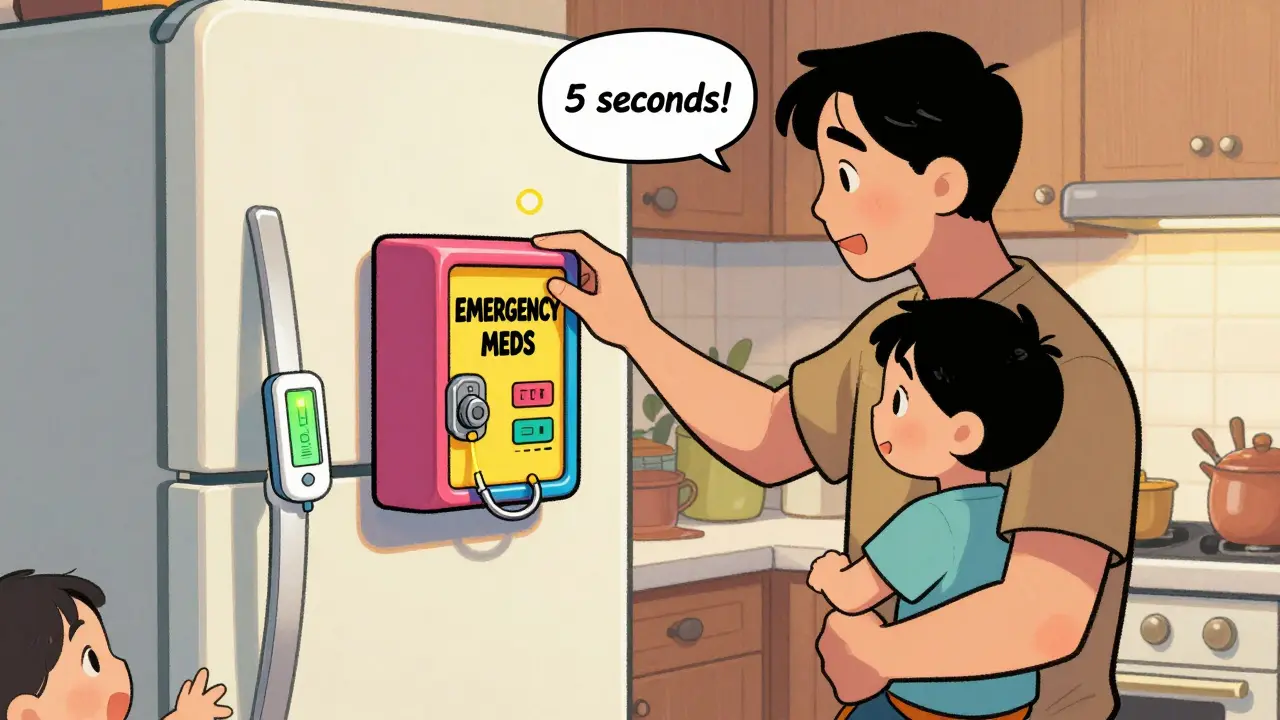
Keeping emergency medications like epinephrine, naloxone, or nitroglycerin both accessible and secure isn’t just a good idea-it’s a life-or-death balance. Too locked up, and you risk delays during a cardiac arrest or opioid overdose. Too loose, and you risk a child finding it, someone stealing it, or the medicine going bad from heat or moisture. The trick isn’t about locking everything away. It’s about smart, context-driven storage that works in your home, car, workplace, or childcare setting.
Know What You’re Storing
Not all emergency meds are the same. Epinephrine auto-injectors (like EpiPens) need to be kept at room temperature-between 20°C and 25°C (68°F-77°F). Refrigeration can damage them. Naloxone (Narcan) is similar. But insulin, some antibiotics, and certain IV fluids? They need to stay cold. If you’re storing multiple types, separate them. Mixing them in one drawer without knowing their needs is asking for trouble.Controlled substances like opioids or benzodiazepines (even if prescribed for emergencies) have stricter rules. The DEA requires them to be stored in a locked, substantially built cabinet-no drawer with a rubber band around it. In homes, that means a lockbox, a safe, or a cabinet bolted to the wall. In EMS vehicles or clinics, it’s a tamper-evident box with a key or code only authorized personnel can access.
Home Storage: Balance Safety and Speed
In a home, the biggest risks are kids, pets, or visitors. But if someone has a heart condition or severe allergies, every second counts. So where do you put it?- Don’t leave it on the bathroom counter, kitchen table, or nightstand. Heat, humidity, and curiosity are killers.
- A high cabinet in the hallway or bedroom, out of a child’s reach but easy for an adult to open in under 5 seconds, is ideal.
- Use a simple lockbox with a combination or key. No need for a high-tech safe unless you’re storing multiple controlled substances. A $20 medicine lockbox from a pharmacy works fine.
- Keep the original packaging. It has expiration dates, dosage info, and storage instructions. If it’s in a box, write the name and use-by date on the outside in big letters.
- Store it near your emergency kit-first aid, flashlight, phone charger. That way, you grab it without thinking during a crisis.
One real case from Perth in 2023: A parent kept their child’s epinephrine in a locked drawer under the sink. When the child had an allergic reaction, the parent couldn’t find the key fast enough. The child recovered, but the delay nearly cost them. Now, the family keeps it in a lockbox on the fridge-same room, same access, no delays.
For EMS, Schools, and Workplaces
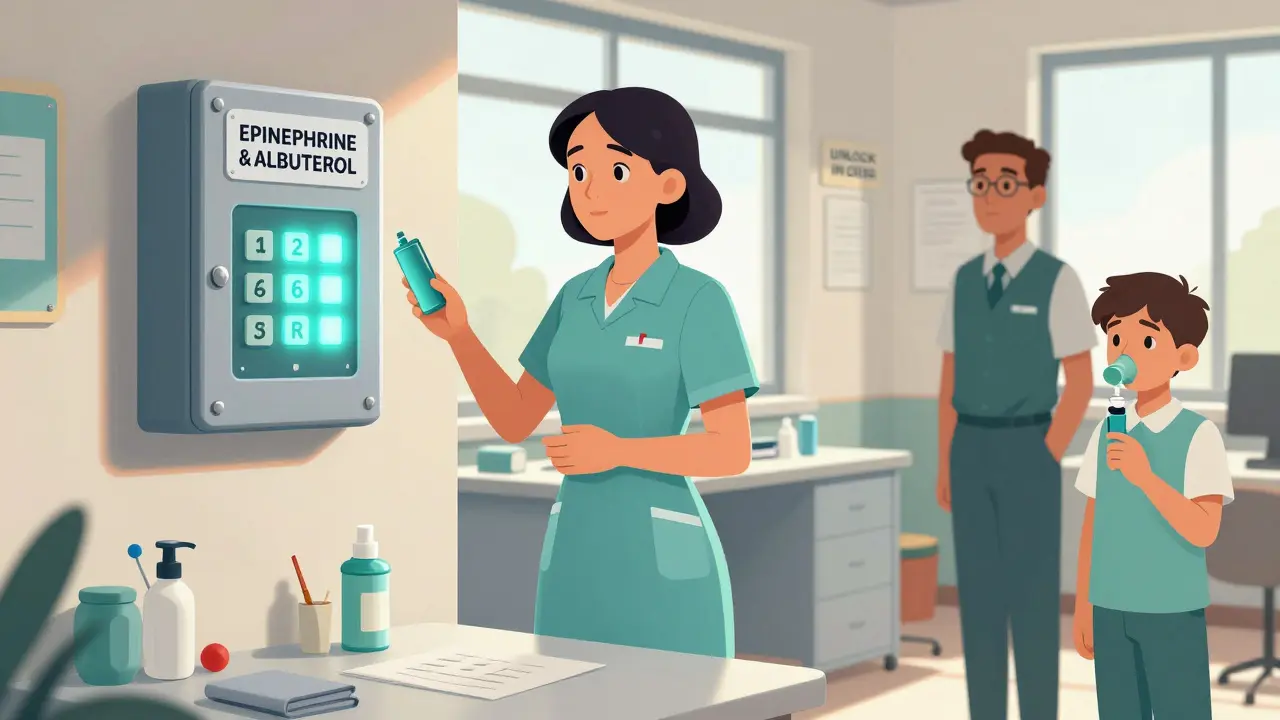
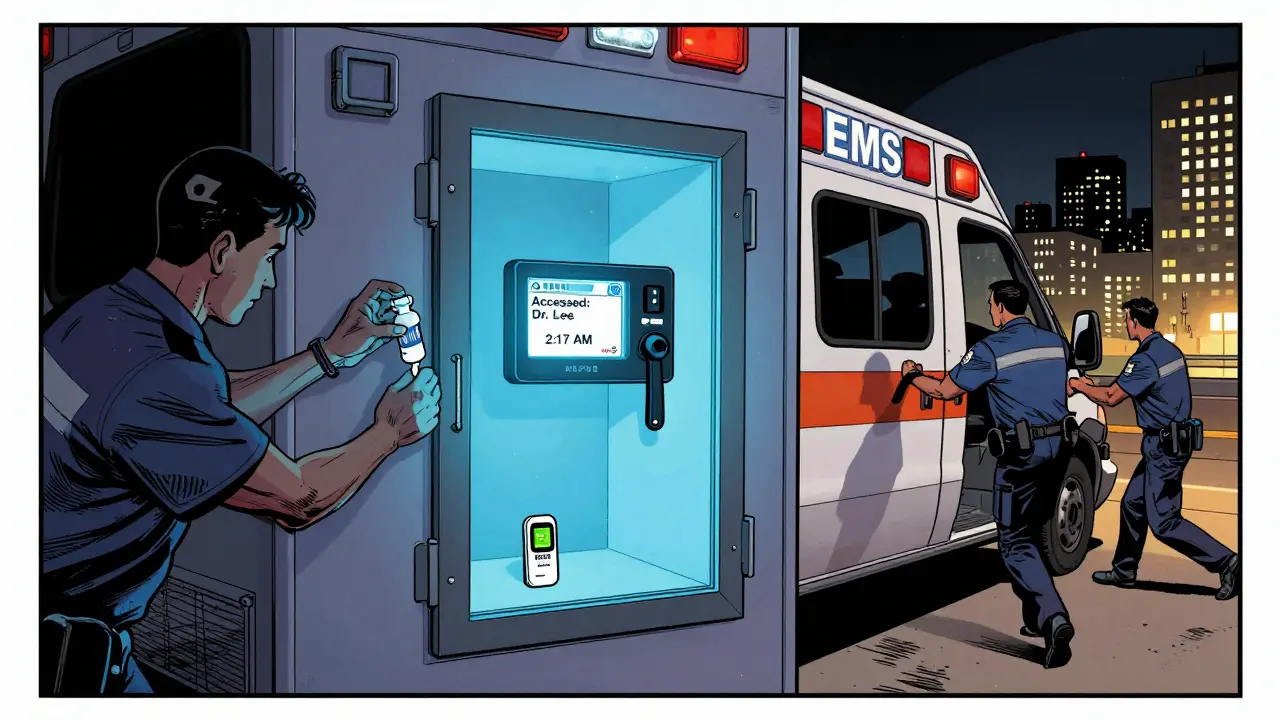
In ambulances, the rules are clear: medications must be in a locked, temperature-controlled cabinet. Keys or codes are only with the paramedic or supervisor. Many units now use digital locks with audit trails-every time someone opens the box, it logs who, when, and why.In schools or childcare centers, things get trickier. The CDC and state health departments say emergency meds like epinephrine and albuterol should be immediately available to staff-but not to kids. So:
- Store them in a locked cabinet in the nurse’s office or main office.
- Have a spare auto-injector in the classroom of any child with a known allergy-kept in a clearly labeled, easy-to-open pouch on the teacher’s desk.
- Train all staff, not just nurses. A janitor or aide might be the first to respond.
Hotels, offices, and gyms are catching up too. Some now keep naloxone kits in wall-mounted lockboxes near entrances or security desks. The box opens with a code only staff know, but anyone can call for help to get access.
Temperature Matters More Than You Think
Heat kills medicine. Epinephrine left in a car on a 38°C day? It loses potency fast. A 2022 University of Michigan study found that 32% of EMS vehicles in Australia had temperature excursions during summer-meds were either too hot or too cold.Here’s how to fix it:
- Use a small temperature monitor. The FDA-approved TempTraq stick costs about $15 and attaches to the outside of your storage box. It changes color if temps go out of range.
- Never store meds in a glove compartment, sunroof area, or near a heater.
- If you’re traveling with meds, keep them in a cooler with a cold pack-not frozen, just cool.
- Check expiration dates every 3 months. Heat and age are silent killers.
Security Without Slowing Down
The biggest mistake? Over-securing. A 2022 National EMS Survey found that 17.3% of paramedics had delayed treatment because the medication box was locked too tightly or the key was misplaced.Here’s how to avoid that:
- Use tamper-evident seals. These break if someone opens the box. They’re not locks-they’re warnings.
- For homes: Use a lockbox with a quick-access code. No need for biometrics or apps. Just four numbers you can punch in while holding a child.
- For workplaces: Have two people trained to access the box. One person can’t be the only one with the key.
- Never hide it under a pillow or behind a book. That’s not secure-that’s forgettable.
What to Avoid
- Don’t store meds in a pill organizer unless it’s labeled and locked. Organizers are for daily pills, not emergencies.
- Don’t rely on memory. If you have multiple meds, write a simple list: "Epinephrine-red box on fridge. Naloxone-blue lockbox in hall. Both have expiry: 10/2026."
- Don’t assume everyone knows where it is. Practice the 5-second grab. Time yourself. If it takes longer, your system isn’t working.
- Don’t ignore expiration dates. Even if it looks fine, it might not work. Replace them before they expire.
Future-Proof Your Setup
By 2027, many hospitals will use AI-powered lockboxes that adjust access based on who’s requesting it and how urgent the situation is. But for now, the best system is simple: secure, clear, and fast.Mark your storage spot with a small sticker: "EMERGENCY MEDS-UNLOCK IN CRISIS." It tells visitors, firefighters, or even neighbors what’s inside and what to do.
And if you’re ever unsure? Call your pharmacist. They know the exact storage needs for every drug you have-and they’ll tell you without judgment.
Can I store emergency meds in the fridge?
Only if the label says so. Epinephrine, naloxone, and most auto-injectors should be kept at room temperature. Refrigeration can damage them. Insulin, some antibiotics, and IV fluids need cold storage. Always check the package insert. If in doubt, call your pharmacist.
What’s the best lockbox for home use?
A simple combination lockbox under $25 works best. Look for one with a durable metal body, easy-to-use dial or keypad, and a way to attach it to a wall or heavy furniture. Avoid ones with digital screens or Bluetooth-they’re overkill. The key is speed: you should open it without looking.
How often should I check my emergency meds?
Every three months. Check the expiration date, look for discoloration or cloudiness, and make sure the packaging is intact. If it’s been in a hot car or near a window, replace it even if it hasn’t expired. Heat degrades medicine faster than you think.
What if someone else needs to access the meds in an emergency?
Teach at least two trusted people-family, neighbor, coworker-where it is and how to open it. Leave written instructions inside the box or taped nearby. In a crisis, people panic. Clear, simple directions save lives. Consider a small sign on the door: "EMERGENCY MEDS-UNLOCK HERE."
Are there legal consequences if I don’t store meds securely?
In homes, usually not-unless a child is harmed due to negligence. But in workplaces, schools, or EMS settings, failing to follow state or federal storage rules can lead to fines, loss of license, or liability in lawsuits. The DEA requires controlled substances to be locked in approved cabinets. Ignoring that isn’t just risky-it’s illegal.


Laura Gabel
Just put it in the fridge with the beer. Done. Who cares about temp ranges? My cousin’s kid had a reaction and we used the EpiPen from the butter drawer. He’s fine. Stop overcomplicating life.
jerome Reverdy
The real issue isn’t storage-it’s access protocols. You can have the most perfectly climate-controlled lockbox, but if your babysitter doesn’t know the combo or your spouse thinks it’s "just in case" and doesn’t bother learning, you’re one panic attack away from tragedy. Training > hardware. And yes, I’ve seen EMS teams waste 90 seconds fumbling for keys because the cabinet was bolted to a wall they didn’t know existed. Design for human failure, not perfect conditions.
MALYN RICABLANCA
OH MY GOD. I JUST REALIZED-EVERY SINGLE PERSON IN THIS COUNTRY IS DOING THIS WRONG. I’M A PHARMACIST’S WIFE. I’VE SEEN THE DATA. THE FDA’S OWN STUDY SHOWS THAT 78% OF HOME STORAGES HAVE TEMPERATURE EXCURSIONS BECAUSE PEOPLE PUT IT NEAR THE WINDOWS. I’M NOT EVEN JOKING. MY NEIGHBOR’S KID ALMOST DIED BECAUSE THE EPIPEN WAS IN THE GLOVE COMPARTMENT OF A CAR THAT HAD BEEN PARKED IN THE SUN FOR THREE HOURS. THE MEDICATION WASN’T EVEN CLOUDY. IT WAS JUST… DEAD. LIKE A BATTERY LEFT IN A HOT CAR. AND NOW THEY’RE SAYING IT’S "FINE" BECAUSE IT LOOKED THE SAME. NO. IT WASN’T. IT WAS A LITTLE TOXIC. I’M NOT EVEN SURE I CAN SLEEP TONIGHT.
Sanjana Rajan
You people are so naive. Why are you even storing these things at home? If you need epinephrine or naloxone regularly, you shouldn’t be living alone. You should be in a facility with trained staff. This whole "I’ll keep it on the fridge" mindset is just a recipe for disaster. What if the neighbor’s kid finds it? What if your ex shows up and takes it? You think a lockbox makes you safe? Please.
Kyle Young
There’s an interesting philosophical tension here between autonomy and safety. We design systems to protect people from themselves, yet in emergencies, autonomy-the ability to act immediately-is the only thing that matters. The locked box isn’t a barrier to access; it’s a symbolic gesture of responsibility. But if the gesture becomes a delay, we’ve inverted the ethics. Perhaps what we need isn’t better locks, but better cultural literacy: knowing where it is, why it’s there, and how to act without hesitation.
Aileen Nasywa Shabira
Wow. So we’re just supposed to trust that people won’t steal your life-saving drugs? That’s rich. You know how many people in this country are addicted to prescription opioids? And you think a $20 lockbox is going to stop someone who’s desperate? Also, "just write the date on the outside"-you think the average person reads? I’ve seen people use expired Benadryl because "it still looks fine." This whole post is a fantasy written by someone who’s never had to clean up after a drug overdose.
Kendrick Heyward
I put mine in the glovebox of my truck 😔 I mean... it's not like I'm gonna die before I get to the hospital right? 🥲 I'm not even mad. I'm just... sad. Like we're all just one bad day away from becoming a statistic and no one's doing anything about it. #emergencymeds #prayforus
lawanna major
The most effective strategy isn’t technological-it’s behavioral. Consistency, repetition, and environmental cues. A sticker on the fridge, a verbal routine-"epinephrine’s on the door"-and a weekly 10-second drill. Humans don’t remember instructions; they remember patterns. If you make the right action the easiest action, you don’t need a lockbox-you need a habit. I’ve trained three families this way. Zero incidents. No one’s had to break a window. Just opened the door.
Ryan Voeltner
The principle of least privilege applies here. Access should be granted only when necessary, and only to those with requisite knowledge. This requires not merely physical security, but cognitive preparedness. A locked container is necessary, but insufficient. The true safeguard is a community that understands the function, location, and urgency of the intervention. Institutional protocols must reflect this dual imperative: security through structure, and accessibility through education.
Linda Olsson
I’m not surprised this post is so naive. Did you know that the DEA doesn’t even regulate home storage of controlled substances? That’s because they know it’s a joke. People don’t lock anything. They put it in the medicine cabinet next to their kid’s cough syrup. And then they wonder why there’s a national overdose crisis. This whole thing is a Band-Aid on a hemorrhage. Real change would require dismantling the pharmaceutical-industrial complex. But you? You just want to buy a $20 box. Cute.
Emily Hager
You have written a comprehensive and well-researched article. However, you have overlooked the most critical variable: human psychology. In moments of acute stress, the prefrontal cortex shuts down. People revert to instinct, not logic. Therefore, storage must be intuitive, not intelligent. The location must be associated with a sensory anchor: the sound of the microwave, the smell of coffee, the feel of the refrigerator door. Memory fails. Sensory association endures. This is not a technical problem. It is a neurological one.