
Medication-Related Nosebleed Risk Checker
How This Tool Works
Enter your medication information and living conditions to get a risk assessment for medication-related nosebleeds based on the article content.
It’s not rare to get a nosebleed. About 60% of people will have one at some point in their life. But when they keep happening - especially if you’re on regular medication - it’s not just annoying. It could be your meds doing more than you think.
Why Your Medications Might Be Causing Nosebleeds
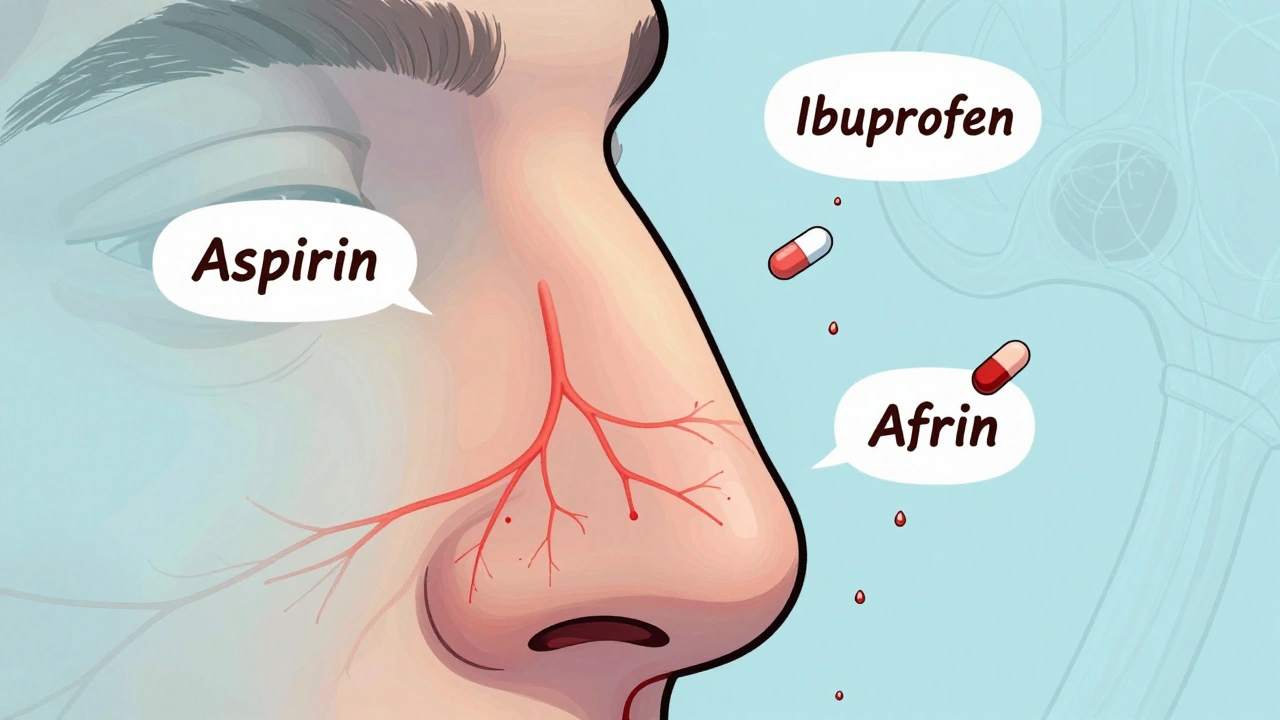
Nosebleeds happen because of tiny blood vessels in your nose that break. One area, called Kiesselbach’s plexus, is packed with capillaries and sits right behind the front of your nostrils. It’s delicate. And when certain drugs interfere with your body’s ability to stop bleeding or dry out the lining of your nose, it becomes a magnet for trouble. Two main types of medications cause this:- Drugs that thin your blood - like aspirin, warfarin, clopidogrel, and NSAIDs (ibuprofen, naproxen)
- Drugs that dry out your nose - like decongestant sprays (oxymetazoline/Afrin) and antihistamines
Who’s Most at Risk?
Not everyone on these meds gets nosebleeds. But some groups are more vulnerable:- Adults over 45 - blood vessels naturally become more brittle with age
- People with high blood pressure or atherosclerosis - increased pressure makes vessels more likely to burst
- Pregnant women - hormonal changes cause nasal blood vessels to expand
- Children - they pick their noses, and their nasal lining is thinner
- People in dry climates - like Perth in winter, where indoor heating drops humidity below 30%
What to Do When a Nosebleed Starts
Most nosebleeds are harmless and stop on their own. But how you handle them matters - especially if you’re on meds.- Pinch your nose - Use your thumb and index finger to squeeze the soft part of your nose shut. Don’t just press the bridge. You need to compress the vessels inside.
- Lean forward - Tilt your head slightly forward. Leaning back lets blood run down your throat. That can make you gag or vomit, which makes things worse.
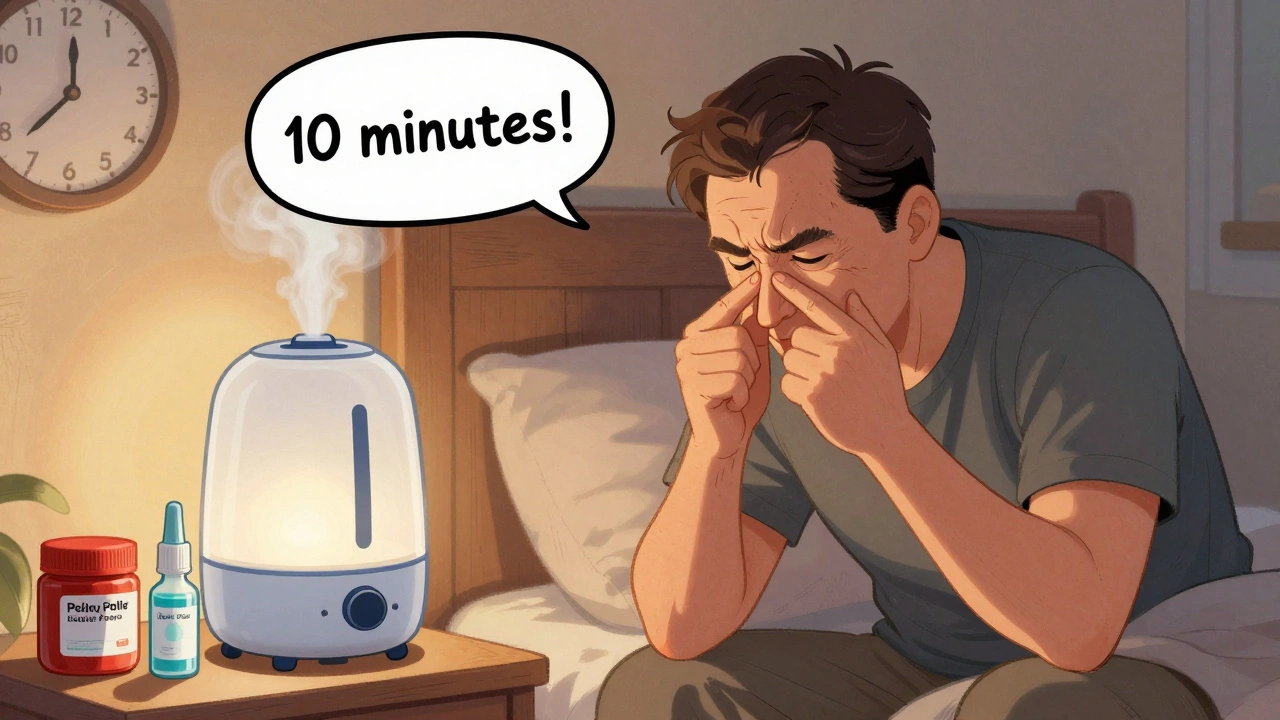
- Hold for 10-15 minutes - Set a timer. Most people give up too soon. You need at least 10 minutes of steady pressure. Don’t peek.
- Use a cold compress - Place a cloth-wrapped ice pack on the bridge of your nose. It helps constrict blood vessels.
- Don’t blow your nose - Wait at least 12 hours after the bleeding stops. Blowing too soon can reopen the wound.
How to Prevent Nosebleeds While Taking Medications
You don’t have to stop your meds. But you can reduce the risk.- Switch pain relievers - Swap ibuprofen or naproxen for acetaminophen (Tylenol). It doesn’t affect platelets. For fever or headaches, it’s just as effective without the bleeding risk.
- Moisturize your nose daily - Apply a thin layer of petroleum jelly (Vaseline) inside each nostril, twice a day - morning and before bed. Or use a saline nasal gel. This keeps the lining soft and less likely to crack.
- Use a humidifier - Especially in winter. Keep one running near your bed. Aim for 40-50% humidity in your bedroom. Dry air is the #1 trigger for nosebleeds.
- Avoid nasal sprays longer than 3 days - If you’re using oxymetazoline (Afrin) for congestion, stop after 72 hours. Try saline sprays instead. They hydrate without rebound.
- Don’t pick or rub your nose - Even if it itches. Use a saline spray to loosen mucus instead.
- Stay hydrated - Drink enough water. Dehydration makes your nasal lining drier.
When to Talk to Your Doctor
If you’re having nosebleeds more than 3-4 times a week, it’s time for a medication review. Don’t stop your pills yourself. Talk to your doctor or pharmacist. They might:- Check your INR if you’re on warfarin
- Adjust your aspirin or NSAID dose
- Switch you to a different blood thinner with lower bleeding risk
- Recommend a nasal ointment or humidifier

Red Flags: When It’s Not Just a Nosebleed
Some nosebleeds are warning signs. Get help right away if you have:- Bleeding that lasts longer than 30 minutes
- Heavy bleeding that soaks through a towel
- Feeling faint, dizzy, or short of breath
- Bruising easily or bleeding from gums, urine, or stool
- Nosebleed after a head injury or fall
The Bottom Line
Nosebleeds from meds are common, preventable, and rarely dangerous - if you know what to do. You don’t need to live with them. Small changes - moisturizing your nose, switching painkillers, using a humidifier - can cut episodes in half. Don’t ignore recurring nosebleeds. They’re your body telling you something’s off. Talk to your doctor. Review your meds. Take control. Your nose - and your health - will thank you.Can aspirin cause nosebleeds even at low doses?
Yes. Even low-dose aspirin (81 mg daily), often taken for heart health, can increase nosebleed risk by interfering with platelet function. Studies show people on daily aspirin are more likely to have nosebleeds than those who don’t take it. It’s not a reason to stop - but it’s a reason to monitor and take preventive steps like using saline sprays and humidifiers.
Is it safe to use nasal sprays like Afrin if I get frequent nosebleeds?
No. Decongestant sprays like oxymetazoline (Afrin) should never be used for more than 3 days in a row. Longer use causes rebound congestion and dries out your nasal lining, making nosebleeds worse. Use saline sprays instead - they’re safe for daily use and help keep your nose moist without the risk.
Should I stop my blood thinner if I get nosebleeds?
Never stop a blood thinner on your own. Stopping warfarin, clopidogrel, or aspirin suddenly can increase your risk of stroke, heart attack, or blood clots. Instead, talk to your doctor. They may adjust your dose, check your INR, or suggest alternatives with lower bleeding risk - while keeping you protected from serious conditions.
Can dry air really cause nosebleeds even if I’m not on meds?
Absolutely. Dry air - especially in winter with indoor heating - is one of the top triggers for nosebleeds, even without medication. It cracks the delicate lining of your nose. That’s why humidifiers and nasal moisturizers are recommended for everyone in dry climates, not just people on meds.
What’s the best way to moisturize my nose to prevent nosebleeds?
Apply a thin layer of petroleum jelly (Vaseline) or a saline nasal gel inside each nostril twice a day - once in the morning and once before bed. You can also use saline sprays several times daily. Avoid oil-based sprays that can be inhaled into the lungs. Stick to water-based gels or ointments designed for nasal use.
Do children get nosebleeds from medications too?
Yes. Kids can get nosebleeds from NSAIDs like ibuprofen, especially if they’re on it regularly for chronic pain or inflammation. Their nasal passages are smaller and more sensitive. If your child has frequent nosebleeds and is on any medication, ask their pediatrician to review the list. Often, switching to acetaminophen helps.
How do I know if my nosebleeds are from medication or something else?
If your nosebleeds started after beginning a new medication, or get worse when you take it, that’s a strong clue. But if you’re also bruising easily, bleeding from gums, or have a family history of bleeding disorders, your doctor may test for other causes like low platelets or clotting factor deficiencies. A simple blood test can rule out serious conditions.


Taya Rtichsheva
lol i just blew my nose and started bleeding again... guess i'm living the dream with my ibuprofen and dry winter air
Christian Landry
sameee i’ve been using afrin for like 2 weeks bc my cold won’t leave and now my nose feels like sandpaper 😭 ty for the heads up tho
Guylaine Lapointe
Honestly? People who use nasal sprays longer than 3 days deserve every nosebleed they get. It’s not the medication’s fault-it’s your dumb habit. Stop being lazy and get a humidifier already.
Lisa Whitesel
I’ve had 3 nosebleeds this month. My doctor said it’s from my aspirin. I’m not stopping it. I’d rather bleed than have a stroke. But yeah, Vaseline in the nostrils now. Gross but effective.
Philippa Barraclough
It’s interesting how the physiological vulnerability of Kiesselbach’s plexus intersects with pharmacological interference, particularly in populations with age-related vascular fragility and environmental desiccation. The data on NSAID-induced epistaxis is statistically significant, yet public awareness remains negligible. Most individuals don’t realize that platelet inhibition isn’t systemic-it’s localized to mucosal surfaces with high capillary density and minimal structural support.
Katie Harrison
I’m Canadian, and I live in Alberta-winter here is basically a dehydrating oven. I started using Vaseline in my nose last year after a 20-minute nosebleed at 3 a.m. It’s weird, but it works. I also got a humidifier. My partner thinks I’m weird. I don’t care. My nose is happy.
Angela R. Cartes
I’m just saying… if you’re on blood thinners and still using ibuprofen, you’re basically playing Russian roulette with your nasal passages. I mean, come on. You know better. 😒
Tim Tinh
my mom’s on warfarin and she swears by the saline spray + vaseline combo. she says it’s saved her from 3 ER trips. also-don’t forget to drink water. i used to think that was dumb until i started getting nosebleeds after 3 days of coffee and no water. 🤦♂️
Andrea Beilstein
It’s funny how we treat the body like a machine that can be hacked with pills, then get surprised when the gears grind. The nose isn’t just a passage-it’s a living membrane, constantly adapting, constantly vulnerable. We medicate to fix one thing, and forget we’re dismantling the balance of an entire ecosystem. Maybe the answer isn’t more drugs... but more humility.
Mona Schmidt
For those asking about children and nosebleeds: yes, pediatricians see this regularly. Ibuprofen is commonly prescribed for recurring ear infections or juvenile arthritis, and many parents don’t connect the dots. I recommend acetaminophen as first-line for pain in kids unless contraindicated. Also, humidifiers in bedrooms are non-negotiable in dry climates. Simple, effective, and cost-free.
Tiffany Sowby
I’m so tired of people blaming their nosebleeds on meds. It’s always something else. You’re probably just dehydrated, or you’re picking your nose, or you’re one of those people who live in a desert and think a $20 humidifier is too much. Stop making excuses and take responsibility.