
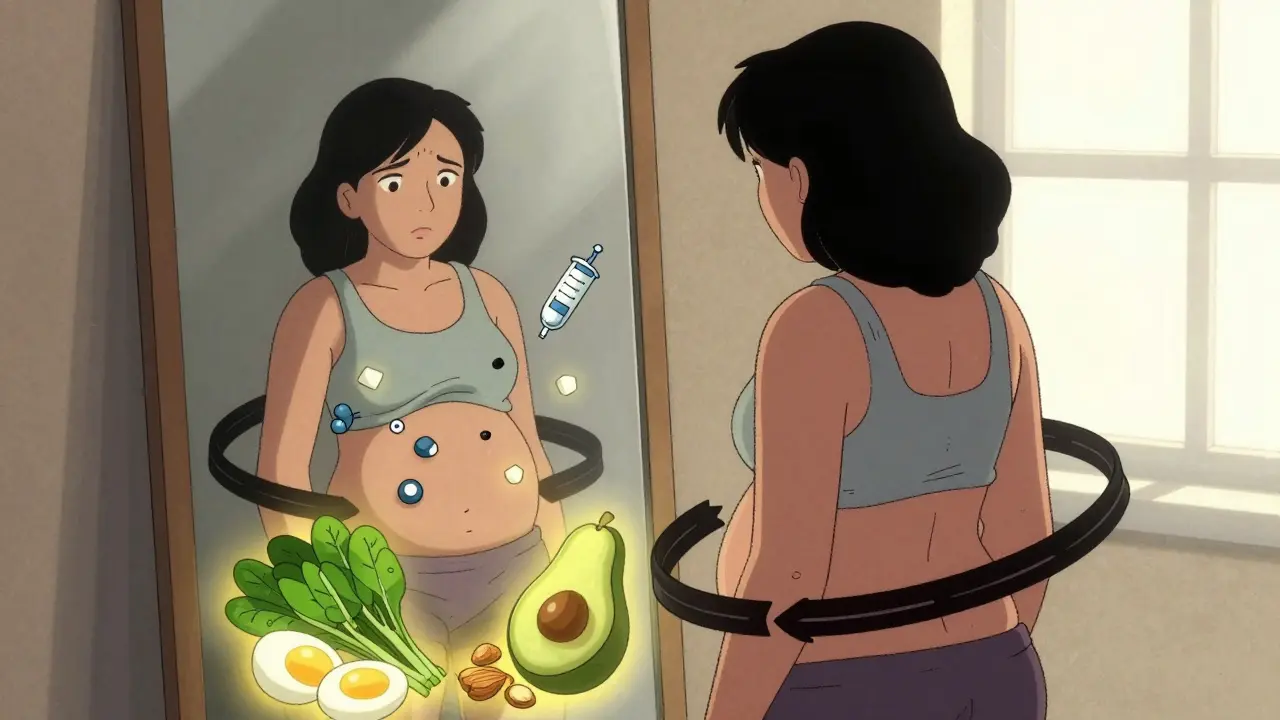
If you have PCOS and struggle to lose weight-no matter how hard you try-you’re not failing. You’re not lazy. You’re not broken. You’re dealing with a metabolic issue that most diets don’t account for. The real problem isn’t willpower. It’s insulin resistance.
Polycystic Ovary Syndrome (PCOS) affects 1 in 10 women of childbearing age. And for most of them, weight gain isn’t just a side effect-it’s a core part of the condition. You might notice your belly getting bigger, even if you’re not eating more. You might crave sugar constantly. You might feel hungrier than usual after meals. And no matter how much you exercise, the fat just won’t budge. That’s not your fault. It’s your biology.
Why Insulin Resistance Makes PCOS Weight Gain So Hard
Insulin is the hormone that tells your body to store energy. When you eat carbs, your blood sugar rises, and insulin steps in to shuttle glucose into your cells for energy or storage. But with PCOS, your cells stop listening. They become resistant. So your pancreas pumps out more and more insulin to compensate. That extra insulin doesn’t just sit there. It starts doing damage.
High insulin levels trigger your ovaries to make more testosterone. That’s why many women with PCOS deal with acne, excess facial hair, and irregular periods. But it also tells your body to store fat-especially around your belly. Unlike typical female fat distribution (hips and thighs), PCOS pushes fat into the abdominal area. This isn’t just about looks. Belly fat is metabolically active. It releases inflammatory chemicals that make insulin resistance worse. And that creates a loop: more insulin → more belly fat → more insulin resistance → more fat.
Research shows that 70-95% of women with PCOS who are overweight have insulin resistance. But even women with PCOS who aren’t overweight? About 30-75% of them still have it. That means insulin resistance isn’t just a result of gaining weight-it’s often there before you even notice the scale moving.
How High Insulin Fuels Cravings and Fat Storage
Ever had one of those days where you’re starving an hour after eating? Or you crave cookies, pasta, or bread like your brain is wired to them? That’s not just hunger. It’s your blood sugar crashing because insulin overreacted.
When insulin spikes after a meal, it drops your blood sugar too fast. Your body thinks it’s starving. So you crave quick energy-sugar, white bread, chips. You eat. Blood sugar spikes again. Insulin spikes again. And the cycle repeats. This isn’t about emotional eating. It’s a physiological response to high insulin.
And here’s the kicker: high insulin blocks fat burning. Normally, your body uses stored fat for energy between meals. But when insulin is high, your body can’t touch that fat. It’s locked away. No matter how many calories you burn at the gym, you’re stuck in fat-storage mode.
Studies also show that women with PCOS have lower levels of sex hormone-binding globulin (SHBG), a protein that ties up testosterone. High insulin lowers SHBG, which means more free testosterone is circulating. That’s why PCOS often comes with a mix of symptoms: irregular periods, acne, hair growth, and stubborn belly fat-all tied to one root cause: insulin.
The Health Risks You Can’t Ignore
PCOS isn’t just about periods and skin. It’s a metabolic disorder that raises your risk for serious health problems. Women with PCOS are up to 7 times more likely to develop type 2 diabetes. That’s not a guess-it’s from the CDC. And if you’re carrying extra weight, especially around your waist, that risk jumps even higher.
High insulin doesn’t just affect your ovaries. It raises your blood pressure, increases bad cholesterol (LDL), and lowers good cholesterol (HDL). It’s also linked to sleep apnea, fatty liver disease, and even endometrial cancer. Why? Because chronic high insulin leads to chronic inflammation. And inflammation is the silent engine behind most chronic diseases.
One study found that women with PCOS and abdominal fat had a much higher risk of heart disease than those with the same BMI but no PCOS. That means your fat distribution matters more than your weight. Two women can weigh the same. One has PCOS and carries fat in her belly. The other stores it in her hips. The one with PCOS is at higher risk-even if she’s "normal weight."
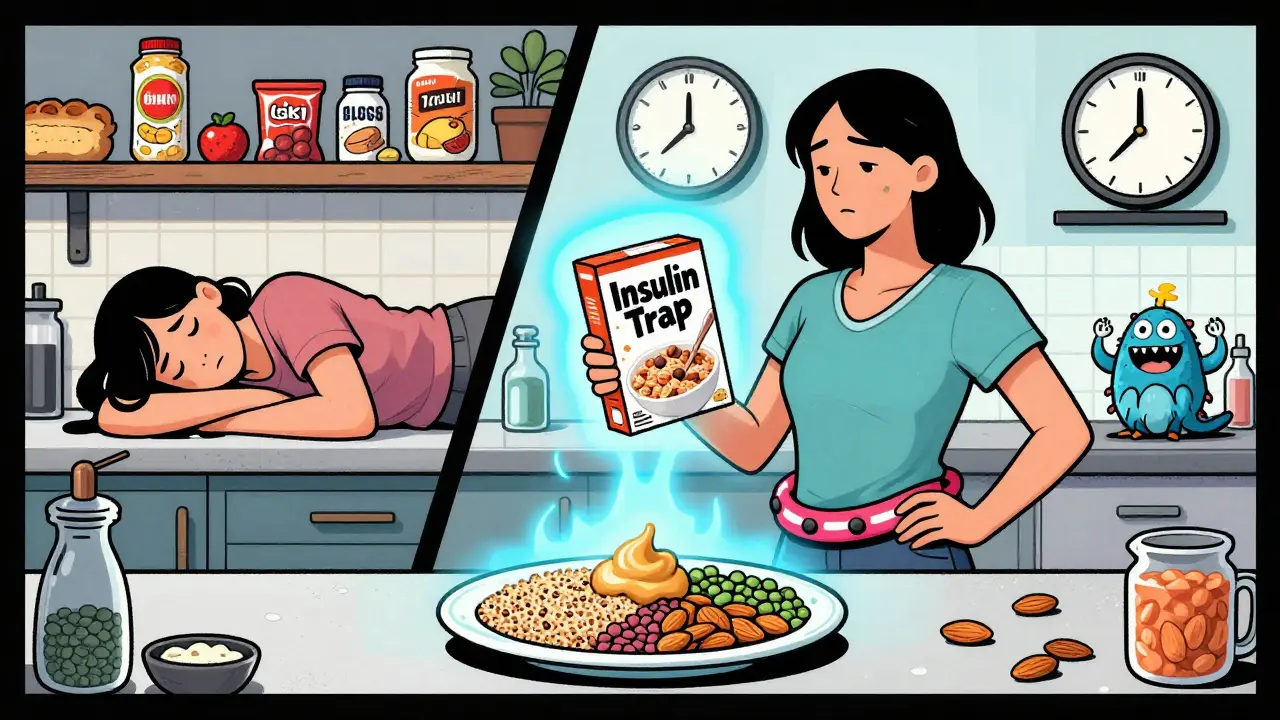
What to Eat: The Real Diet for PCOS Weight Loss
Forget calorie counting. Forget low-fat diets. The most effective way to manage PCOS weight gain isn’t about eating less. It’s about eating differently. The goal? Lower insulin. Stabilize blood sugar. Break the cycle.
Here’s what actually works:
- Reduce refined carbs-white bread, pasta, rice, pastries, sugary drinks. These are insulin’s favorite fuel. Replace them with whole grains like oats, quinoa, barley, and brown rice. Even better-add more non-starchy vegetables like broccoli, spinach, kale, zucchini, and peppers.
- Pair carbs with protein and fat-eating a banana alone? Blood sugar spikes. Eating a banana with almond butter and a boiled egg? Blood sugar stays steady. Protein and fat slow down digestion, which prevents insulin spikes.
- Choose low-glycemic foods-these are foods that don’t spike blood sugar. Think legumes (lentils, chickpeas), nuts, seeds, Greek yogurt, eggs, tofu, and most vegetables. Avoid anything with added sugar-even "healthy" granola bars and flavored yogurts.
- Don’t skip meals-going too long without eating makes your body more sensitive to insulin spikes later. Eat every 3-4 hours. Keep snacks on hand: a handful of almonds, a hard-boiled egg, cottage cheese with berries.
- Watch portion sizes-even healthy carbs can raise insulin if eaten in large amounts. A cup of quinoa is fine. Two cups? Might trigger a spike. Use your palm as a guide: one palm-sized portion of carbs per meal.
Some women find success with a low-carb diet (under 100g of carbs per day). Others do better with moderate carbs and lots of fiber. There’s no one-size-fits-all. But all effective plans for PCOS reduce processed carbs and focus on whole, unprocessed foods.
Why Fad Diets Don’t Work for PCOS
You’ve probably tried keto. Or intermittent fasting. Or juice cleanses. And you might have lost weight at first. But then it came back. Or worse-you felt worse. Why?
Extreme diets don’t fix insulin resistance. They often make it worse. Severely restricting calories can trigger your body to hold onto fat as a survival mechanism. Skipping meals raises cortisol, the stress hormone, which increases belly fat and worsens insulin resistance. And if you’re cutting out entire food groups without replacing nutrients, you risk hormone imbalances, fatigue, and irregular periods.
PCOS isn’t a problem you can out-diet. It’s a metabolic condition that needs a long-term, sustainable approach. The goal isn’t to lose 20 pounds fast. It’s to lower insulin, reduce inflammation, and restore balance-so your body can finally let go of the fat it’s been clinging to.
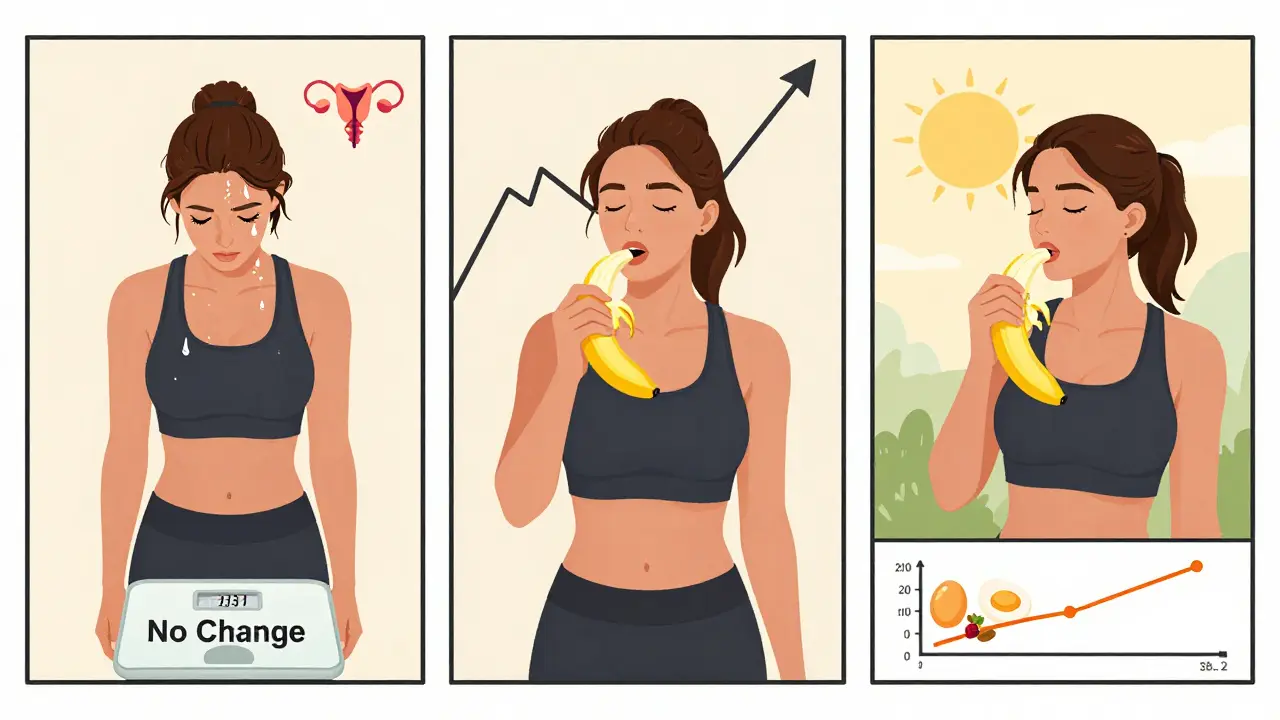
Small Changes That Make a Big Difference
You don’t need to overhaul your life overnight. Start with one or two changes:
- Swap your morning toast for scrambled eggs with spinach and avocado.
- Drink water instead of soda or sweetened tea.
- Add a protein source to every meal-even breakfast.
- Take a 10-minute walk after dinner. Movement helps your muscles use glucose without insulin.
One woman I spoke to (a 32-year-old from Perth) started by cutting out sugary coffee drinks. She didn’t change anything else. In 6 weeks, her cravings dropped. Her energy improved. And she lost 4 pounds without trying. That’s the power of reducing insulin spikes.
Consistency beats intensity. A small, sustainable change repeated daily does more than a strict diet followed for a week.
It’s Not Just About Food
Diet is the biggest lever-but it’s not the only one. Sleep matters. Stress matters. Movement matters.
Lack of sleep raises cortisol and insulin. Aim for 7-8 hours. Stress triggers emotional eating and increases belly fat. Try deep breathing, walking in nature, or yoga-even 10 minutes a day helps.
Exercise doesn’t have to mean hours at the gym. Strength training twice a week builds muscle, which helps your body use insulin better. Walking after meals lowers blood sugar. Even standing more during the day helps.
And if you’re on medication like metformin? It helps with insulin resistance-but it works best when paired with food changes. Medication supports. Food leads.
What Progress Looks Like
You won’t wake up one day with a flat stomach. Progress in PCOS is subtle at first:
- Less sugar craving
- More stable energy
- Better sleep
- Regular periods
- Clearer skin
- Not feeling hungrier after meals
Weight loss may follow-or it may not. But even if the scale doesn’t budge, your body is healing. Insulin levels are dropping. Inflammation is reducing. Hormones are rebalancing. That’s real progress.
One study found that losing just 5-10% of body weight improved ovulation in 80% of women with PCOS. That’s not about being thin. It’s about restoring function.
Can you have PCOS and not be overweight?
Yes. While many women with PCOS struggle with weight, up to 30-75% of those with PCOS are at a normal weight or even underweight. Insulin resistance can still be present, even without visible weight gain. This is sometimes called "lean PCOS." The symptoms-irregular periods, acne, hair growth, and fertility issues-are the same. The difference? The body’s internal metabolism is still affected by high insulin.
Does losing weight cure PCOS?
No, PCOS is a lifelong condition. But losing even a small amount of weight (5-10% of body weight) can dramatically improve symptoms. Many women see their periods return, acne clear up, and fertility improve. It doesn’t "cure" PCOS, but it can reverse its worst effects by lowering insulin and restoring hormonal balance.
Should I avoid all carbs if I have PCOS?
No. Carbs aren’t the enemy-refined carbs are. Whole food carbs like sweet potatoes, legumes, oats, and fruit are rich in fiber and nutrients. Fiber slows sugar absorption, which helps control insulin. The key is pairing carbs with protein and fat, and avoiding large portions of processed carbs like white bread, pasta, and sugary snacks.
Why does PCOS cause belly fat?
High insulin levels in PCOS promote fat storage around the abdomen. Unlike fat stored on the hips and thighs (common in women without PCOS), belly fat is more sensitive to insulin and androgens. This type of fat also releases inflammatory chemicals that worsen insulin resistance, creating a cycle that’s hard to break without targeted dietary changes.
How long does it take to see results from a PCOS-friendly diet?
Most women notice changes in energy, cravings, and skin within 2-4 weeks. Period regularity and weight loss may take 3-6 months. The key is consistency. Since insulin resistance is a long-term metabolic issue, reversing its effects takes time. Focus on daily habits, not the scale. Your body is rebuilding its balance, one meal at a time.
If you’ve been told to just "eat less and move more," you were given the wrong advice. PCOS isn’t about discipline. It’s about biology. And when you understand the role of insulin, the right path becomes clear: lower insulin, reduce inflammation, nourish your body-and the rest will follow.


jared baker
Insulin resistance is the real villain here. I used to think it was just about calories in, calories out. Then I learned how insulin locks fat away. Cutting out sugary coffee and swapping toast for eggs changed everything for me. Energy stayed steady. Cravings disappeared. No gym needed. Just food changes.
Michelle Jackson
Wow. Another post telling women they’re broken until they eat the right kind of kale. Let me guess-you’re the one who eats quinoa at 7am and meditates before coffee? Newsflash: not everyone has the time, money, or privilege to follow your perfect diet. Some of us are working two jobs and surviving on gas station burritos. Stop shaming.
becca roberts
Oh honey. You’re telling me the reason I can’t lose belly fat is because I ate a banana? Not because my thyroid is out, my stress is through the roof, and my doctor prescribed me metformin like it’s a magic pill? I love how this post makes PCOS sound like a simple food choice. Meanwhile, I’m 32, have three kids, and my insurance won’t cover a single nutritionist. But sure, just add avocado to everything. Easy.
Andrew Muchmore
Lower insulin. Eat protein with carbs. Move after meals. That’s it. No need for complicated plans. Just do the basics consistently. The rest follows.
jerome Reverdy
Bro. I’ve been in the PCOS trenches for a decade. Keto didn’t work. Intermittent fasting made my periods vanish. Then I started focusing on insulin load-not macros. Realized I didn’t need to cut carbs, just the processed junk. Sweet potatoes with butter and eggs? Game changer. Also, sleep and stress matter more than people admit. Your body’s not lazy. It’s overwhelmed. Give it the right signals and it’ll respond.
Justin Archuletta
Yes!!
Exactly!!
This!!
Thank you for saying this!!
I’ve been saying this for years!!
Aileen Nasywa Shabira
Oh, so now it’s all about insulin? What about glyphosate? Or the fact that the FDA allows 100 different additives in processed food? Or that Big Pharma profits off women being told they need to ‘eat better’ while ignoring endocrine disruptors in our water and makeup? This post is a distraction. It’s not about your banana. It’s about a system designed to keep you sick and buying products.
Kendrick Heyward
I’ve been there. I cried in the grocery aisle because I didn’t know what to buy. I thought I was failing. Then I found out insulin was the problem. I started eating eggs for breakfast. I stopped drinking soda. I walked after dinner. I didn’t lose weight fast-but I stopped feeling like a monster. My skin cleared. My anxiety dropped. It’s not magic. It’s biology. And you’re not broken. You’re just misinformed.
lawanna major
The metabolic dysregulation inherent in PCOS is not merely a matter of dietary adherence; it is a complex interplay of endocrine, inflammatory, and neurobehavioral pathways. The notion that insulin resistance is the singular driver, while empirically supported in a majority of cases, risks oversimplification. For instance, elevated androgen production may precede insulin resistance in some phenotypes, suggesting a bidirectional relationship rather than a linear causality. Moreover, the psychological burden of chronic dietary prescription may exacerbate cortisol elevation, thereby reinforcing the very cycle we seek to disrupt. Sustainable intervention must therefore integrate nutritional science with psychosocial support, not reduce the condition to a grocery list.
Ryan Voeltner
It is imperative to recognize that the pathophysiology of Polycystic Ovary Syndrome necessitates a multidisciplinary approach grounded in evidence-based medicine. While dietary modification remains a cornerstone of management, it must be contextualized within the broader framework of endocrinological assessment, mental health evaluation, and longitudinal monitoring. The assertion that insulin resistance is the primary etiological factor, while widely accepted, should not preclude consideration of genetic, environmental, and epigenetic contributors. A reductionist model risks inadvertently stigmatizing individuals who, despite optimal adherence, experience persistent symptoms.
cara s
I read this whole thing and I’m just… confused. Like, I have PCOS. I’m not overweight. I eat organic everything. I don’t eat sugar. I do yoga. I sleep 8 hours. I take metformin. And I still have facial hair and my period is late every month. So what’s the point? Are you saying I’m doing it wrong? Or is this just another way to make women feel guilty? I’m tired of being told what to eat like I’m a toddler. I just want to feel normal. And nobody tells me how to do that. They just give me a list of foods. And I’m like… I already know what broccoli is. I need help. Not a pamphlet.
Amadi Kenneth
Insulin resistance? That’s just the cover-up. The real cause? The government is adding fluoride to the water to suppress fertility. They don’t want women to have kids. That’s why PCOS is rising. And they want you to believe it’s your fault. They want you to eat kale and feel guilty. But the truth? The CDC, the WHO, Big Pharma-they’re all connected. They profit from your confusion. Don’t fall for it. Test your water. Stop taking metformin. Go raw. Go alkaline. Fight the system.
Nilesh Khedekar
bro i had pcos and i was skinny as hell but still had acne and no period. then i stopped eating rice for 3 weeks and started eating eggs and lentils. period came back. i was like wtf. its not about weight its about insulin. my aunt in delhi had same thing. she ate white bread every day. stopped it. now she’s pregnant. its real. just try it.
Robin Hall
Insulin resistance is not the root cause. It is a symptom of a deeper systemic failure. The endocrine disruptors present in plastics, cosmetics, and pesticides are the true drivers of PCOS. The human body is not malfunctioning-it is responding appropriately to toxic environmental inputs. To suggest dietary modification alone is sufficient ignores the structural violence inflicted upon women through industrial pollution and regulatory negligence. This post is a form of victim-blaming disguised as empowerment.
jared baker
Replying to the person who said "just eat less and move more"-I heard that too. I did. I lost 10 lbs. Then gained back 15. Then I stopped counting calories and started lowering insulin. That’s when things changed. It’s not about discipline. It’s about chemistry. And once you get that, you stop blaming yourself.