
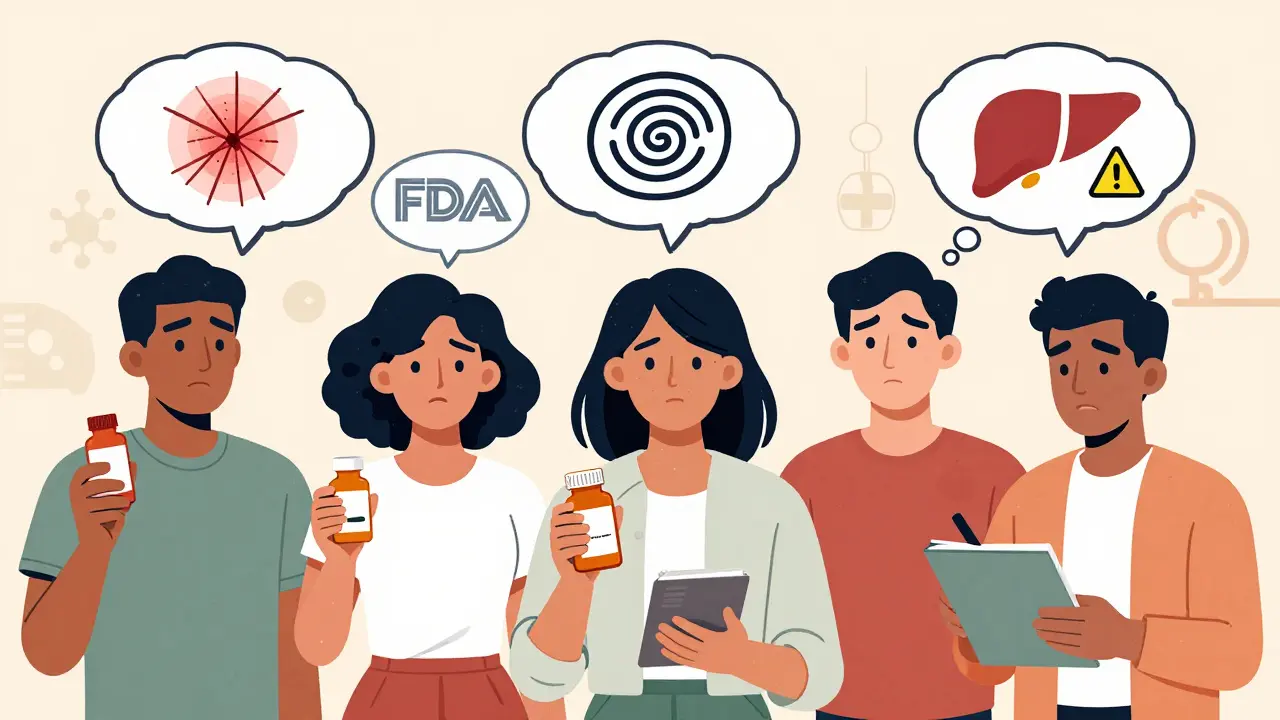
When you take a generic medication, you expect the same results as the brand-name version. After all, the FDA says they’re bioequivalent. But what happens when something unexpected goes wrong? A rash that doesn’t go away. A strange dizziness that starts after switching pills. Or worse - something that lands you in the hospital. Rare adverse events with generics aren’t common, but they do happen. And knowing when and how to report them could help prevent harm to others.
What counts as a rare adverse event?
A rare adverse event is a side effect that shows up in fewer than 1 in 1,000 people during clinical trials. But real-world use is different. Once thousands - or millions - of people start taking a drug, new problems can emerge. The FDA’s Adverse Event Reporting System (FAERS) has over 25 million reports, and many of them came from generic medications. These aren’t always caught in trials because those studies are too small or too short. A reaction might only appear after months of use, or only in people with certain health conditions.Examples of rare events linked to generics include:
- Stevens-Johnson Syndrome from generic lamotrigine - a severe skin reaction
- QT prolongation with generic citalopram - a heart rhythm issue that led to updated dosing rules
- Acute liver injury after starting generic statins
- Arthralgia (joint pain) with generic levetiracetam
These weren’t listed on the original labels. They showed up because someone noticed it, documented it, and reported it.
Is a generic drug more dangerous than the brand?
No. Not according to the data. A 2021 FDA study looked at 1.2 million adverse event reports involving cardiovascular drugs. The rate of reported side effects was nearly identical between generics and brand-name versions. The active ingredient is the same - that’s the whole point of generics. So if you’re having a reaction, it’s not because the drug is "inferior." It’s because individual bodies react differently.Here’s the catch: some rare events are tied to inactive ingredients - the fillers, dyes, or preservatives in the pill. A generic made by one company might use lactose, while another uses cornstarch. If you’re sensitive to lactose, you might get stomach pain or diarrhea. That’s not the drug failing. It’s the formulation. And most people don’t know to mention it.
When should you report a side effect?
You don’t need proof. You don’t need to be 100% sure. If something unusual happens after starting a generic medication, and it doesn’t seem like it’s caused by something else - report it.The FDA says you should report when:
- The reaction is serious - meaning it caused hospitalization, disability, birth defects, or could have killed you
- The reaction wasn’t listed in the drug’s labeling
- The timing makes sense - like liver damage appearing 3 weeks after starting a new statin
- There’s no other clear cause - like a new food, infection, or other medication
Even if you’re unsure, report it. The FDA’s 2023 guidance says 68.4% of major safety discoveries started with a report where causality was uncertain. Your report could be the first clue.
How to report: The 5-step process
Reporting isn’t complicated. Here’s how to do it right.Step 1: Write down the details
Use a notebook or phone note. Include:
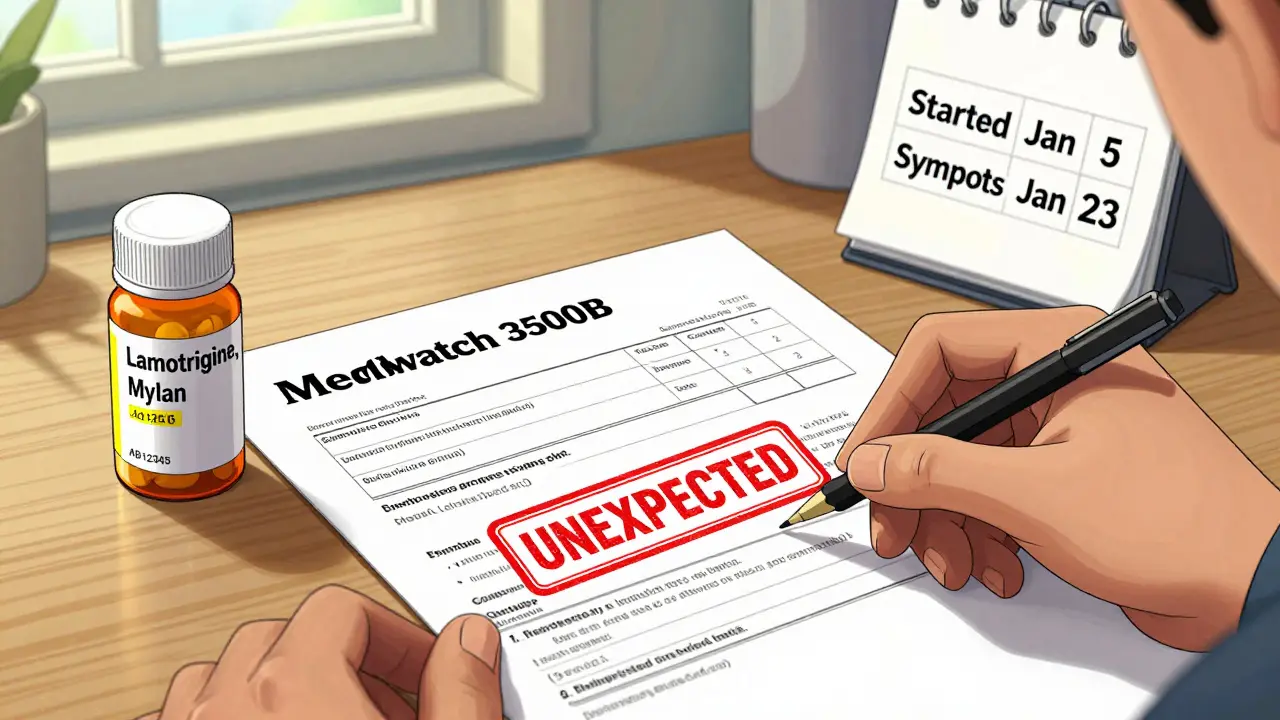
- Exact drug name (including manufacturer - e.g., "Lamotrigine, Mylan 100mg")
- Date you started taking it
- When symptoms started
- What happened (describe symptoms in detail)
- Any other meds or supplements you’re taking
- Your age, weight, and any existing conditions
Step 2: Check if it’s expected
Look at the drug’s package insert. Is your symptom listed? If yes, it’s an "expected" reaction. Still worth noting, but not urgent. If it’s not listed - that’s "unexpected." That’s the red flag.
Step 3: Determine seriousness
Use this quick guide:
- Life-threatening? → Report now
- Required ER visit or hospitalization? → Report now
- Caused permanent damage? → Report now
- Just a mild rash or headache? → Still report, but not emergency
Step 4: Submit the report
Use the FDA’s MedWatch system. Two forms:
- Form 3500 - for healthcare professionals
- Form 3500B - for patients and consumers
You can submit online at fda.gov/medwatch or call 1-800-FDA-1088. No need to wait for your doctor. You can report yourself.
Step 5: Include the lot number
This is critical. Look on the pill bottle. The lot number helps the FDA trace whether the problem came from one bad batch. Only 12.4% of consumer reports include this. Without it, the FDA can’t investigate properly. If you threw away the bottle? Call your pharmacy. They can look it up.
Why most reports fail
The FDA found that only 28.7% of consumer-submitted reports contain enough detail to be useful. Most people say: "I took the pill and felt sick." That’s not enough. You need dates, doses, symptoms, and the lot number.Healthcare providers do better - 63.2% of their reports are complete. Why? They have access to records, lab results, and know what to write. But you don’t need to be a doctor. Just be specific.
Example of a strong report:
"72-year-old male, no prior liver issues. Started generic simvastatin 40mg on Jan 5, 2026. On Jan 23, developed jaundice, dark urine, fatigue. Lab tests: ALT 890 U/L (normal: 7-55). Stopped drug on Jan 25. Symptoms improved by Feb 2. Lot number: AB12345. No other new medications or alcohol use. No history of hepatitis."
That’s the kind of report that leads to action.
What happens after you report?
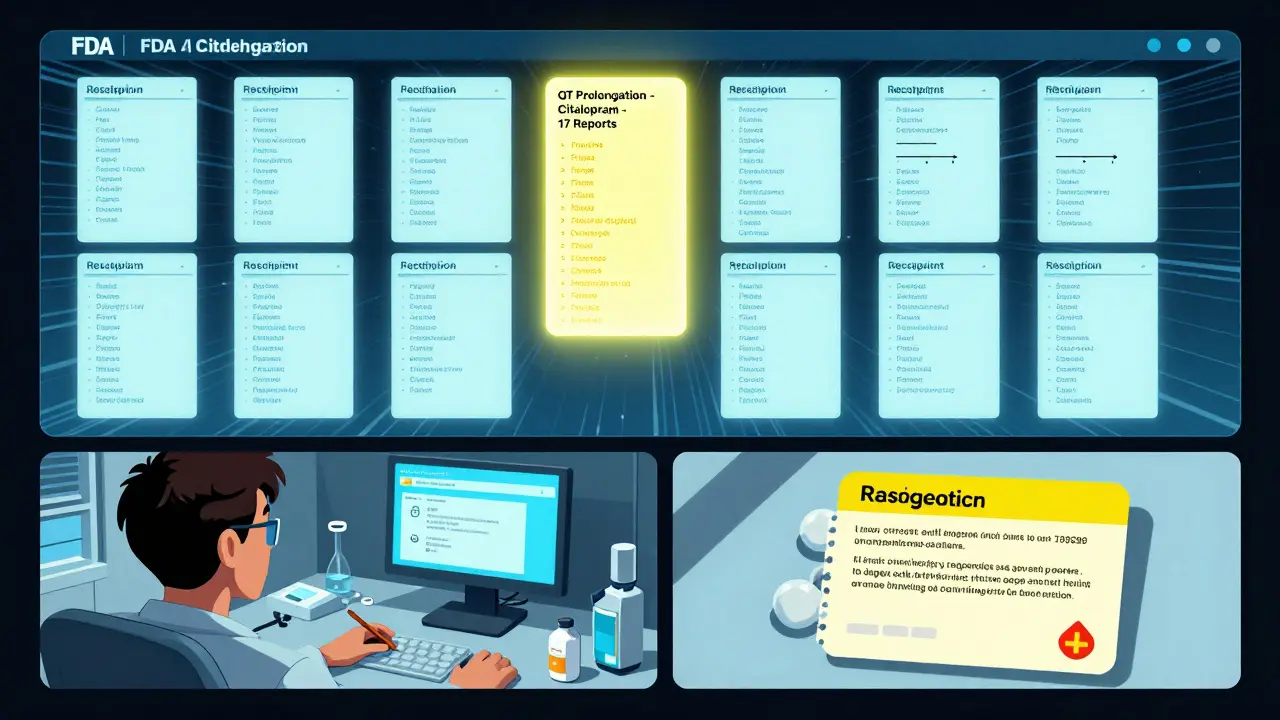
Your report goes into FAERS - a database used by scientists and regulators. AI tools now scan it daily, looking for patterns. If 10 people report the same rare reaction with the same generic drug, the system flags it. That can lead to:- Updated drug labels with new warnings
- Manufacturing recalls
- Changes in dosing guidelines
- Further studies
In 2021, 17 reports of QT prolongation with generic citalopram led to a new warning: max dose of 20mg for patients over 60. That change likely saved lives.
What you can’t report
Don’t report routine side effects that are already listed - like nausea from antibiotics or drowsiness from antihistamines. Those are expected. The system is built for surprises.Also, don’t wait. If you think a reaction is serious, don’t wait for your next doctor’s visit. Report it now. The sooner it’s in the system, the faster others can be warned.
Global standards - it’s not just the U.S.
The European Medicines Agency (EMA) and other global regulators use similar systems. EudraVigilance processed 1.4 million adverse event reports in 2022 - 38.2% of them involved generics. The rules are the same: serious, unexpected, unexplained? Report it. No matter where you live.What’s next?
The FDA’s 2024 action plan aims to boost high-quality generic drug reports by 25%. They’re training pharmacists, simplifying online forms, and pushing for mandatory electronic reporting by 2025. But progress depends on people like you.Most people don’t realize they can report. Most don’t know how. And that’s the gap. The system works - but only if people use it.
Do I need to prove the generic drug caused my side effect to report it?
No. You don’t need proof. The FDA encourages reporting even when causality is uncertain. In fact, over two-thirds of major safety discoveries began with reports where the link wasn’t clear. If you suspect the drug might be involved, report it. The experts will sort it out.
Can I report a side effect if I didn’t get it from my doctor?
Yes. Anyone can report - patients, family members, caregivers. You don’t need a prescription or a doctor’s note. The FDA’s consumer form (3500B) is designed for you. If you noticed something unusual after taking a generic, your report matters.
What if I switched from a brand-name drug to a generic and now feel worse?
That’s a common concern. But switching to a generic doesn’t automatically mean it’s the cause. The active ingredient is identical. However, inactive ingredients (like fillers or dyes) can differ. If you’re sensitive to lactose, corn, or a dye, you might react. Document the lot number and report it. The FDA tracks these patterns across manufacturers.
Is it safe to keep taking a generic if I had a mild side effect?
If the side effect was mild and listed on the label (like mild nausea), it’s usually safe to continue. But if it’s new, unusual, or getting worse - stop the drug and talk to your provider. Don’t wait. Even if you decide to keep taking it, report the reaction. It helps others.
Do I need to report every minor side effect?
No. The system is designed for serious or unexpected events. Routine side effects like dry mouth or drowsiness that are already on the label don’t need to be reported. Focus on reactions that are new, severe, or unexplained. Quality matters more than quantity.

Philip Mattawashish
Let me get this straight - you’re telling me I have to report every little weird feeling I get after popping a generic pill? Bro, I’ve had dry mouth since 2018. That’s not a safety issue, that’s just life. But sure, go ahead and waste the FDA’s time with your ‘I felt a tingling in my left pinky after taking Mylan lamotrigine’ nonsense. Meanwhile, real people are out here trying to survive on $20 prescriptions while Big Pharma laughs all the way to the bank with their $400 brand-name crap. Stop treating patients like lab rats and fix the damn system.
Mary Beth Brook
Generic manufacturers exploit regulatory loopholes. Inactive ingredients aren't vetted with the same rigor as APIs. Lactose, FD&C dyes, magnesium stearate - these are fillers with documented immunogenic potential. The FDA's 2021 CV drug study is statistically noise. Confounding variables: bioavailability variance, excipient cross-reactivity, and batch-to-batch inconsistency. Report. Now. This isn't anecdotal - it's pharmacovigilance failure.
Neeti Rustagi
Thank you for this meticulously detailed and deeply important guide. As a healthcare professional from India, I have witnessed firsthand how patients in low-resource settings are often unaware of the reporting mechanisms available to them. The emphasis on lot numbers is particularly critical - in our clinics, we see multiple cases where adverse reactions were linked to a single manufacturing batch, yet no one thought to record it. Your clear steps empower patients to become active participants in drug safety. Please continue advocating for this vital practice.
Dan Mayer
ok so i took generic citalopram and got dizzy for 3 days and i think it was the filler?? but i dont know what filler is in it?? how do i find out?? also i read somewhere that the FDA lets generics use different dyes and like one time i had a rash and i think it was red 40?? but i dont have a bottle anymore?? should i still report?? also my doc said not to worry but i think he’s wrong??
Janelle Pearl
I just want to say - thank you. For writing this. For caring enough to lay it all out. I had a reaction last year - not life-threatening, but terrifying. I didn’t know what to do. I thought I was overreacting. I didn’t report it. I wish I had. So I’m reporting this now - not for me, but for the next person who reads this and thinks, ‘Am I crazy?’ No. You’re not. Your body is speaking. Listen. Report. You’re not alone.
Ray Foret Jr.
Just wanted to say you’re doing god’s work here 🙏 I had the exact same thing with generic simvastatin - jaundice, dark pee, felt like I was dying. I reported it last week and got an email from the FDA saying my report was logged. Felt like I actually did something good for once. Also, I found my bottle in a box of old receipts - lot number AB12345! So yeah. Do it. Even if you think it’s small. You never know who it’ll save. 💪
Samantha Fierro
This is an exceptionally well-structured and clinically grounded overview. The inclusion of actionable steps - particularly the emphasis on documentation, timing, and lot number retention - aligns with international pharmacovigilance best practices. I have trained numerous patients on this protocol, and the compliance rate increases exponentially when they understand the downstream impact: label updates, dosing revisions, and ultimately, preventable harm reduction. This is public health in motion.
Robert Bliss
Hey, I just want to say - I used to think generics were all the same. Then I got sick. Not bad, just weird. Nausea, headaches, felt like my brain was underwater. I switched back to brand and felt normal again. I didn’t know what to do. I didn’t report it. But now I’m telling you: if something feels off, it probably is. You don’t need to be an expert. Just be honest with yourself. And report it. It’s not about blame. It’s about safety. 🤝
Peter Kovac
The premise of this article is fundamentally flawed. It conflates correlation with causation by attributing adverse events to generics without controlling for confounding variables: polypharmacy, age-related pharmacokinetic changes, non-adherence, and concurrent comorbidities. The FAERS database is inherently biased - it is a passive, voluntary, unverified repository. Over 80% of reports lack laboratory confirmation. The FDA’s own internal audits show that less than 3% of consumer reports lead to regulatory action. This narrative encourages panic, not vigilance. You are not a pharmacovigilance agent. You are a patient. Trust your prescriber. Do not self-diagnose drug toxicity.
APRIL HARRINGTON
OMG I had the exact same thing with generic levetiracetam I thought I was going crazy I started having joint pain like I was 80 and I thought it was arthritis or something but then I read this and I was like HOLY CRAP I’M NOT ALONE I REPORTED IT AND NOW I’M TELLING EVERYONE I KNOW PLEASE REPORT YOUR STUFF I’M SO GLAD I DID IT
Leon Hallal
You people are so naive. You think your little report changes anything? The FDA doesn’t care. The manufacturers don’t care. They’ll just change the lot number and keep selling. You’re not saving lives. You’re just giving them data they already have. I’ve been in pharma. I know how it works. Your ‘critical report’? It gets buried under 10,000 others. You’re not a hero. You’re a data point.