
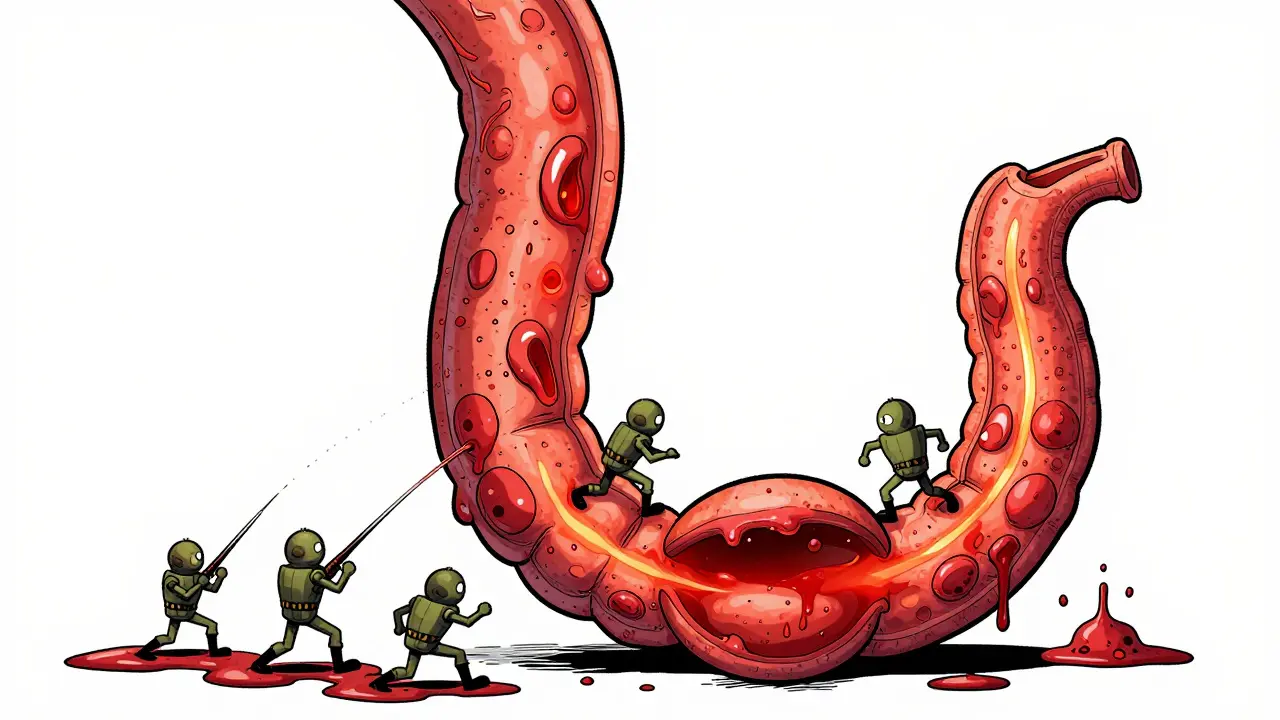
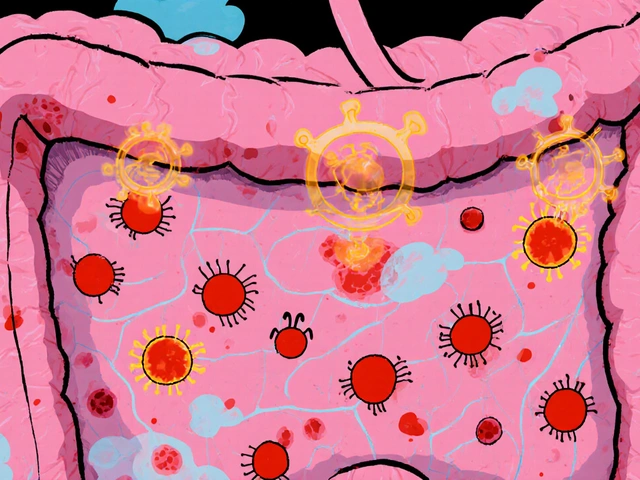
Ulcerative colitis isn’t just occasional stomach upset. It’s a lifelong condition where your colon and rectum become chronically inflamed, leading to open sores, bloody diarrhea, and unpredictable flare-ups that can turn your life upside down. Unlike a bad meal or stress-induced cramps, this is your immune system attacking your own gut lining-no matter how healthy you eat or how calm you try to be. The good news? Most people with ulcerative colitis can control it. Not by luck, but by knowing exactly what’s happening inside their body and how to stop the inflammation before it takes over.
What Exactly Is Ulcerative Colitis?
- It only affects the innermost lining of the colon and rectum
- Inflammation starts in the rectum and spreads upward in a continuous pattern-no healthy patches in between
- It doesn’t skip areas like Crohn’s disease does
- It never goes deeper than the mucosal layer-no holes or fistulas like in Crohn’s
The Five Types of Ulcerative Colitis (And What They Mean for You)
Not everyone with UC has the same experience. Where the inflammation stops determines your type-and how serious it is.- Ulcerative proctitis: Only the rectum is affected. Symptoms? Mostly rectal bleeding and discomfort. This is the mildest form and carries the lowest risk of colon cancer.
- Proctosigmoiditis: Inflammation reaches the sigmoid colon (the S-shaped part just above the rectum). More frequent bloody stools, cramping on the lower left side.
- Left-sided colitis: Inflammation goes as far as the splenic flexure (near the spleen). You’ll feel pain on your left side, lose weight, and have more than 10 bowel movements a day.
- Pancolitis: The entire colon is inflamed. This is the most severe form. You’ll have constant bloody diarrhea, severe cramps, fever, fatigue, and major weight loss.
- Rectal-sparing UC: Rare. The rectum stays healthy, but everything above it is inflamed. Symptoms mirror pancolitis but without rectal bleeding.
What Causes Ulcerative Colitis?
No one knows for sure. But we know what’s not the cause.- It’s not your diet. Eating spicy food or dairy doesn’t give you UC.
- It’s not stress. Anxiety won’t trigger it-but it can make flare-ups worse.
- It’s not contagious. You can’t catch it from someone else.

More Than Just Gut Symptoms: The Hidden Signs
Ulcerative colitis doesn’t just live in your colon. About one in three people with UC also get symptoms outside the gut:- Red, itchy, or burning eyes (uveitis)
- Swollen, painful joints-especially knees, ankles, and wrists
- Red, tender bumps under the skin (erythema nodosum)
- Sores in the mouth
- Nausea and vomiting during severe flares
How Do You Know If You’re in Remission?
Remission doesn’t mean you’re cured. It means your colon has healed enough that you feel normal again-no blood in stool, no urgency, no cramps, no fatigue. You can eat without fear. Sleep through the night. Go to work without planning your day around the nearest bathroom. But here’s the catch: remission can be silent. You might feel fine, but inflammation is still there. That’s why regular colonoscopies are non-negotiable. Especially if you’ve had UC for more than 8 years, your risk of colon cancer rises. Your doctor needs to check for early cell changes before they turn dangerous.How to Get-and Stay-in Remission
There’s no one-size-fits-all plan. But here’s what actually works, based on what doctors see every day.1. Medication Is the Foundation
- 5-ASAs (mesalamine, sulfasalazine): First-line for mild to moderate cases. Taken as pills, suppositories, or enemas. They reduce inflammation right where it’s happening.
- Immunomodulators (azathioprine, 6-MP): For people who don’t respond to 5-ASAs. They calm the immune system over time-takes 3 to 6 months to kick in.
- Biologics (infliximab, vedolizumab, ustekinumab): Target specific parts of the immune system. These are game-changers for moderate to severe UC. Many people go into deep remission and stay there for years.
- JAK inhibitors (tofacitinib, upadacitinib): Newer oral pills that block inflammation signals. Fast-acting and effective when biologics fail.
2. Diet Isn’t the Cause-but It Can Be a Trigger
No diet cures UC. But certain foods can make flare-ups worse:- High-fiber foods (raw veggies, nuts, seeds) during flares
- Dairy if you’re lactose intolerant
- Spicy foods, alcohol, caffeine
- Artificial sweeteners like sorbitol
3. Stress Management Isn’t Optional
Stress doesn’t cause UC. But when you’re stressed, your body releases chemicals that make inflammation worse. Yoga, meditation, walking in nature, therapy-these aren’t luxuries. They’re part of your treatment plan.4. Exercise Keeps You Strong
When you’re in remission, regular movement helps. It reduces fatigue, improves mood, and lowers inflammation. You don’t need to run marathons. Just move. Walk. Swim. Stretch. Even 20 minutes a day makes a difference.5. Know When Surgery Is Needed
About 1 in 3 people with UC eventually need their colon removed. This isn’t failure. It’s freedom. After a colectomy, you’re cured of UC. No more bloody stools. No more urgency. No more flares. You’ll have an ileostomy or a pouch built from your small intestine-but you’ll get your life back.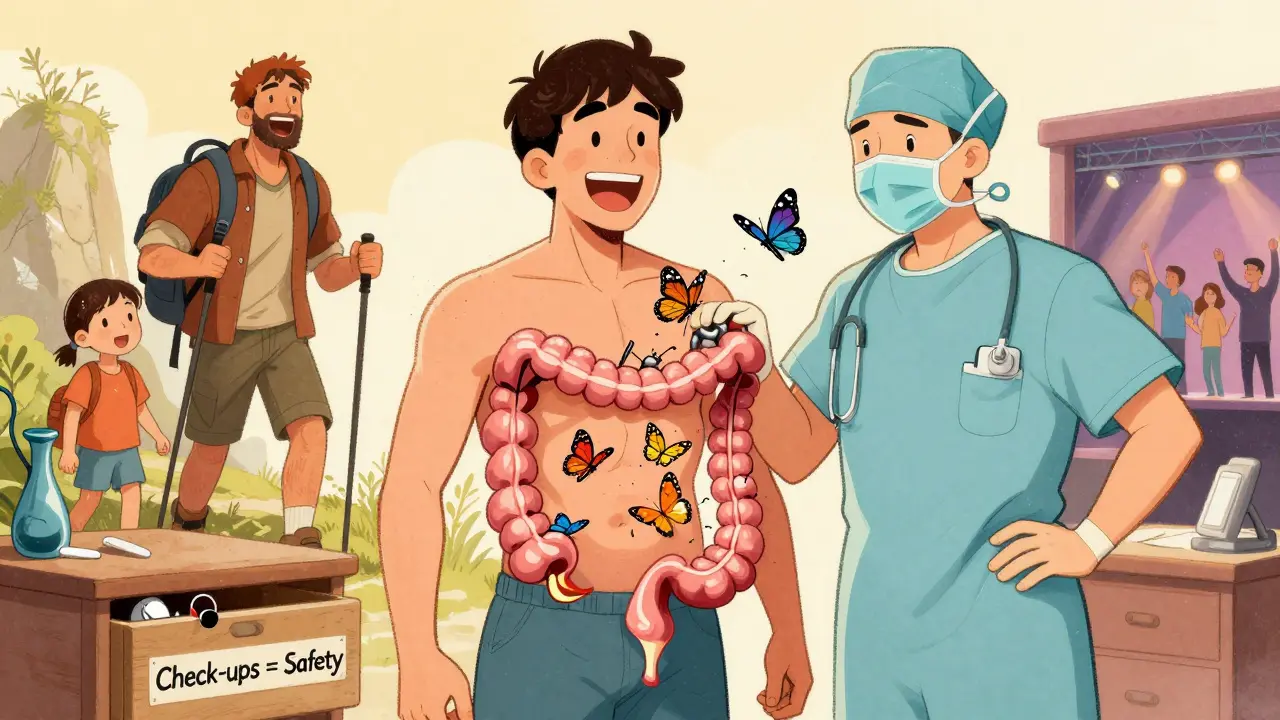
What Happens If You Ignore It?
Left untreated, UC doesn’t just cause discomfort. It can lead to:- Severe bleeding that requires hospitalization
- Toxic megacolon-a life-threatening swelling of the colon
- Colon cancer (risk increases after 8-10 years of disease)
- Malnutrition from poor absorption and loss of appetite
- Chronic fatigue that affects work, relationships, and mental health
Can You Live a Normal Life With Ulcerative Colitis?
Yes. Absolutely. People with UC travel, raise kids, run businesses, and compete in sports. They just do it differently. They plan ahead. They carry emergency supplies. They know their limits. They don’t let fear control them. The key is consistency. Take your meds. See your doctor. Track your symptoms. Adjust as needed. Remission isn’t a one-time win-it’s a daily practice.Can ulcerative colitis be cured?
There’s no medication that cures ulcerative colitis. But removing the colon (colectomy) does. After surgery, you’re no longer at risk for UC flare-ups or colon cancer. For most people, medication can bring long-term remission, meaning they live symptom-free for years-even decades-with regular check-ups and proper treatment.
Does stress cause ulcerative colitis?
No. Stress doesn’t cause ulcerative colitis. The disease comes from your immune system attacking your colon lining for reasons still not fully understood. But stress can trigger flare-ups. When you’re under pressure, your body releases chemicals that worsen inflammation. Managing stress isn’t optional-it’s part of staying in remission.
Can you eat normally with ulcerative colitis?
Yes-but not always. During flares, high-fiber foods, raw veggies, nuts, dairy, and spicy meals can make symptoms worse. Many people do better on low-residue diets temporarily. In remission, most can return to a normal diet. The key is personal testing. Keep a food diary to find your triggers. There’s no universal UC diet-only what works for you.
How often do you need a colonoscopy with ulcerative colitis?
After having UC for 8 years, you should get a colonoscopy every 1 to 2 years to check for early signs of colon cancer. If you have pancolitis or a family history of colon cancer, your doctor may recommend starting screenings earlier or doing them more often. These exams aren’t just routine-they’re life-saving.
Are biologics safe for long-term use?
Yes, for most people. Biologics like infliximab and vedolizumab have been used for over 20 years to treat ulcerative colitis. They’re highly effective at inducing and maintaining remission. Risks include a slightly higher chance of infections or rare cancers, but these are carefully monitored. The benefits of staying in remission-avoiding hospitalizations, surgery, and cancer-far outweigh the risks for most patients.
Can children get ulcerative colitis?
Yes. While UC most often starts between ages 15 and 30, it can appear in children as young as 5. Pediatric UC can be more aggressive and affect growth and development. Early diagnosis and treatment are critical. Kids with UC need specialized care from pediatric gastroenterologists who understand how to balance medication, nutrition, and quality of life.

Aliza Efraimov
I remember the first time I bled through my jeans in public. No one talks about how humiliating that is. I thought I was dying. Turns out, I just had proctosigmoiditis. Took me two years to find a doctor who didn’t tell me to "just eat less fiber." You’re not crazy. Your colon is literally screaming. And you’re not alone.
Now I’m in remission on vedolizumab. No more panic attacks before leaving the house. I travel. I hike. I even went to a concert last month. It’s not perfect, but it’s life. And it’s possible.
Don’t let anyone make you feel like your suffering is "all in your head." It’s not. It’s real. And you deserve to feel better.
Nisha Marwaha
The immunomodulatory cascade in UC is mediated by IL-23/Th17 axis dysregulation, which triggers epithelial barrier dysfunction via downregulation of tight junction proteins-claudin-1, occludin, ZO-1. Biologics targeting p40 (ustekinumab) or p19 (mirikizumab) demonstrate superior mucosal healing rates versus 5-ASAs in moderate-to-severe phenotypes. JAK inhibitors like upadacitinib exhibit rapid onset (median 2 weeks) due to intracellular signaling blockade, but require CBC and LFT monitoring due to thromboembolic risk.
For pancolitis, endoscopic remission (Mayo endoscopic subscore 0-1) is the gold standard endpoint, not symptom resolution alone. Colonoscopic surveillance should commence at 8 years, with chromoendoscopy if dysplasia is suspected. Colectomy remains definitive therapy for refractory disease or LGD/HGD.
Paige Shipe
People need to stop blaming everything on stress. I’ve seen too many patients waste years on yoga and turmeric while their colon turns to jelly. You don’t need to be a saint to manage this. You need to take your meds. Period.
And if you think diet fixes it, you’re delusional. I had a patient who ate only boiled chicken for six months and still ended up in the ER with toxic megacolon. No. Just no.
Medication isn’t optional. It’s survival. Stop romanticizing natural remedies. Your colon doesn’t care about your aura.
Tamar Dunlop
As someone who grew up in a household where illness was never spoken of, discovering I had ulcerative colitis felt like being handed a secret language no one else understood.
I remember sitting in the waiting room of the gastroenterology clinic, clutching my medical file like it was the only proof I wasn’t imagining it. The doctor didn’t say "it’s all in your head." He said, "We’re going to fix this." That was the first time I felt seen.
Now, I carry a small pouch of emergency wipes in my purse, and I’ve taught my children how to ask for the nearest bathroom without shame. We don’t whisper about it anymore. We talk. We share. We heal together.
This isn’t just a disease. It’s a community. And we are not broken. We are becoming.
Manan Pandya
For those asking about pediatric UC, early intervention is critical. Growth faltering is often the first red flag, not diarrhea. Pediatric IBD centers use weight-for-height Z-scores and pubertal staging to assess disease burden. Exclusive enteral nutrition (EEN) remains underutilized in North America but is first-line in Europe for induction in children.
Biologics are safe in adolescents when monitored properly. The risk of lymphoma is lower than the risk of untreated inflammation-induced stunting.
Parents: Don’t wait for your child to say "I’m tired." They may not have the words. Look for changes in school performance, social withdrawal, or refusal to eat with friends.
David Chase
STOP TELLING PEOPLE TO "JUST RELAX"!! 😡
I’m sick of this woke, touchy-feely nonsense. You don’t heal a broken colon with meditation and kale smoothies. You heal it with drugs. Real science. Real medicine.
My cousin had pancolitis. He tried acupuncture, CBD, and a juice cleanse. He ended up in the ICU with toxic megacolon. Then he got his colon removed. Now he’s alive. And he doesn’t give a damn about your vibes.
Take your meds. Or die trying. I’m not here to coddle you. 🚫🌱🧘♂️💊
Emma Duquemin
Let me tell you about the day I danced in my kitchen after 7 years of not being able to leave the house without a plan, a map, and three pairs of underwear.
I was making pancakes. Just stupid, fluffy, buttery pancakes. And I didn’t have to stop halfway because my gut was staging a revolution. I didn’t have to Google "closest bathrooms" before I even turned on the stove.
It was the little things. The smell of maple syrup. The sound of my cat purring on the floor. The fact that I didn’t have to apologize for existing.
Remission isn’t glamorous. It’s quiet. It’s ordinary. And it’s the most beautiful thing I’ve ever known.
If you’re still fighting? Keep going. The dance floor is waiting.
And yes-you’re allowed to cry while you cook. You’ve earned it.
Kevin Lopez
Biologics aren’t magic. They’re expensive. And they’re not for everyone.