Fungal Bioluminescence Explained
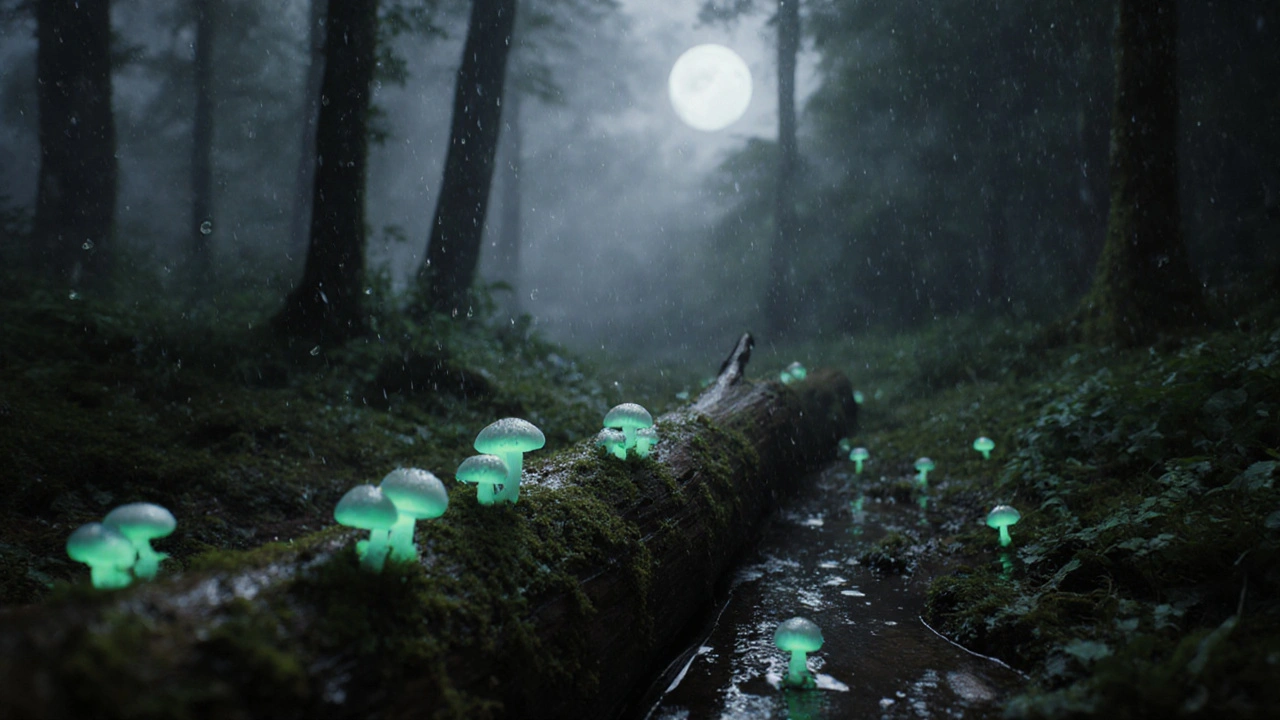
When studying Fungal Bioluminescence, the natural glow emitted by certain mushroom species. Also known as glowing fungi, it relies on a chemical reaction that turns invisible energy into visible light. The process hinges on luciferase, an enzyme that catalyzes light production and a matching substrate called luciferin. Inside the mycelium, the vegetative network of fungal threads, these components work together to create a soft greenish shine that can be seen on forest floors at night. Understanding this glow opens doors to science, ecology, and even health tech.
Biologically, fungal bioluminescence is a two‑step reaction. First, luciferase binds to luciferin, a small organic molecule produced by the fungus itself. This binding releases energy, which the enzyme then converts into photons—tiny packets of light. Researchers have mapped the genes responsible for this pathway in species like Panellus stipticus and Neonothopanus nambi. The genes sit alongside those that control growth and pigment, showing that light production is woven into the fungus's overall metabolism. Because the reaction works at normal body temperatures, scientists see it as a portable, low‑energy light source.
Ecologically, the glow isn’t just a party trick. In damp woodlands, bioluminescent fungi may attract insects that help disperse spores, boosting reproductive success. The light can also signal the presence of decaying wood, guiding other organisms to nutrient‑rich sites. Some studies suggest that the illumination deters predators that prefer dark, hidden prey. By lighting up their surroundings, these fungi play a subtle role in forest nutrient cycles and food webs.
Beyond nature, the chemistry of fungal bioluminescence fuels innovative applications. Because the reaction works without external electricity, biotech firms are embedding luciferase genes into bacteria and mammalian cells to create live‑cell imaging tools. Doctors can watch how engineered cells behave inside the body, opening a new window for early disease detection. Engineers also experiment with fungal‑derived lighting panels, aiming for sustainable, biodegradable light fixtures that could replace LEDs in low‑power settings.
Below you’ll find a range of articles that tie into these topics—from skin infection guides that explain how fungal biology impacts health, to deep dives on medical imaging techniques that borrow from bioluminescent science. Whether you’re curious about the glow itself or its practical uses, the collection offers clear, actionable insights you can explore right away.