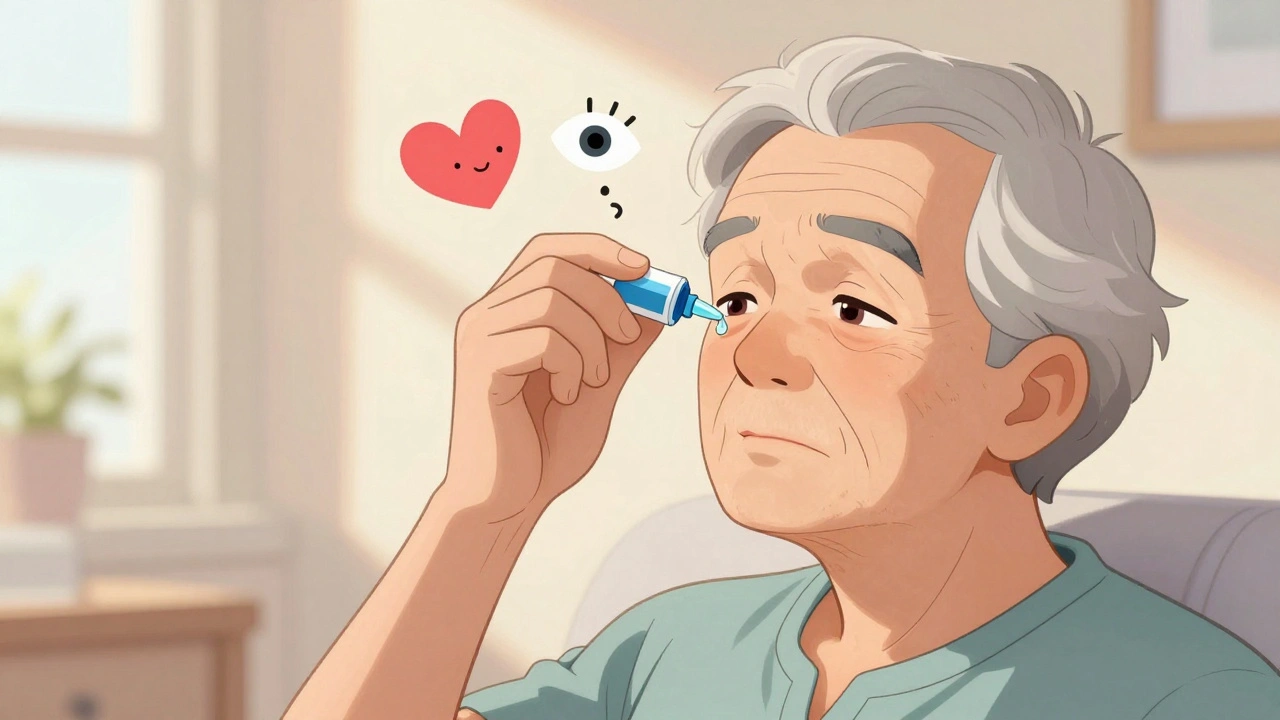
Eye Drops: What They Are, How They Work, and What You Need to Know
When you reach for eye drops, liquid medications applied directly to the surface of the eye to treat conditions like dryness, infection, or high pressure. Also known as ocular medication, they’re one of the most common ways to deliver treatment straight to the problem—no pills, no shots, just a few drops. But not all eye drops are the same. Some soothe, some kill bacteria, some lower pressure inside the eye, and some are just fancy water with a preservative. Knowing the difference can save you money, prevent damage, and stop unnecessary discomfort.
Dry eyes, a condition where your eyes don’t make enough tears or the tears evaporate too fast is the most common reason people use eye drops. Over-the-counter versions often contain lubricants like carboxymethylcellulose or hyaluronic acid. But if your dryness is linked to inflammation—like in Sjögren’s syndrome or long screen use—you might need prescription drops with cyclosporine or lifitegrast. These aren’t just moisturizers; they’re immune modulators that change how your eye responds over time.
Glaucoma eye drops, medications designed to reduce pressure inside the eye and prevent optic nerve damage are another major category. Some work by reducing fluid production, others by improving drainage. Beta-blockers like timolol, prostaglandins like latanoprost, and alpha agonists like brimonidine all do different things—and none of them are interchangeable. Skipping a dose, using the wrong one, or mixing them without timing can make your treatment useless. And yes, some of these drops can cause side effects like darkened eyelids, slower heart rate, or even depression.
Then there’s conjunctivitis treatment, eye drops used to fight viral, bacterial, or allergic inflammation of the eye’s surface. Antibiotic drops like ciprofloxacin or tobramycin only work on bacterial infections—using them for a cold or allergies won’t help and can lead to resistance. Allergy drops like ketotifen block histamine and are safe for daily use, but steroid drops? Those need a doctor’s watchful eye. Too much, too long, and you risk cataracts or glaucoma.
People often think eye drops are harmless because they’re easy to get. But they’re still drugs. The wrong kind, the wrong timing, or the wrong combo can hurt more than help. Some drops interact with oral meds. Some make your eyes more sensitive to light. Some contain preservatives that irritate with daily use. And if you’re using them for months, you might be masking something bigger—like thyroid disease, autoimmune issues, or even a tumor pressing on your optic nerve.
What you’ll find below isn’t a list of brands or where to buy them. It’s a collection of real, practical articles that cut through the noise. You’ll learn how aging changes how your eyes absorb drops, why some prescriptions are more dangerous than others, how drug interactions can sneak up on you, and what to ask your doctor before you refill that bottle. No fluff. No marketing. Just what actually matters for your eyes—and your health.